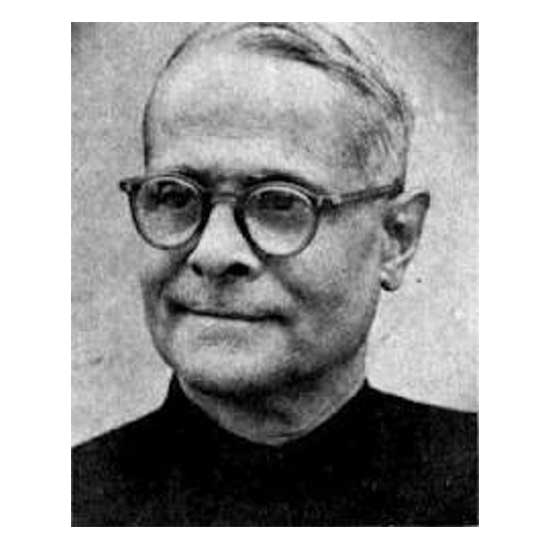
नारायण पंडित
| जन्म स्थान | 1340 |
| पिता | रामचंद्र |
| शिक्षा | गणितज्ञ |
| पेशा | प्रख्यात गणितज्ञ |
| राष्ट्रीयता | भारतीय |
| धर्म | हिन्दू |
| रचनाएँ | लीलावती (कर्म-प्रदीपिका), गणित कौमुदी |
| मृत्यु | 1400 |
नारायण पंडित--
प्रख्यात गणितज्ञ नारायण पंडित का जन्म अनुमानों के अनुसार, सन् 1340 के आस- पास हुआ था।
उन्होंने अर्थमिति पर आधारित अपनी प्रसिद्ध रचना का सृजन सन् 1356 में किया था, जिसका शीर्षक था ‘गणित कौमुदी’।
नारायण पंडित का कृतित्व अपने पूर्ववर्ती गणितज्ञ भास्कराचार्य द्वितीय से काफी प्रभावित रहा था।
उन्होंने भास्कराचार्य की रचना ‘लीलावती’ पर आधारित एक टीका लिखी थी, जिसका शीर्षक था ‘कर्म-प्रदीपिका’ नारायण पंडित एक अद्भुत विद्वान् थे
और उन्होंने संख्याओं का वर्ग निकालने की सात विधियाँ बतलाई थीं, जो कि अनोखी थीं। उन्होंने त्रिभुजों व चतुर्भुजों से संबंधित अनेक नियम प्रतिपादित किए। वर्गमूलों की गणना हेतु नियम विकसित करनेवाले नारायण पंडित ने जादुई चतुर्भुजों का भी विवरण दिया।
वास्तव में, गणित उनके लिए एक खेल था और वे लगातार खेलते रहते थे। अनुमानों के अनुसार,
उनका निधन सन् 1400 के आस-पास हुआ था।
परिचय (Introduction) :-
नारायण पण्डित भारत के एक प्राचीन महान गणितज्ञ और खगोलशास्त्री थे, जिन्होंने 14वीं शताब्दी में महत्वपूर्ण गणितीय ग्रंथ की रचना की थी। उन्हें विशेष रूप से उनके प्रसिद्ध गणितीय ग्रंथ "गणित कौमुदी" (Gaṇita Kaumudī) के लिए जाना जाता है। यह ग्रंथ गणित के विभिन्न विषयों जैसे अंकगणित, बीजगणित, भिन्न, अनुपात, क्षेत्रमिति आदि पर आधारित है।
जीवन और काल (Life and Era) :-
नारायण पण्डित का जन्म 14वीं शताब्दी के आसपास हुआ था।
वे संभवतः भारत के पश्चिमी या दक्षिणी भाग से संबंधित थे।
उनका प्रमुख ग्रंथ "गणित कौमुदी" सन् 1356 ई. (शक 1278) में लिखा गया था।
उनके पिता का नाम रामचंद्र था, जो स्वयं एक महान गणितज्ञ थे और जिन्होंने "लीलावती" और "बीजगणित" पर टिप्पणी की थी।
प्रमुख कृति – गणित कौमुदी (Gaṇita Kaumudī) :-
गणित कौमुदी नारायण पण्डित की सबसे महत्वपूर्ण रचना है। यह ग्रंथ गणित के लगभग 13 अध्यायों में विभाजित है। इस ग्रंथ की भाषा संस्कृत है और इसमें गणितीय समस्याएं श्लोकों के रूप में दी गई हैं।
इसमें निम्नलिखित विषयों का वर्णन है:
- अंकगणित (Arithmetic)
- भिन्न (Fractions)
- गुणा, भाग, वर्गमूल, घनमूल
- अनुपात और समानुपात (Ratio & Proportion)
- क्षेत्रफल (Mensuration)
- युक्ति (Logic and Reasoning)
- क्रमचय और संचय (Permutation and Combination)
- श्रृंखला (Progressions – Arithmetic & Geometric)
- संख्या पहेली और गणनात्मक खेल
एक प्रसिद्ध पहेली उदाहरण:
एक बंदर तालाब के किनारे एक खंभे पर चढ़ता है। वह हर बार 3 हाथ ऊपर चढ़ता है, लेकिन फिर 2 हाथ फिसल जाता है। यदि खंभा 60 हाथ ऊँचा है, तो बंदर कितने प्रयास में ऊपर पहुंचेगा?
इस प्रकार की समस्याएं नारायण पण्डित की प्रश्न शैली को दर्शाती हैं।
गणित कौमुदी की प्रसिद्ध पहेलियाँ (Famous Riddles & Examples) :-
उदाहरण 1: बंदर की चढ़ाई
एक खंभा 60 हाथ ऊँचा है। एक बंदर प्रतिदिन 3 हाथ चढ़ता है और 2 हाथ फिसल जाता है। तो वह कितने दिनों में शीर्ष पर पहुंचेगा?
उत्तर:
प्रत्येक दिन शुद्ध लाभ = 1 हाथ
58वें दिन तक = 58 हाथ
59वें दिन वह सीधे 3 हाथ चढ़कर 61 पहुंच जाएगा, लेकिन खंभा तो केवल 60 का है, तो वह 59वें दिन ऊपर पहुंचेगा।
उदाहरण 2: श्रीखण्ड वितरण (Sweet Distribution)
एक व्यक्ति ने अपने मित्रों को श्रीखण्ड इस प्रकार बाँटा:
पहले को आधा और आधा श्रीखण्ड, फिर दूसरे को बचा हुआ का आधा और आधा... इस प्रकार पाँच मित्रों को देने पर श्रीखण्ड समाप्त हो गया। तो प्रारंभ में कितना श्रीखण्ड था?
यह एक प्रकार की रिवर्स गणना (reverse calculation) है जो गणित कौमुदी में पहेली रूप में आती है।
नारायण पण्डित की विशेषताएं (Unique Contributions) :-
उन्होंने गणित को कविता और श्लोक के रूप में प्रस्तुत किया, जिससे विद्यार्थी गणित को याद कर सकें।
गणित को रोचक, चुनौतीपूर्ण और तर्कसंगत बनाने की कला उन्हें अन्य गणितज्ञों से अलग करती है।
उन्होंने "प्रमेयों" (theorems) और "युक्तियों" (methods) को आसान तरीकों से समझाया।
नारायण पण्डित और आधुनिक गणित पर प्रभाव :-
गणित कौमुदी आज भी संस्कृत गणितीय साहित्य का एक महत्वपूर्ण स्त्रोत है।
उनके विचारों और तकनीकों का उपयोग भविष्य के गणितज्ञों जैसे भास्कराचार्य और केरल स्कूल ऑफ गणित** के विद्वानों ने भी किया।
उनकी पहेलियों और श्लोकों का अनुवाद कई भाषाओं में हुआ।
गणित कौमुदी — परिचय--
ग्रंथ का नाम: गणित कौमुदी (Gaṇita Kaumudī)
लेखक: नारायण पंडित (Narāyaṇa Paṇḍita)
रचना काल: लगभग सन् 1356 ईस्वी
भाषा: संस्कृत
विषय: अंकगणित, बीजगणित, श्रेणी, संयोजन, अनुपात, वर्ग, घन, संख्याओं की संरचना, और व्यावहारिक गणना
मुख्य स्रोत: भास्कराचार्य की लीलावती एवं बीजगणित, साथ ही पूर्ववर्ती आर्यभट, ब्रह्मगुप्त, और महावीराचार्य की परंपरा।
नाम एवं अर्थ--
“कौमुदी” का अर्थ होता है — चन्द्रिका, प्रकाश या उजाला।
इसलिए “गणित कौमुदी” का भावार्थ है —
“गणित-ज्ञान को आलोकित करने वाला ग्रंथ।”
नारायण पंडित ने इसे इस उद्देश्य से लिखा कि गणित के सभी सिद्धांतों को सरल, क्रमबद्ध और उदाहरणों सहित प्रस्तुत किया जाए ताकि विद्यार्थी तथा विद्वान दोनों के लिए यह सुलभ हो।
रचना-परिप्रेक्ष्य--
14वीं शताब्दी में भारत का गणित-ज्ञान दक्षिण और उत्तर भारत में दो धाराओं में विकसित हो रहा था।
भास्कराचार्य (1114–1185 ई.) के बाद भारतीय गणित में कई ग्रंथ आए, परंतु व्यापक प्रणालीबद्ध व्याख्या “गणित कौमुदी” के रूप में पहली बार पुनः सामने आई।
यह ग्रंथ न केवल गणितीय नियमों का संकलन है, बल्कि
शिक्षण-ग्रंथ (Pedagogical treatise) भी है —
जिसमें सूत्र, उदाहरण और समाधान-विधियाँ दी गई हैं।
ग्रंथ-संरचना (Structure of Gaṇita Kaumudī)--
“गणित कौमुदी” कुल १३ अध्यायों (अथवा प्रकरणों) में विभाजित है।
प्रत्येक अध्याय में श्लोक-रूप में सूत्र दिए गए हैं और उनके बाद “उदाहरण” (प्रश्न) व “उत्तर” प्रस्तुत हैं।
अध्याय-वार सारांश--
1 संख्यानय (Saṅkhyānaya) संख्याओं की गिनती, जोड़-घटाव के नियम
2 गुणन-भाग गुणा, भाग, शेषफल आदि
3 वर्ग-घन वर्ग, घन, वर्गमूल, घनमूल
4 भिन्न-प्रकरण भिन्न, लघुत्तम समापवर्त्य (LCM), महत्तम समापवर्तक (HCF)
5 अनुपात-प्रकरण अनुपात, समानुपात, और अनुपात के प्रश्न
6 मिश्र-प्रकरण औसत, व्यापारिक गणना, ब्याज
7 श्रेणी-प्रकरण अंकगणितीय व ज्यामितीय श्रेणी
8 क्षेत्रफल-प्रकरण आयत, त्रिभुज, वृत्त, चतुर्भुज के क्षेत्रफल
9 घनत्व-प्रकरण घन-आयतन, ठोस ज्यामिति
10 संयोजन-प्रकरण क्रमचय, संयोजन, व्यवस्थान
11 अंकपाश (Ankapāśa) जादुई वर्ग, संख्यात्मक पैटर्न
12 व्यावहारिक गणित व्यापार, विनिमय, नाप-जोख
13 अनुप्रयोग-प्रकरण जटिल प्रश्नों के समाधान व सूत्रों का संयुक्त प्रयोग
अध्याय-वार विवरण--
संख्यानय--
यह प्रारंभिक अध्याय है जिसमें नारायण पंडित संख्याओं के प्रकार बताते हैं —
सकारात्मक, ऋणात्मक, मिश्रित, सम, विषम, पूर्णांक, अपूर्णांक आदि।
“संख्या अनंत है, परन्तु गणना की आवश्यकता से सीमित रूपों में प्रयुक्त होती है।”
उन्होंने अंकों के नाम संस्कृत रूपों में दिए — एक, द्वि, त्रि, चतु, पञ्च, षट् इत्यादि — और दशमलव पद्धति (place-value system) को स्पष्ट किया।
गुणन-भाग प्रकरण--
इस अध्याय में उन्होंने लिखित गुणा और भाग की प्राचीन भारतीय विधियाँ बताईं।
लंब-गुणन (Vertical multiplication)
क्रम-गुणन (Cross method)
भागफल से शेष निकालने की विशेष तकनीकें।
उन्होंने शून्य (०) के साथ गणना करने के नियम भी दिए, जो उस काल में अत्यंत अग्रणी दृष्टिकोण था।
वर्ग-घन और मूल निकालने की विधियाँ--
इस अध्याय में वर्ग, घन, वर्गमूल, घनमूल निकालने की विविध विधियाँ दी गई हैं।
विशेष रूप से,
“वर्ग निकालने की सात विधियाँ”
उनकी कर्म-प्रदीपिका में भी विस्तारित हैं।
ये विधियाँ आधुनिक “digit-by-digit” square-root विधि जैसी लगती हैं।
भिन्न-प्रकरण--
इस अध्याय में उन्होंने भिन्नों की परिभाषा, समान हर लाने की प्रक्रिया, ल.स.प. और म.स.प. का उपयोग,
साथ ही भिन्नों का जोड़-घटाव-गुणा-भाग स्पष्ट किया।
उन्होंने मिश्रित भिन्नों और अनुपातों को भी एक-दूसरे से जोड़ने की तकनीक बताई।
अनुपात एवं समानुपात--
यह अध्याय अनुपात, समानुपात (ratio & proportion) से संबंधित है।
उन्होंने “त्रैराशिक” (Rule of Three) और “चतुराशिक” नियमों का भी विस्तार से वर्णन किया —
जो व्यापारिक गणना, धन-विनिमय, मूल्य-मापन में उपयोगी थे।
मिश्रण-प्रकरण (Mixture & Alligation)--
इस अध्याय में मिश्र धातु, मूल्य-मिश्रण, औसत मूल्य निकालने की विधियाँ हैं।
यह आज के “Alligation or Mixture” नियम के समान है।
श्रेणी-प्रकरण--
यह अध्याय अत्यंत महत्वपूर्ण है।
इसमें उन्होंने अंकगणितीय श्रेणी (A.P.) और ज्यामितीय श्रेणी (G.P.) दोनों का विवरण दिया है।
उन्होंने श्रेणी का सामान्य पद (nth term) और योग (sum) के सूत्र प्रस्तुत किए:
“श्रृंखला यदि समानांतर बढ़ती हो तो उसका योग, प्रथम और अंतिम पदों के योग का अर्ध गुणा पदों की संख्या से।”
यह बिल्कुल आधुनिक सूत्र जैसा है —
Narayan Pandit – The Eminent Indian Mathematician--
Introduction:
Narayan Pandit (also spelled Narayana Pandita) was one of the most prominent Indian mathematicians and astronomers of the 14th century. He is best known for his celebrated mathematical treatise “Gaṇita Kaumudī” (The Moonlight of Mathematics), composed around 1356 CE. This work encompasses almost every major branch of mathematics known in India at the time—arithmetic, algebra, geometry, mensuration, series, combinatorics, and practical applications.
Life and Era:
Narayan Pandit was born around 1340 CE, possibly in western or southern India. His father, Ramakrishna (or Ramachandra), was also a scholar and mathematician who had written commentaries on Bhāskara II’s Līlāvatī and Bījagaṇita. Narayan Pandit followed in his father’s footsteps, blending traditional Indian mathematics with innovative reasoning and poetic presentation.
He lived during a time when Indian mathematical thought was deeply influenced by earlier works like those of Āryabhaṭa, Brahmagupta, Mahāvīrācārya, and Bhāskara II, yet Narayan added new perspectives and refinements, creating a bridge between classical and later medieval Indian mathematics.
He is believed to have died around 1400 CE.
Major Work – Gaṇita Kaumudī:
The Gaṇita Kaumudī is Narayan Pandit’s magnum opus. The title literally means “Moonlight of Mathematics”—a text meant to illuminate the subject for students and scholars alike.
It was composed in Sanskrit, in poetic śloka form, making mathematical principles memorable and rhythmic.
Structure of the Gaṇita Kaumudī:
The treatise is divided into 13 chapters (prakaraṇas), each dealing with a distinct mathematical field.
| Chapter No. | Topic (Prakaraṇa) | Content Summary |
|---|---|---|
| 1 | Saṅkhyānaya | Nature and types of numbers, addition, subtraction |
| 2 | Multiplication & Division | Multiplicative rules, remainders, zero operations |
| 3 | Squares & Cubes | Methods to find squares, cubes, square roots, cube roots |
| 4 | Fractions | Definitions, LCM, HCF, fractional arithmetic |
| 5 | Ratio & Proportion | Rules of three and four, commercial calculations |
| 6 | Mixtures | Alloy and average problems (Alligation) |
| 7 | Series | Arithmetic and geometric progressions |
| 8 | Mensuration | Areas of rectangles, triangles, circles, quadrilaterals |
| 9 | Solid Geometry | Volumes of cubes, cylinders, and spheres |
| 10 | Combinatorics | Permutations, combinations, and arrangements |
| 11 | Ankapāśa | Magic squares and numerical patterns |
| 12 | Practical Mathematics | Commerce, time, exchange, measurement |
| 13 | Applications | Complex problems and combined applications |
Highlights and Examples:
1. The Monkey and the Pole Puzzle:
A pole is 60 hands high. A monkey climbs 3 hands up and slips 2 hands down each time. How many climbs will it take to reach the top?
-
Net gain per attempt = 1 hand
-
After 58 climbs = 58 hands
-
On the 59th climb, he reaches 61 hands (top).
Answer: 59 climbs
This riddle, still popular today, shows Narayan’s playful and logical teaching style.
2. Sweet Distribution Problem:
A man distributes sweets to five friends as follows:
He gives the first friend half of all sweets and half a sweet extra; then to the next, half of the remaining and half a sweet more—and so on. After the fifth, nothing remains.
→ Find the original quantity of sweets.
This problem teaches reverse calculation, an early form of algebraic reasoning.
Distinctive Features of Narayan Pandit’s Work:
-
Mathematics in Verse:
He composed mathematical principles in Sanskrit poetry, making them easier to memorize and recite. -
Innovative Teaching Style:
His examples often involve daily life—trade, distribution, games, puzzles—making learning interactive. -
Systematic Presentation:
Each topic is introduced with a sutra (formula), followed by examples and solutions. -
Fusion of Logic and Poetry:
Narayan Pandit viewed mathematics not only as computation but as a philosophy of logic and order.
Mathematical Contributions:
| Field | Narayan Pandit’s Contribution | Modern Equivalent |
|---|---|---|
| Series | Formulas for sum and nth term of progressions | Arithmetic & Geometric Series |
| Combinatorics | nCr = n(n–1)…(n–r+1)/r! | Binomial coefficient |
| Magic Squares | Equal sum across rows, columns, diagonals | Magic Squares |
| Geometry | Cyclic quadrilateral and diagonal concept | Advanced Euclidean Geometry |
| Square Root | Seven different methods for extracting roots | Numerical Algorithms |
| Mixtures | Rules for weighted averages | Alligation Method |
| Number Theory | Solution of equations like n*q² + 1 = p² | Pell’s Equation |
Ankapāśa (Magic Squares):
This is one of the most fascinating parts of Gaṇita Kaumudī. Narayan describes how to create numerical grids in which every row, column, and diagonal gives the same sum—a mathematical art centuries ahead of Europe’s similar developments.
Influence on Later Mathematics:
-
Gaṇita Kaumudī became a standard text in Indian mathematical education for centuries.
-
It influenced the Kerala School of Mathematics and other scholars who later developed infinite series and calculus-like concepts.
-
Manuscripts of the text are still preserved in Varanasi, Pune, Mysore, Madras, and Nepal.
Style and Language:
Narayan’s Sanskrit verses are both elegant and instructive. For example:
“Yatraikaṃ dvayamādāya trayaṃ vā yojayet punaḥ,
Tasmāt saṅkhyā prajāyante gaṇitaṃ kaumudīmate.”(“Where one, two, or three are combined in various ways, there arise countless numbers—thus speaks the doctrine of Gaṇita Kaumudī.”)
Critical Appreciation:
-
Narayan Pandit’s work represents a synthesis of Indian mathematical tradition, structured and refined for pedagogy.
-
It demonstrates that 14th-century Indian mathematics was on par with, or even ahead of, contemporary European developments.
-
His methods prefigure aspects of modern combinatorics, algorithmic logic, and numerical computation.
Modern Studies:
In the 20th century, scholars such as K. S. Shukla and A. K. Bag translated and analyzed Gaṇita Kaumudī.
Institutes like the Bhandarkar Oriental Research Institute (Pune) and University of Madras published annotated editions, confirming its mathematical accuracy and cultural value.
Interesting Facts:
-
Mathematics in Poetry: His verses made abstract formulas musical and easy to learn.
-
The Monkey Puzzle: His most famous problem, still taught in schools, demonstrates logical progression.
Early Combinatorics: Discussed permutation and combination centuries before Western texts.
-
Reverse Calculation: His riddles encouraged thinking backward—precursor to algebraic logic.
-
Comprehensive Work: 13 chapters cover almost all known mathematical disciplines.
Historical Pride: Written in 1356 CE—when much of Europe’s mathematics was still developing.
-
Scholarly Lineage: His father Ramachandra was also a mathematician.
-
Timeless Relevance: Concepts from Gaṇita Kaumudī appear in modern exams and mathematical puzzles.
Death:
The exact year of his death is unknown, but it is believed that he lived into the late 14th century, contributing continuously to the advancement of Indian mathematical thought.
Conclusion:
Narayan Pandit was not merely a mathematician—he was a teacher, poet, and philosopher of logic.
His Gaṇita Kaumudī remains a monumental work of Indian intellectual heritage, demonstrating how mathematics can be both precise and poetic, logical and beautiful.
Even today, his ideas illuminate the deep-rooted brilliance of ancient Indian science and education—proving that mathematics, when combined with art and intuition, becomes a form of enlightenment.