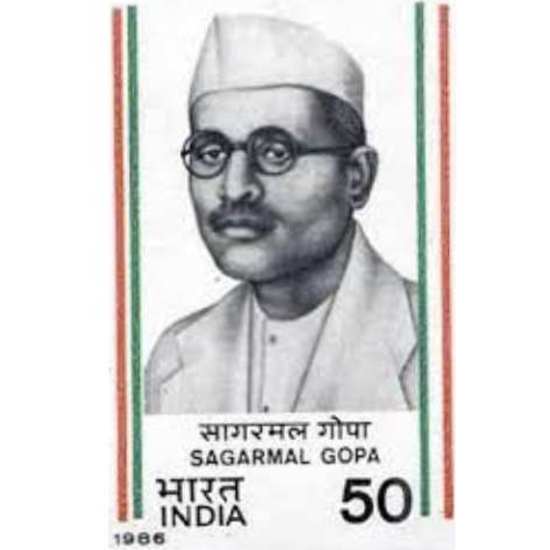
सागरमल गोपा
| जन्म तिथि | 03 November 1900 |
| जन्म स्थान | जैसलमेर, राजस्थान (भारत) |
| पिता | मुकुंददास गोपा |
| शिक्षा | प्रारंभिक शिक्षा जोधपुर | उच्च शिक्षा बनारस हिंदू विश्वविद्यालय |
| राष्ट्रीयता | भारतीय |
| धर्म | हिन्दू |
| रचनाएँ | जोधपुर राज्य का भेद | जेल डायरी |
| मृत्यु | 5 अप्रैल 1946 को जोधपुर की मेहरानगढ़ जेल |
सागरमल गोपा की जीवनी (Sagarmal Gopa Biography in Hindi)--
सागरमल गोपा भारतीय स्वतंत्रता संग्राम के एक महान और साहसी योद्धा थे, जिन्होंने राजस्थान की धरती से अंग्रेजों और देशी रियासतों की दमनकारी नीतियों के खिलाफ आवाज़ उठाई। उन्होंने जोधपुर रियासत के महाराजा और अंग्रेजी शासन के अन्यायपूर्ण गठजोड़ का विरोध किया, जिसके कारण उन्हें प्रताड़ना और अंततः जेल में मार दिया गया। उनका जीवन बलिदान, निडरता और देशभक्ति की एक अद्वितीय मिसाल है।
प्रारंभिक जीवन--
सागरमल गोपा का जन्म 3 नवम्बर 1900 को राजस्थान के जोधपुर नगर में एक संपन्न वैश्य परिवार में हुआ था। उनके पिता का नाम मुकुंददास गोपा था, जो पेशे से व्यापारी थे और समाज में एक प्रतिष्ठित स्थान रखते थे। गोपा परिवार धार्मिक, सांस्कृतिक और सामाजिक दृष्टिकोण से अत्यंत प्रबुद्ध था।
बचपन से ही सागरमल गोपा में न्यायप्रियता, साहस और विद्रोही प्रवृत्ति के गुण दिखाई देने लगे थे। उनका बचपन जोधपुर की गलियों में बीता, लेकिन उनके विचार सामान्य बच्चों से अलग थे। वे अन्याय और अत्याचार को सहन नहीं कर सकते थे।
शिक्षा--
सागरमल गोपा ने अपनी प्रारंभिक शिक्षा जोधपुर से प्राप्त की। इसके बाद वे उच्च शिक्षा के लिए बनारस (अब वाराणसी) चले गए, जहाँ उन्होंने बनारस हिंदू विश्वविद्यालय में अध्ययन किया। यहीं से उनके विचारों में क्रांतिकारी परिवर्तन हुआ। वे महात्मा गांधी, बाल गंगाधर तिलक और अन्य स्वतंत्रता सेनानियों के विचारों से अत्यंत प्रभावित हुए।
बनारस में रहते हुए उन्होंने विदेशी शासन की क्रूरता और भारतीय जनता के साथ हो रहे अन्याय को गहराई से समझा और प्रण लिया कि वे आजीवन देश की स्वतंत्रता के लिए संघर्ष करेंगे।
स्वतंत्रता संग्राम में भागीदारी--
सागरमल गोपा ने स्वतंत्रता संग्राम में सक्रिय भाग लेना 1920 के दशक से आरंभ किया। वे गांधी जी के असहयोग आंदोलन से अत्यधिक प्रभावित थे। उन्होंने न केवल खुद इस आंदोलन में भाग लिया बल्कि जोधपुर में जन जागरण किया और कई नौजवानों को भी आंदोलन से जोड़ा।
उनका मुख्य उद्देश्य जोधपुर रियासत के महाराजा के अंग्रेजों से गठजोड़ और जनविरोधी नीतियों के खिलाफ आवाज़ उठाना था। उन्होंने "जनता की आवाज़" नामक एक पत्रिका के माध्यम से जन-जागरूकता फैलाने का काम किया, जिसमें रियासत के भ्रष्टाचार और अत्याचार का खुलासा किया गया।
रियासती अत्याचार का विरोध--
जोधपुर रियासत के महाराजा उम्मेद सिंह ब्रिटिश शासन के पक्के समर्थक थे। उन्होंने स्वतंत्रता सेनानियों पर अत्याचार करना शुरू कर दिया था। सागरमल गोपा ने महाराजा की जनविरोधी नीतियों का खुलकर विरोध किया। उन्होंने कहा कि अंग्रेजों की गुलामी से मुक्ति तभी संभव है जब देशी रियासतों का भी विरोध किया जाए।
इसके कारण वे महाराजा और अंग्रेजी अधिकारियों की निगाह में आ गए। उन पर देशद्रोह, अशांति फैलाने और शासन के खिलाफ षड्यंत्र करने के झूठे आरोप लगाए गए।
प्रवास और गिरफ्तारी--
जोधपुर से निष्कासन
रियासत सरकार की नीतियों के विरोध के कारण सन् 1930 में उन्हें जोधपुर से निष्कासित कर दिया गया। इसके बाद उन्होंने देश के विभिन्न हिस्सों में भ्रमण किया और राष्ट्रीय नेताओं के संपर्क में आए।
उन्होंने गांधी जी, पंडित नेहरू, सुभाष चंद्र बोस, और सरदार पटेल जैसे नेताओं से मुलाकात की। इसके साथ ही वे 'प्रजा मंडल आंदोलन' से जुड़ गए और जन-जन को स्वतंत्रता के लिए प्रेरित करते रहे।
गिरफ्तारी और यातना--
वर्ष 1941 में सागरमल गोपा कुछ व्यक्तिगत कारणों से जोधपुर लौटे, लेकिन जैसे ही उनकी वापसी की खबर प्रशासन को लगी, उन्हें तुरंत गिरफ्तार कर लिया गया। उन्हें जोधपुर के मेहरानगढ़ किले में बंदी बना दिया गया।
उन पर कोई विधिवत मुकदमा नहीं चलाया गया। जेल में उन्हें अमानवीय यातनाएं दी गईं। उन्हें भूखा रखा गया, पीटा गया, मानसिक रूप से प्रताड़ित किया गया। इसके बावजूद उन्होंने कभी माफ़ी नहीं मांगी और न ही झुके।
1. शारीरिक यातनाएं--
भोजन और पानी से वंचित रखना – लंबे समय तक भूखा-प्यासा रखा जाता था, ताकि उनका शारीरिक बल टूट जाए।
लोहे की बेड़ियां और हथकड़ियां – हाथ-पाँव में भारी लोहे की बेड़ियां डालकर हिलने-डुलने तक में कठिनाई पैदा की जाती थी।
मारपीट – लाठियों और डंडों से बर्बरतापूर्वक पीटा जाता था, जिससे उनके शरीर पर गंभीर चोटें आईं।
अत्यधिक ठंड/गर्मी में रखना – कभी उन्हें तपते धूप में, तो कभी ठंडी हवाओं में बंद किया जाता था।
जलाना – अंततः, यातना की चरम सीमा पर उन्हें ज़िंदा जलाकर मौत के घाट उतारा गया।
2. मानसिक यातनाएं--
अकेलेपन की सज़ा – उन्हें लंबे समय तक एकांत कोठरी में रखा गया, ताकि मानसिक संतुलन बिगड़ जाए।
परिवार से मिलने पर रोक – परिवार के किसी भी सदस्य को उनसे मिलने की अनुमति नहीं थी।
अपमान और धमकियां – उन्हें लगातार गालियां दी जाती थीं और धमकाया जाता था कि अगर वे आज़ादी की लड़ाई से पीछे नहीं हटे, तो उनके परिवार को भी सताया जाएगा।
जबरन झूठे बयान पर दबाव – अंग्रेज़ चाहते थे कि वे क्रांतिकारी गतिविधियों से इनकार कर दें, लेकिन उन्होंने ऐसा करने से इंकार कर दिया।
सागरमल गोपा ने इन अमानवीय यातनाओं के बावजूद अपने देशप्रेम, क्रांतिकारी विचार और आज़ादी के संकल्प को कभी नहीं छोड़ा।
उनकी शहादत राजस्थान और पूरे भारत के स्वतंत्रता संग्राम में अत्यधिक प्रेरणादायी मानी जाती है।
शहादत--
15 अप्रैल 1946 को सागरमल गोपा को जोधपुर की जेल में ज़िंदा जला दिया गया। प्रशासन ने दावा किया कि यह आत्महत्या थी, लेकिन उनके शरीर पर मिले जलने के निशान, प्रताड़ना के चिह्न और अन्य सबूतों से स्पष्ट हुआ कि यह एक सुनियोजित हत्या थी।
उनकी हत्या ने पूरे देश में आक्रोश की लहर पैदा कर दी। कांग्रेस ने इसकी निंदा की और जांच की मांग की। सागरमल गोपा की शहादत को आज़ादी के आंदोलन की एक ज्वलंत मिसाल माना गया।
साहित्यिक योगदान--
सागरमल गोपा केवल एक क्रांतिकारी ही नहीं, एक उत्कृष्ट लेखक और विचारक भी थे। उन्होंने अपने जीवनकाल में कई लेख, पत्र और टिप्पणियाँ लिखीं, जिनमें उन्होंने जोधपुर राज्य की दमनकारी नीतियों, जनता की दुर्दशा और ब्रिटिश सत्ता के अत्याचारों का वर्णन किया।
उनकी लिखी रचनाएँ आज भी प्रासंगिक मानी जाती हैं और देशभक्ति की भावना को जाग्रत करती हैं।
प्रेरणास्त्रोत और विचारधारा--
प्रेरणा स्रोत
महात्मा गांधी: सत्याग्रह और अहिंसा से उन्होंने बहुत कुछ सीखा।
भगत सिंह: क्रांति और बलिदान की भावना।
लोकमान्य तिलक: "स्वराज्य मेरा जन्मसिद्ध अधिकार है" – यह भाव उनके विचारों में स्पष्ट दिखता है।
विचारधारा--
स्वतंत्रता केवल अंग्रेजों से नहीं बल्कि देशी राजाओं के अत्याचार से भी जरूरी है।
सच्चा स्वराज तभी आएगा जब जनता की भागीदारी सुनिश्चित होगी।
युवाओं को जागरूक करना, शिक्षा देना और संघर्ष के लिए प्रेरित करना।
मरणोपरांत सम्मान--
स्वतंत्रता प्राप्ति के बाद भारत सरकार ने सागरमल गोपा के बलिदान को स्वीकार किया और उन्हें शहीद का दर्जा दिया गया। उनकी स्मृति में कई स्थानों पर स्मारक स्थापित किए गए हैं।
सागरमल गोपा हॉस्टल, जयपुर
सागरमल गोपा कॉलेज, राजस्थान
डाक टिकट: भारत सरकार ने 1986 में उनकी स्मृति में डाक टिकट जारी किया।
राजस्थान में योगदान की मान्यता--
राजस्थान सरकार ने उनके बलिदान को स्मरणीय बनाने के लिए पाठ्यक्रमों में उनका जीवन शामिल किया।
हर वर्ष 15 अप्रैल को कई स्थानों पर उन्हें श्रद्धांजलि दी जाती है।
व्यक्तित्व और सिद्धांत--
सादगी और साहस का प्रतीक
सागरमल गोपा का जीवन अत्यंत सादा था। वे दिखावे से दूर रहते थे और स्वदेशी वस्तुओं का प्रयोग करते थे। अपने विचारों में अडिग, साहसी और निर्भीक थे।
नैतिकता और देशभक्ति--
उन्होंने हर परिस्थिति में नैतिकता और ईमानदारी का पालन किया। देशभक्ति उनकी नस-नस में बसी थी। उन्होंने न कभी समझौता किया और न ही अपने सिद्धांतों से पीछे हटे।
सागरमल गोपा की रचनाएँ (Sagarmal Gopa Writings)--
1. जोधपुर राज्य का भेद (Jodhpur Rajya ka Bhed)
यह सागरमल गोपा की सबसे प्रसिद्ध और चर्चित रचना है। इस पुस्तक में उन्होंने जोधपुर रियासत के राजशाही तंत्र की अन्यायपूर्ण नीतियों, जनता पर हो रहे अत्याचारों और भ्रष्टाचार का पर्दाफाश किया है।
- रियासती प्रशासन की क्रूरता
- आम जनता की दशा
- राजाओं और अंग्रेजों का गठबंधन
- करों का अत्यधिक बोझ
- दमनात्मक नीतियों की आलोचना
प्रभाव:--
यह पुस्तक जोधपुर राज्य और ब्रिटिश सरकार की आँखों की किरकिरी बन गई। इसके कारण सागरमल गोपा को राज्य से निष्कासित कर दिया गया। यह रचना प्रजामंडल आंदोलन के लिए विचारधारा का आधार बनी।
2. देशभक्ति से ओतप्रोत पत्र और लेख--
जेल में रहते हुए सागरमल गोपा ने अनेक पत्र और लेख लिखे जो उनके विचारों, संघर्षों और दर्शन को दर्शाते हैं। ये रचनाएँ व्यक्तिगत डायरी, खुली चिट्ठियाँ और लेखों के रूप में थीं।
विशेषताएँ:
- अंग्रेजों की नीति का विश्लेषण
- अहिंसा बनाम क्रांति पर विचार
- राजस्थान के युवाओं से आह्वान
- नैतिक साहस और आत्मबल पर बल
उदाहरण:
उन्होंने अपने एक लेख में लिखा —
"यदि देश को आज़ादी चाहिए, तो उसे केवल अंग्रेज़ों से नहीं, उन राजाओं से भी लड़ना होगा, जो जनता को ग़ुलाम समझते हैं।"
3. जेल डायरी (Jail Diary)
जोधपुर की मेहरानगढ़ जेल में रहते हुए सागरमल गोपा ने जो भी यातनाएँ झेली, उनका विस्तृत वर्णन उन्होंने अपनी जेल डायरी में किया। हालांकि यह डायरी स्वतंत्रता के बाद ही लोगों के सामने आ सकी।
मुख्य विषय:--
- जेल में अमानवीय अत्याचार
- मानसिक प्रताड़ना
- देशप्रेम की भावना
- अंतिम दिनों की मनःस्थिति
प्रभाव:--
यह डायरी आज़ादी की लड़ाई में शहीदों के कष्टों का दस्तावेज़ बन चुकी है। यह भावी पीढ़ी को प्रेरित करती है कि किस प्रकार विचारों और देशभक्ति की शक्ति किसी भी प्रताड़ना से बड़ी होती है।
4. कविताएँ और प्रेरक लेखन--
हालाँकि सागरमल गोपा ने काव्य लेखन को विशेष रूप से नहीं अपनाया, लेकिन उनके कुछ पत्रों और लेखों में काव्यात्मक अभिव्यक्ति मिलती है। उन्होंने देशभक्ति, आत्मबल और बलिदान को लेकर प्रेरक पंक्तियाँ लिखी हैं।
एक उदाहरणात्मक पंक्ति:
"सत्य की जो राह चले, वह कभी अकेला नहीं होता, और अन्याय के सामने जो झुके, वह कभी नायक नहीं होता।"
जोधपुर जेल में सागरमल गोपा की हत्या – एक जघन्य सत्य--
मेहरानगढ़ की जेल में बंदी जीवन
वर्ष 1941 में सागरमल गोपा को जोधपुर लौटने पर गिरफ्तार कर लिया गया।
उन्हें राज-द्रोह, अशांति फैलाने और शाही परिवार की छवि खराब करने जैसे झूठे आरोपों में बिना मुकदमा चलाए जेल में डाल दिया गया।
उन्हें जोधपुर के प्रसिद्ध मेहरानगढ़ किले की जेल में कैद किया गया।
कैद के दौरान अमानवीय अत्याचार--
उन्हें नियमित रूप से शारीरिक और मानसिक यातनाएं दी गईं।
उन्हें भूखा रखा गया, बिना चिकित्सा सुविधा, और अंधेरी कोठरी में बंद किया गया।
रियासत उन्हें तोड़ना चाहती थी ताकि वे माफी मांग लें या रियासत के खिलाफ लिखना बंद करें, लेकिन सागरमल गोपा कभी झुके नहीं।
15 अप्रैल 1946 – शहादत का दिन--
इसी दिन, रात के समय, उन्हें कोठरी में ज़िंदा जला दिया गया।
रियासत सरकार ने आधिकारिक बयान जारी किया कि उन्होंने आत्महत्या कर ली।
लेकिन जब उनके शरीर के अवशेष परिजनों को सौंपे गए, तो उसमें जलने के साथ-साथ पीटे जाने के भी निशान स्पष्ट थे।
जोधपुर प्रजामंडल, कांग्रेस पार्टी और स्वतंत्रता संग्राम सेनानियों ने इसे एक राज्य प्रायोजित हत्या करार दिया।
सबूत जो "हत्या" सिद्ध करते हैं--
जेल रिकॉर्ड में विरोधाभास: जेल में मौत के समय के विवरण और डॉक्टर की रिपोर्ट में मेल नहीं था।
शरीर पर चोट के निशान: पीठ, हाथ और छाती पर गंभीर चोटें पाई गईं जो जलने से पहले दी गईं।
जेल में आग का कोई अन्य स्रोत नहीं था, फिर आग लगने की बात संदिग्ध थी।
कई गवाहों (जेल कर्मचारियों, अन्य कैदियों) ने इशारा किया कि यह हत्या थी।
क्यों जलाया गया ज़िंदा?--
सागरमल गोपा राजा उम्मेद सिंह और ब्रिटिश अधिकारियों के गहरे भ्रष्टाचार और अत्याचार का पर्दाफाश कर रहे थे।
उन्होंने जोधपुर राज्य की सच्चाई को उजागर करने वाली किताब "जोधपुर राज्य का भेद" लिखी थी।
उनका प्रभाव जनता में बढ़ रहा था और रियासत डर गई थी कि वे राजशाही के अंत का कारण बन सकते हैं।
उनकी शहादत के बाद की प्रतिक्रियाएँ--
देशभर के नेताओं ने इसकी घोर निंदा की।
महात्मा गांधी, नेहरू, सरदार पटेल तक ने सागरमल गोपा की हत्या को गंभीर मानवाधिकार हनन बताया।
जोधपुर प्रजामंडल ने जांच आयोग की मांग की, लेकिन तत्कालीन रियासत ने कुछ नहीं किया।
आज का भारत और सागरमल गोपा की याद--
स्वतंत्रता के बाद उन्हें "शहीद" का दर्जा दिया गया।
सरकारी डाक टिकट जारी किया गया (1986)
राजस्थान में कई संस्थाओं, कॉलेजों और स्मारकों का नाम उनके नाम पर रखा गया।
इतिहास में यह घटना आज भी याद दिलाती है कि गुलामी केवल अंग्रेजों से ही नहीं, देशी अत्याचारियों से भी थी।
सागरमल गोपा पर जारी डाक टिकट (Sagarmal Gopa Postage Stamp)--
जारी होने की तिथि:--
14 अगस्त 1986
(स्वतंत्रता दिवस की पूर्व संध्या पर)
जारी करने वाली संस्था:--
भारतीय डाक विभाग (India Post)
मूल्य:-
₹ 1.00 (एक रुपये)
डिज़ाइन विवरण:-
डाक टिकट पर सागरमल गोपा का चित्र छपा है।
उनके चेहरे पर गंभीरता, विचारशीलता और साहस झलकता है।
पृष्ठभूमि में राजस्थानी परंपरा और उनकी संघर्षशीलता को प्रतीकात्मक रूप में दिखाया गया है।
हिंदी और अंग्रेजी दोनों में नाम "Sagarmal Gopa" अंकित है।
उद्देश्य:--
भारतीय स्वतंत्रता संग्राम में रियासती अत्याचारों के विरुद्ध लड़ने वाले नायकों को सम्मान देना।
नई पीढ़ी को वीर सपूतों के बलिदान से परिचित कराना।
डाक टिकट का प्रतीकात्मक महत्व--
सागरमल गोपा पर यह डाक टिकट न केवल एक सरकारी मान्यता है, बल्कि यह उस अन्याय के खिलाफ लड़ने वाले नायक को श्रद्धांजलि है,
जिसने अंग्रेजों और देशी तानाशाहों दोनों के विरुद्ध आवाज उठाई — और अपनी जान की आहुति दे दी।
रोचक तथ्य--
उन्हें रियासत से बाहर निकालने का आदेश केवल इसलिए हुआ क्योंकि उन्होंने महाराजा की आलोचना की थी।
जेल में उन्होंने कई बार ब्रिटिश और जोधपुर प्रशासन के अत्याचारों का लेखन किया, जो आज ऐतिहासिक दस्तावेज़ माने जाते हैं।
वे अपने समय में युवाओं के प्रेरणास्त्रोत थे, जो उन्हें "राजस्थान का भगत सिंह" कह कर संबोधित करते थे।
सागरमल गोपा से जुड़े कुछ महत्वपूर्ण प्रश्न और उत्तर (FAQ)--
प्र. सागरमल गोपा का जन्म कब और कहाँ हुआ था?
उत्तर: उनका जन्म 3 नवम्बर 1900 को जोधपुर, राजस्थान में हुआ था।
प्र. सागरमल गोपा को जेल में क्यों डाला गया था?
उत्तर: उन्होंने जोधपुर रियासत और अंग्रेजों के खिलाफ आवाज़ उठाई थी, जिसके कारण उन्हें जेल में बंद कर दिया गया।
प्र. उनकी मृत्यु कैसे हुई?
उत्तर: 15 अप्रैल 1946 को जोधपुर की जेल में उन्हें जला कर मार दिया गया।
प्र. उनका मुख्य उद्देश्य क्या था?
उत्तर: भारत को अंग्रेजों और देशी रियासतों के अन्याय से मुक्त कराना।
निष्कर्ष--
सागरमल गोपा का जीवन एक ऐसा दीपस्तंभ है, जो हमें यह सिखाता है कि अन्याय और अत्याचार के खिलाफ एक व्यक्ति भी खड़ा हो सकता है। उन्होंने अपनी जान की बाज़ी लगाकर सच्चाई और स्वतंत्रता की रक्षा की।
आज के समय में जब नैतिक मूल्यों और ईमानदारी का अभाव दिखता है, सागरमल गोपा जैसे शहीद हमें रास्ता दिखाते हैं कि सच्चाई के लिए कोई भी कीमत चुकानी पड़े तो चुकाओ — लेकिन झुको मत।
Sagarmal Gopa – Biography
Sagarmal Gopa was a great and fearless warrior of the Indian freedom struggle who raised his voice from the land of Rajasthan against the oppressive policies of the British and the princely states. He opposed the unjust alliance between the Maharaja of Jodhpur and the British rule, for which he was tortured and ultimately killed in prison. His life is a unique example of sacrifice, courage, and patriotism.
Early Life
Sagarmal Gopa was born on 3 November 1900 in Jodhpur, Rajasthan, into an affluent Vaishya family. His father, Mukunddas Gopa, was a businessman and a respected member of society. The Gopa family was deeply religious, culturally aware, and socially enlightened.
From childhood, Sagarmal Gopa showed traits of justice, courage, and a rebellious spirit. He spent his early years in the streets of Jodhpur, but his thinking was different from that of other children. He could not tolerate injustice and oppression.
Education
Sagarmal Gopa received his early education in Jodhpur. Later, he moved to Banaras (now Varanasi) for higher studies, where he studied at Banaras Hindu University. It was here that his thoughts underwent a revolutionary transformation. He was deeply influenced by the ideas of Mahatma Gandhi, Bal Gangadhar Tilak, and other freedom fighters.
During his stay in Banaras, he understood the cruelty of foreign rule and the injustice faced by the Indian people. He pledged to dedicate his life to the struggle for India’s independence.
Participation in the Freedom Struggle
Sagarmal Gopa began actively participating in the freedom struggle in the 1920s. Greatly inspired by Gandhi’s Non-Cooperation Movement, he not only joined the movement himself but also awakened the people of Jodhpur and involved many young men in the cause.
His main aim was to oppose the alliance between the Maharaja of Jodhpur and the British, as well as the anti-people policies of the state. Through his magazine "Janata Ki Awaaz" (The Voice of the People), he spread public awareness and exposed the corruption and oppression of the princely state.
Opposition to Princely Oppression
The Maharaja of Jodhpur, Umed Singh, was a staunch supporter of British rule. He began persecuting freedom fighters. Sagarmal Gopa openly opposed the Maharaja’s anti-people policies and declared that liberation from British slavery would only be possible if the princely states were also opposed.
As a result, he came under the radar of the Maharaja and the British authorities. He was falsely accused of sedition, spreading unrest, and conspiring against the state.
Exile and Arrest
Exile from Jodhpur
In 1930, due to his opposition to the policies of the state government, he was exiled from Jodhpur. After that, he traveled to different parts of the country and came in contact with national leaders.
He met Mahatma Gandhi, Pandit Nehru, Subhas Chandra Bose, and Sardar Patel. He also joined the Praja Mandal Movement and continued to inspire people to fight for freedom.
Arrest and Torture
In 1941, Sagarmal Gopa returned to Jodhpur for personal reasons. However, as soon as the administration learned of his return, he was immediately arrested and imprisoned in the Mehrangarh Fort Jail in Jodhpur.
No formal trial was conducted against him. In prison, he was subjected to inhuman torture — starved, beaten, and mentally harassed. Despite this, he never apologized nor bowed down.
1. Physical Tortures
-
Deprivation of food and water – He was kept hungry and thirsty for long periods to weaken him physically.
-
Iron chains and shackles – Heavy iron chains were placed on his hands and feet, making it difficult for him to move.
-
Beatings – He was brutally beaten with sticks and rods, leaving serious injuries on his body.
-
Extreme weather exposure – He was sometimes kept in the scorching sun and sometimes in freezing cold.
-
Burning alive – Ultimately, he was burned alive at the peak of torture.
2. Mental Tortures
-
Solitary confinement – He was kept in isolation for long periods to break his mental strength.
-
Family meeting ban – His family was not allowed to meet him.
-
Insults and threats – He was constantly abused and threatened that his family would be harassed if he did not quit the freedom struggle.
-
Pressure for false confessions – The British wanted him to deny his revolutionary activities, but he refused.
Even after enduring these inhuman tortures, Sagarmal Gopa never abandoned his patriotism, revolutionary ideas, or his pledge for freedom. His martyrdom is considered highly inspirational in the freedom movement of Rajasthan and the whole of India.
Martyrdom
On 15 April 1946, Sagarmal Gopa was burned alive in Jodhpur jail. The administration claimed it was suicide, but the burn marks, signs of torture on his body, and other evidence clearly proved it was a planned murder.
His killing created a wave of outrage across the country. The Congress condemned it and demanded an investigation. His martyrdom is remembered as a blazing example in India’s freedom struggle.
Literary Contributions
Sagarmal Gopa was not only a revolutionary but also an excellent writer and thinker. He wrote many articles, letters, and notes during his lifetime, highlighting the oppressive policies of the Jodhpur state, the plight of the people, and the atrocities of British rule.
His writings remain relevant today and inspire patriotic feelings.
Inspirations and Ideology
Inspirations
-
Mahatma Gandhi – Learned the principles of Satyagraha and non-violence.
-
Bhagat Singh – Inspiration for revolution and sacrifice.
-
Lokmanya Tilak – The belief that “Swaraj is my birthright” is clearly visible in his ideas.
Ideology
-
Freedom is necessary not only from the British but also from the tyranny of native rulers.
-
True self-rule will only come when public participation is ensured.
-
Youth must be awakened, educated, and inspired to struggle.
Posthumous Honors
After independence, the Government of India recognized his sacrifice and declared him a martyr. Several memorials were established in his honor, such as:
-
Sagarmal Gopa Hostel, Jaipur
-
Sagarmal Gopa College, Rajasthan
-
Postage Stamp – In 1986, the Government of India issued a postage stamp in his memory.
Recognition in Rajasthan
The Rajasthan government included his life story in school curricula to keep his memory alive. Every year on 15 April, tributes are paid to him in many places.
Personality and Principles
Symbol of Simplicity and Courage
Sagarmal Gopa lived a very simple life. He avoided showiness and used only Swadeshi goods. He was steadfast, courageous, and fearless in his beliefs.
Morality and Patriotism
He upheld morality and honesty in all circumstances. Patriotism was deeply embedded in his soul. He never compromised nor stepped back from his principles.
Sagarmal Gopa’s Writings
1. "Jodhpur Rajya ka Bhed" (The Secret of Jodhpur State)
This was Sagarmal Gopa’s most famous and discussed work. In this book, he exposed the unjust policies of the royal system of Jodhpur, the atrocities on the people, and the corruption in the state.
Contents:
-
Cruelty of princely administration
-
Condition of common people
-
Alliance of kings and British
-
Heavy tax burden
-
Criticism of repressive policies
Impact:
This book became a thorn in the side of both the Jodhpur state and the British government. It led to his exile from the state. The work became the ideological foundation of the Praja Mandal Movement.
2. Patriotic Letters and Articles
While in prison, Sagarmal Gopa wrote many letters and articles reflecting his thoughts, struggles, and philosophy. These writings were in the form of personal diaries, open letters, and essays.
Features:
-
Analysis of British policies
-
Thoughts on non-violence vs. revolution
-
Appeal to the youth of Rajasthan
-
Emphasis on moral courage and inner strength
One of his writings stated:
"If the country wants freedom, it must fight not only the British but also those kings who consider the people as slaves."
3. Jail Diary
While imprisoned in the Mehrangarh jail of Jodhpur, Sagarmal Gopa recorded the tortures he faced. This diary came to light only after independence.
Main Themes:
-
Inhuman prison atrocities
-
Mental harassment
-
Patriotism
-
Emotional state during his final days
Impact:
This diary has become a historical document of the sufferings of martyrs in the freedom struggle. It inspires future generations that the power of ideas and patriotism is greater than any torture.
4. Poems and Inspirational Writings
Although Sagarmal Gopa was not primarily a poet, some of his letters and articles contained poetic expressions. He wrote inspirational lines on patriotism, inner strength, and sacrifice.
Example:
"One who walks the path of truth is never alone, and one who bows before injustice is never a hero."
The Murder of Sagarmal Gopa in Jodhpur Jail – A Brutal Truth
Life in Mehrangarh Jail
In 1941, Sagarmal Gopa was arrested upon returning to Jodhpur. Without trial, he was imprisoned under false charges of treason, spreading unrest, and tarnishing the image of the royal family. He was kept in the Mehrangarh Fort prison.
Inhuman Torture in Jail
He was regularly subjected to physical and mental torture — starved, denied medical care, and kept in a dark cell. The state wanted to break him so he would apologize or stop writing against the state, but he never surrendered.
15 April 1946 – The Day of Martyrdom
That night, he was burned alive in his cell. The state claimed it was suicide, but when his remains were handed over to his family, they bore signs of both burning and beatings.
The Jodhpur Praja Mandal, Congress Party, and other freedom fighters declared it a state-sponsored murder.
Evidence of Murder:
-
Contradictions in jail records and the doctor’s report.
-
Injury marks on his body that occurred before burning.
-
No other source of fire in the jail cell.
-
Witness accounts from jail staff and other prisoners suggesting foul play.
Reason for Burning Alive:
Sagarmal Gopa was exposing the deep corruption and tyranny of Maharaja Umed Singh and the British officials. His book “Jodhpur Rajya ka Bhed” had revealed the truth of the Jodhpur state. His growing influence among the masses scared the rulers.
Aftermath of His Martyrdom
National leaders strongly condemned the killing. Gandhi, Nehru, and Sardar Patel called it a grave violation of human rights. The Jodhpur Praja Mandal demanded an inquiry, but the princely state took no action.
Modern India and the Memory of Sagarmal Gopa
-
Declared a martyr after independence.
-
Government of India issued a postage stamp in 1986.
-
Many institutions, colleges, and memorials in Rajasthan are named after him.
-
His life reminds us that slavery existed not only under the British but also under native tyrants.
Sagarmal Gopa Postage Stamp
Date of Issue: 14 August 1986 (on the eve of Independence Day)
Issuing Authority: India Post
Value: ₹1.00
Design: Featured his portrait, showing seriousness, thoughtfulness, and courage, with a background reflecting Rajasthani tradition and his struggle. His name appeared in both Hindi and English.
Purpose: To honor heroes who fought against princely oppression during India’s freedom struggle and to acquaint the younger generation with their sacrifices.
Symbolism: The stamp was not just official recognition but also a tribute to a hero who raised his voice against both the British and native tyrants — and gave his life for it.
Interesting Facts
-
He was expelled from the princely state simply for criticizing the Maharaja.
-
Even in jail, he wrote about the atrocities of the British and Jodhpur administration — writings now considered historical documents.
-
He was called "The Bhagat Singh of Rajasthan" by the youth of his time.
FAQ – Frequently Asked Questions about Sagarmal Gopa
Q: When and where was Sagarmal Gopa born?
A: He was born on 3 November 1900 in Jodhpur, Rajasthan.
Q: Why was he imprisoned?
A: For raising his voice against the Jodhpur state and the British.
Q: How did he die?
A: On 15 April 1946, he was burned to death in Jodhpur jail.
Q: What was his main goal?
A: To free India from the injustice of both the British and the princely states.
Conclusion
Sagarmal Gopa’s life is like a beacon, teaching us that even a single person can stand against injustice and oppression. He risked his life to defend truth and freedom.
In today’s times, when moral values and honesty seem rare, martyrs like Sagarmal Gopa show us the path — that no matter what the price, one should stand for truth and never bow down.