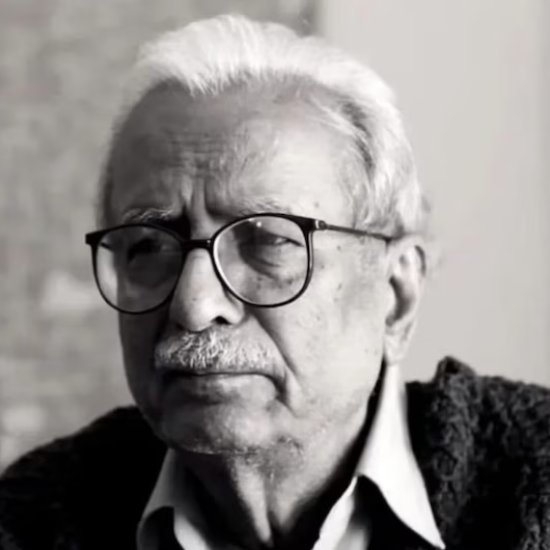
विनोद कुमार शुक्ल
| जन्म तिथि | 01 January 1937 |
| उम्र | 89 साल (2025) |
| राशि | मकर (Capricorn) |
| जन्म स्थान | राजनांदगांव, छत्तीसगढ़ (पूर्व में मध्यप्रदेश) |
| निवास स्थान | रायपुर, छत्तीसगढ़ |
| विश्वविद्यालय | स्नातक (B.Sc.) – विषय: विज्ञान |
| योग्यता | स्नातक (B.Sc.) |
| पेशा | मशहूर कवि, कथाकार और उपन्यासकार |
| राष्ट्रीयता | भारतीय |
| धर्म | हिन्दू |
| मृत्यु | 23 दिसंबर 2025 को रायपुर स्थित अखिल भारतीय आयुर्विज्ञान संस्थान (AIIMS) |
विनोद कुमार शुक्ल – संपूर्ण जीवनी––
हिंदी साहित्य के आधुनिक परिदृश्य में जिन लेखकों ने अपनी सादगी, मौन, सूक्ष्म संवेदना और अद्भुत मानवीय दृष्टि से पाठकों को गहराई तक प्रभावित किया है, उनमें विनोद कुमार शुक्ल का नाम अत्यंत सम्मान और आत्मीयता के साथ लिया जाता है। वे ऐसे लेखक हैं जिनकी रचनाएँ ऊँचे स्वर में नहीं बोलतीं, बल्कि धीमे-धीमे पाठक के भीतर उतरती हैं। उनकी भाषा में कोई बनावट नहीं, कोई कृत्रिम चमक नहीं, बल्कि जीवन की सहजता, आम आदमी की पीड़ा, उसकी आशाएँ, उसका अकेलापन और उसका मौन मौजूद रहता है।
विनोद कुमार शुक्ल का लेखन न तो किसी विचारधारा के नारे लगाता है और न ही किसी आंदोलन का घोष करता है, फिर भी वह पाठक को गहरे स्तर पर झकझोर देता है। उनकी कविताएँ, कहानियाँ और उपन्यास मानवीय अस्तित्व के उन कोनों को उजागर करते हैं, जिन पर अक्सर साहित्यिक विमर्श में कम ध्यान दिया जाता है। वे शब्दों के शोर के बजाय शब्दों के बीच के मौन को महत्व देते हैं।
यह जीवनी विनोद कुमार शुक्ल के जीवन, उनके साहित्यिक विकास, उनकी रचनात्मक दृष्टि, उनके प्रमुख कृतित्व, सम्मान, आलोचनात्मक मूल्यांकन और हिंदी साहित्य में उनके योगदान का विस्तार से परिचय प्रस्तुत करती है।
प्रारंभिक जीवन और पारिवारिक पृष्ठभूमि––
विनोद कुमार शुक्ल का जन्म 1 जनवरी 1937 को भारत के तत्कालीन मध्यप्रदेश (वर्तमान छत्तीसगढ़) के राजनांदगांव जिले में हुआ। राजनांदगांव उस समय एक शांत, सांस्कृतिक और शैक्षणिक वातावरण वाला शहर था, जहाँ लोकसंस्कृति, बोलचाल की सहज भाषा और मानवीय रिश्तों की गर्माहट जीवन का हिस्सा थी। यही वातावरण आगे चलकर विनोद कुमार शुक्ल के लेखन की आत्मा बना।
उनका परिवार एक साधारण मध्यमवर्गीय परिवार था। बचपन से ही उन्होंने अभाव, सीमित साधन और सामान्य जीवन की वास्तविकताओं को नजदीक से देखा। यह अनुभव उनके लेखन में बार-बार उभरकर सामने आता है। उनके पात्र भी किसी भव्य संसार से नहीं आते, बल्कि साधारण घरों, छोटे कस्बों और सीमित संसाधनों में जीने वाले लोग होते हैं।
बचपन में विनोद कुमार शुक्ल स्वभाव से शांत और अंतर्मुखी थे। वे अधिक बोलने की बजाय चीज़ों को देखने, समझने और महसूस करने में विश्वास रखते थे। यही प्रवृत्ति आगे चलकर उनके साहित्य की पहचान बनी।
शिक्षा और बौद्धिक विकास––
विनोद कुमार शुक्ल की प्रारंभिक शिक्षा राजनांदगांव में ही हुई। पढ़ाई में वे औसत छात्र रहे, लेकिन उन्हें पुस्तकों से गहरा लगाव था। विद्यालय के दिनों में ही उन्होंने हिंदी साहित्य के साथ-साथ अन्य विषयों की किताबें पढ़नी शुरू कर दी थीं।
उच्च शिक्षा के लिए उन्होंने विज्ञान विषय चुना और बी.एससी. की पढ़ाई पूरी की। विज्ञान की शिक्षा ने उनके सोचने के तरीके को तार्किक और सूक्ष्म बनाया, जो बाद में उनके लेखन में भी दिखाई देता है। यद्यपि वे पेशे से वैज्ञानिक नहीं बने, लेकिन विज्ञान की अनुशासित सोच ने उनकी रचनात्मक प्रक्रिया को प्रभावित किया।
शिक्षा के दौरान वे साहित्यिक गतिविधियों में अधिक सक्रिय नहीं थे, लेकिन भीतर ही भीतर उनके मन में भाषा और जीवन को लेकर एक अलग तरह की समझ विकसित हो रही थी। वे जीवन की छोटी-छोटी घटनाओं को भी गहरी दृष्टि से देखते थे।
साहित्य की ओर झुकाव––
विनोद कुमार शुक्ल का साहित्य की ओर झुकाव किसी अचानक निर्णय का परिणाम नहीं था। यह धीरे-धीरे विकसित हुआ। प्रारंभ में उन्होंने कविता लिखना शुरू किया। उनकी शुरुआती कविताएँ बहुत निजी, आत्मकथात्मक और भावनात्मक थीं।
उनकी कविता में न तो भारी-भरकम शब्द होते थे और न ही जटिल प्रतीक। वे साधारण भाषा में असाधारण संवेदनाएँ व्यक्त करते थे। यही कारण है कि उनकी कविताएँ पाठक को तुरंत अपनी लगती हैं।
उनके लेखन की सबसे बड़ी विशेषता यह है कि वे चीज़ों को जैसा हैं, वैसा ही स्वीकार करते हैं। वे न तो जीवन को सजाते हैं और न ही उसे अनावश्यक रूप से कुरूप दिखाते हैं।
प्रारंभिक कविताएँ और पहचान––
विनोद कुमार शुक्ल की शुरुआती कविताएँ विभिन्न साहित्यिक पत्रिकाओं में प्रकाशित होने लगीं। धीरे-धीरे साहित्यिक जगत में उनके नाम की चर्चा होने लगी। उनकी कविता की भाषा इतनी सरल थी कि कई बार आलोचक उसे सामान्य समझ लेते थे, लेकिन उसी सरलता में गहरी दार्शनिकता छिपी होती थी।
उनकी कविताओं में प्रकृति, घर, रास्ता, पेड़, हवा, अकेलापन, स्मृति और समय जैसे विषय बार-बार आते हैं। वे बड़े सामाजिक मुद्दों को भी बहुत निजी स्तर पर व्यक्त करते हैं।
कविता की विशेषताएँ––
विनोद कुमार शुक्ल की कविता की कुछ प्रमुख विशेषताएँ इस प्रकार हैं:
- सादगी – उनकी भाषा अत्यंत सरल और सहज है।
- मौन का प्रयोग – वे शब्दों से अधिक मौन के माध्यम से बात करते हैं।
- मानवीय संवेदना – उनकी कविताएँ मनुष्य के भीतर छिपी पीड़ा और कोमलता को उजागर करती हैं।
- प्रकृति से लगाव – प्रकृति उनके लेखन में केवल पृष्ठभूमि नहीं, बल्कि जीवंत पात्र की तरह मौजूद रहती है।
कथा साहित्य की ओर रुख––
कविता के साथ-साथ विनोद कुमार शुक्ल ने कहानी और उपन्यास भी लिखे। उनके कथा साहित्य में भी वही सादगी और संवेदनशीलता दिखाई देती है।
उनकी कहानियों के पात्र अक्सर ऐसे लोग होते हैं जो समाज के हाशिये पर खड़े होते हैं, लेकिन लेखक उन्हें पूरी गरिमा और सम्मान के साथ प्रस्तुत करता है।
उपन्यास लेखन की शुरुआत––
विनोद कुमार शुक्ल का उपन्यास लेखन हिंदी साहित्य में एक अलग तरह की ताजगी लेकर आया। उनके उपन्यासों में कोई तेज़ घटनाक्रम नहीं होता, बल्कि जीवन की धीमी गति को बहुत सुंदर ढंग से चित्रित किया जाता है।
उनका सबसे चर्चित उपन्यास "नौकर की कमीज़" हिंदी उपन्यास परंपरा में एक महत्वपूर्ण कृति मानी जाती है। इस उपन्यास में एक साधारण व्यक्ति के जीवन, उसकी आकांक्षाओं और उसकी विवशताओं को अत्यंत संवेदनशील ढंग से प्रस्तुत किया गया है।
नौकर की कमीज़ – एक विश्लेषण––
"नौकर की कमीज़" केवल एक उपन्यास नहीं, बल्कि मध्यवर्गीय जीवन की आत्मकथा है। इसमें लेखक ने एक ऐसे व्यक्ति की कहानी कही है जो अपने छोटे-छोटे सपनों और सीमित साधनों के बीच जीवन जीता है।
उपन्यास की भाषा इतनी सहज है कि पाठक को लगता है मानो वह स्वयं उस जीवन को जी रहा हो।
शिक्षक के रूप में जीवन––
विनोद कुमार शुक्ल ने अपने जीवन का एक बड़ा हिस्सा शिक्षक के रूप में बिताया। उन्होंने छत्तीसगढ़ के विभिन्न विद्यालयों और महाविद्यालयों में अध्यापन कार्य किया। शिक्षक के रूप में वे अत्यंत सरल और विनम्र थे।
शिक्षण कार्य ने उन्हें समाज के विभिन्न वर्गों को नजदीक से देखने का अवसर दिया, जिसका प्रभाव उनके लेखन पर भी पड़ा।
जीवन दृष्टि और दर्शन––
विनोद कुमार शुक्ल का जीवन दर्शन बहुत ही सरल है। वे मानते हैं कि जीवन को उसकी पूरी सादगी के साथ स्वीकार करना चाहिए। उनके लेखन में किसी प्रकार का दिखावा या बौद्धिक आतंक नहीं मिलता।
उनका मानना है कि साहित्य का उद्देश्य मनुष्य को मनुष्य के करीब लाना है।
आलोचनात्मक दृष्टि (संक्षेप)––
कई आलोचकों ने विनोद कुमार शुक्ल के लेखन को "मौन का साहित्य" कहा है। कुछ आलोचक उनकी भाषा को अत्यधिक सरल मानते हैं, लेकिन अधिकांश साहित्यकार इस बात से सहमत हैं कि उनकी सरलता ही उनकी सबसे बड़ी शक्ति है।
विनोद कुमार शुक्ल का साहित्य हिंदी साहित्य को एक नई संवेदनात्मक दिशा देता है। वे उन लेखकों में से हैं जिन्होंने बिना किसी शोर-शराबे के अपनी एक अलग और स्थायी पहचान बनाई है।
काव्य संग्रहों का विस्तृत विश्लेषण––
1. लगभग जयहिंद--
यह विनोद कुमार शुक्ल का अत्यंत चर्चित काव्य संग्रह है। इस संग्रह की कविताएँ स्वतंत्रता, राष्ट्र, व्यक्ति और उसके निजी जीवन के बीच के संबंधों को अत्यंत निजी ढंग से प्रस्तुत करती हैं। यहाँ देशभक्ति किसी नारे या घोषणा के रूप में नहीं, बल्कि साधारण मनुष्य की संवेदना के रूप में आती है।
इस संग्रह की कविताएँ बताती हैं कि राष्ट्र केवल राजनीतिक इकाई नहीं, बल्कि मनुष्य के दैनिक जीवन, उसकी स्मृतियों और उसके संघर्षों में बसता है।
2. वह आदमी चला गया नया घर बनाने––
यह संग्रह विस्थापन, परिवर्तन और आधुनिक जीवन की अनिश्चितता पर केंद्रित है। कविता में "घर" केवल भौतिक संरचना नहीं, बल्कि सुरक्षा, स्मृति और पहचान का प्रतीक बन जाता है।
विनोद कुमार शुक्ल यहाँ आधुनिक मनुष्य की उस बेचैनी को व्यक्त करते हैं, जो बेहतर जीवन की तलाश में लगातार स्थान बदलता रहता है।
3. दीवार में एक खिड़की रहती थी––
यह संग्रह उनके काव्य संसार का अत्यंत संवेदनशील पक्ष प्रस्तुत करता है। "खिड़की" यहाँ आशा, संवाद और बाहर की दुनिया से जुड़ाव का प्रतीक है।
इन कविताओं में जीवन की छोटी-छोटी चीज़ें – रोशनी, हवा, आवाज़ – अत्यंत गहरे अर्थ ग्रहण कर लेती हैं।
4. आदमी और पेड़––
इस संग्रह में मनुष्य और प्रकृति के संबंधों को बेहद आत्मीय ढंग से चित्रित किया गया है। पेड़ केवल प्रकृति का अंग नहीं, बल्कि मनुष्य के जीवन साथी की तरह उपस्थित हैं।
यह संग्रह पर्यावरणीय चेतना का भी सशक्त उदाहरण है, लेकिन बिना किसी उपदेशात्मक स्वर के।
कहानी संग्रहों का विस्तृत विश्लेषण––
1. महाविद्यालय––
इस कहानी संग्रह में शैक्षणिक संस्थानों के भीतर मौजूद मानवीय रिश्तों, अकेलेपन और औपचारिकता को उभारा गया है। शिक्षक और छात्र – दोनों ही अपने-अपने स्तर पर संघर्षरत दिखाई देते हैं।
कहानियाँ व्यवस्था के भीतर दबे हुए मनुष्य को सामने लाती हैं।
2. आदमी की औरत––
यह संग्रह संबंधों की जटिलता और स्त्री–पुरुष संबंधों के सूक्ष्म मनोविज्ञान को प्रस्तुत करता है। यहाँ स्त्री किसी प्रतीक या आदर्श के रूप में नहीं, बल्कि एक संपूर्ण व्यक्ति के रूप में मौजूद है।
विनोद कुमार शुक्ल स्त्री पात्रों को अत्यंत गरिमा और संवेदनशीलता के साथ रचते हैं।
3. पेड़ पर कमरा––
इस संग्रह में यथार्थ और कल्पना के बीच की सीमा धुंधली हो जाती है। कहानियाँ जीवन की असंभव-सी लगने वाली स्थितियों को भी सहज बना देती हैं।
यह संग्रह शुक्ल जी की कल्पनाशीलता और मानवीय दृष्टि का श्रेष्ठ उदाहरण है।
उपन्यासों का विस्तृत विश्लेषण––
1. नौकर की कमीज़––
यह उपन्यास हिंदी साहित्य का मील का पत्थर माना जाता है। इसमें एक निम्न-मध्यवर्गीय व्यक्ति की आकांक्षाएँ, असुरक्षाएँ और आत्मसम्मान को अत्यंत सूक्ष्मता से चित्रित किया गया है।
कथानक साधारण है, लेकिन उसकी भावनात्मक गहराई असाधारण है। यह उपन्यास बताता है कि छोटी-सी वस्तु भी मनुष्य के लिए बड़े अर्थ रख सकती है।
2. खिलेगा तो देखेंगे––
यह उपन्यास आशा और प्रतीक्षा की कथा है। यहाँ जीवन किसी तात्कालिक परिणाम की बजाय भविष्य की संभावना के रूप में सामने आता है।
शुक्ल जी इस कृति में समय की धीमी गति और मनुष्य की धैर्यशीलता को बेहद मार्मिक ढंग से प्रस्तुत करते हैं।
3. दीवार में एक खिड़की रहती थी (उपन्यास रूप)––
यह उपन्यास व्यक्ति के भीतर और बाहर की दुनिया के बीच संवाद का प्रतीक है। खिड़की यहाँ जीवन के प्रति खुलेपन और उम्मीद का संकेत बन जाती है।
उपन्यास की भाषा कविता की तरह प्रवाहित होती है, जिससे गद्य और पद्य की सीमाएँ धुंधली हो जाती हैं।
विधागत विशेषताएँ (कविता–कहानी–उपन्यास)––
- भाषा की अत्यधिक सादगी
- घटनाओं की बजाय अनुभूतियों पर ज़ोर
- मौन और रिक्त स्थान का रचनात्मक प्रयोग
- साधारण पात्रों को असाधारण गरिमा
पुरस्कार व सम्मान––
विनोद कुमार शुक्ल को हिंदी साहित्य में उनके अद्वितीय, मौनशील और गहन मानवीय लेखन के लिए देश के सर्वोच्च साहित्यिक सम्मानों से नवाज़ा गया है। उनका सम्मान किसी साहित्यिक लॉबी या प्रचार का परिणाम नहीं, बल्कि दशकों के सच्चे, निरंतर और ईमानदार सृजन का स्वाभाविक फल है।
ज्ञानपीठ पुरस्कार (Jnanpith Award)––
पुरस्कार वर्ष: 2023
घोषणा: 2024 में सार्वजनिक रूप से व्यापक चर्चा में
क्षेत्र: हिंदी साहित्य
कारण: कविता, कहानी और उपन्यास – तीनों विधाओं में मौलिक, संवेदनशील और मानवीय साहित्यिक योगदान
ज्ञानपीठ पुरस्कार का महत्व––
ज्ञानपीठ पुरस्कार भारत का सर्वोच्च साहित्यिक सम्मान है, जो किसी लेखक को उसके संपूर्ण साहित्यिक अवदान (Lifetime Contribution) के लिए दिया जाता है। यह पुरस्कार केवल लोकप्रियता के लिए नहीं, बल्कि भाषा, समाज और मनुष्य की आत्मा को समृद्ध करने वाले लेखन के लिए दिया जाता है।
विनोद कुमार शुक्ल को यह सम्मान मिलना इस बात की पुष्टि है कि उनका शांत, सादा और मौनपूर्ण साहित्य भी उतना ही महत्वपूर्ण है जितना ऊँचे स्वर में बोलने वाला साहित्य।
निर्णायक मंडल की दृष्टि––
- ज्ञानपीठ चयन समिति ने विनोद कुमार शुक्ल के साहित्य को:
- "अत्यंत मौलिक"
- "मानवीय करुणा से परिपूर्ण"
- "भाषा के अनावश्यक आडंबर से मुक्त"
- बताते हुए उन्हें हिंदी साहित्य की समकालीन चेतना का अनिवार्य स्वर माना।
50 रोचक जानकारियाँ – विनोद कुमार शुक्ल––
- विनोद कुमार शुक्ल हिंदी साहित्य के सबसे शांत और आत्मकेंद्रित लेखकों में गिने जाते हैं।
- वे बिना किसी साहित्यिक आंदोलन से जुड़े, अपनी अलग पहचान बनाने वाले रचनाकार हैं।
- उनकी भाषा इतनी सरल है कि वह बोलचाल जैसी लगती है, लेकिन अर्थ में गहरी होती है।
- उन्होंने विज्ञान विषय से स्नातक (B.Sc.) किया था।
- विज्ञान की तार्किक दृष्टि उनके साहित्य में सूक्ष्म संतुलन के रूप में दिखती है।
- उनका जन्म छत्तीसगढ़ के राजनांदगांव में हुआ।
- उनकी रचनाओं में छोटे शहर और कस्बों का जीवन बार-बार उभरता है।
- वे साहित्य में ‘मौन’ को भी अभिव्यक्ति का माध्यम मानते हैं।
- उनकी कविताओं में बड़े शब्दों की जगह छोटे अनुभव होते हैं।
- वे दिखावटी बौद्धिकता के घोर विरोधी माने जाते हैं।
- उनका प्रसिद्ध उपन्यास नौकर की कमीज़ मध्यवर्गीय जीवन का प्रतीक बन चुका है।
- नौकर की कमीज़ पर फिल्म भी बनाई गई थी।
- उनकी रचनाओं में ‘घर’ एक बार-बार आने वाला प्रतीक है।
- उन्होंने कविता, कहानी और उपन्यास – तीनों विधाओं में समान अधिकार से लिखा।
- उनकी कविताओं में प्रकृति केवल पृष्ठभूमि नहीं, सहचर होती है।
- वे लंबे समय तक शिक्षक रहे।
- अध्यापन अनुभव ने उनके लेखन को और मानवीय बनाया।
- वे मीडिया और प्रचार से हमेशा दूर रहे।
- उनकी जीवनशैली अत्यंत साधारण रही है।
- वे पुरस्कारों को उपलब्धि नहीं, जिम्मेदारी मानते हैं।
- उन्हें 2023 का ज्ञानपीठ पुरस्कार प्रदान किया गया।
- वे ज्ञानपीठ पुरस्कार पाने वाले प्रमुख हिंदी लेखकों में शामिल हैं।
- उनका लेखन किसी राजनीतिक नारे से संचालित नहीं होता।
- उनकी रचनाएँ पाठक से धीरे-धीरे संवाद करती हैं।
- उनकी कहानियों में घटनाओं से अधिक मनोस्थिति महत्त्वपूर्ण होती है।
- उन्होंने बहुत कम लेकिन अत्यंत प्रभावशाली साहित्य लिखा।
- उनकी कविताएँ बच्चों जैसी सरल, लेकिन दार्शनिक होती हैं।
- वे यथार्थ और कल्पना के बीच की रेखा को धुंधला कर देते हैं।
- उनकी रचनाओं का कई भाषाओं में अनुवाद हुआ है।
- वे छत्तीसगढ़ के साहित्यिक परिवेश का गौरव माने जाते हैं।
- उन्होंने कभी आत्मकथात्मक प्रचार नहीं किया।
- उनका साहित्य शोर के विरुद्ध मौन का साहित्य है।
- उनकी भाषा में आडंबर बिल्कुल नहीं मिलता।
- वे आम आदमी के लेखक कहे जाते हैं।
- उनकी रचनाओं में अकेलापन प्रमुख भाव है।
- वे किसी साहित्यिक गुट का हिस्सा नहीं रहे।
- उनके पात्र अक्सर सामान्य नौकरीपेशा लोग होते हैं।
- वे साहित्य को जीवन से अलग नहीं मानते।
- उनका लेखन धैर्य से पढ़ने की माँग करता है।
- उनकी कविताएँ बार-बार पढ़ने पर नए अर्थ देती हैं।
- वे कम बोलने और अधिक सुनने में विश्वास रखते हैं।
- उनकी रचनाओं में समय की गति बहुत धीमी होती है।
- वे साहित्य में मानवीय गरिमा के पक्षधर हैं।
- उन्होंने कभी लोकप्रियता को लक्ष्य नहीं बनाया।
- उनकी सादगी ही उनकी सबसे बड़ी पहचान है।
- वे नई पीढ़ी के लेखकों के लिए प्रेरणा स्रोत हैं।
- उनकी रचनाओं पर शोध कार्य होते रहे हैं।
- उन्हें ‘मौन का कवि’ भी कहा जाता है।
- वे शब्दों से अधिक शब्दों के बीच के अंतराल पर भरोसा करते हैं।
- विनोद कुमार शुक्ल का साहित्य बताता है कि साधारण जीवन भी असाधारण हो सकता है।
निष्कर्ष––
विनोद कुमार शुक्ल को प्राप्त पुरस्कार यह सिद्ध करते हैं कि साहित्य में शोर नहीं, सच्चाई टिकती है। ज्ञानपीठ पुरस्कार उनके लेखन की वैचारिक गहराई, मानवीय करुणा और भाषाई सादगी की राष्ट्रीय स्वीकृति है।
Vinod Kumar Shukla – Complete Biography––
In the modern landscape of Hindi literature, Vinod Kumar Shukla is remembered with deep respect and affection as a writer whose simplicity, silence, subtle sensitivity, and profound human vision touched readers at the deepest level. He was a writer whose works never spoke loudly, yet slowly and quietly entered the inner world of the reader. His language carried no artificial brilliance or ornamentation; instead, it reflected the natural rhythm of life—its simplicity, the pain of the common person, quiet hopes, loneliness, and silence.
Vinod Kumar Shukla’s writing neither raised ideological slogans nor declared affiliation with any literary movement, yet it deeply unsettled and transformed readers. His poems, stories, and novels illuminated those corners of human existence that often remain neglected in literary discourse. He valued the silence between words more than the noise of words themselves.
This biography presents a detailed account of Vinod Kumar Shukla’s life, literary evolution, creative vision, major works, honors, critical reception, and his lasting contribution to Hindi literature.
Early Life and Family Background––
Vinod Kumar Shukla was born on 1 January 1937 in Rajnandgaon, located in the then Madhya Pradesh (now Chhattisgarh). At that time, Rajnandgaon was a quiet town enriched with cultural and educational traditions, where folk culture, simple spoken language, and warm human relationships were part of everyday life. This environment later became the soul of Shukla’s writing.
He belonged to a modest middle-class family. From an early age, he closely observed scarcity, limited resources, and the realities of ordinary life. These experiences repeatedly surfaced in his literary creations. His characters did not emerge from grand or extraordinary worlds; they belonged to simple homes, small towns, and lives shaped by limited means.
As a child, Vinod Kumar Shukla was calm and introspective. He preferred observing, understanding, and feeling rather than speaking excessively. This inward-looking nature later became the defining characteristic of his literature.
Education and Intellectual Development––
Shukla received his early education in Rajnandgaon. Though an average student academically, he developed a deep attachment to books. During his school years, he began reading Hindi literature along with works from other disciplines.
For higher education, he chose science and completed a Bachelor of Science (B.Sc.) degree. Scientific training shaped his thinking with discipline, balance, and precision—qualities that later reflected subtly in his writing. Although he did not pursue a scientific career, scientific reasoning deeply influenced his creative process.
During his education, he was not actively involved in literary circles, but within him, a unique understanding of language and life was steadily evolving. He observed even the smallest moments of life with extraordinary depth.
Inclination Towards Literature––
Vinod Kumar Shukla’s journey toward literature was gradual rather than sudden. He began by writing poetry. His early poems were deeply personal, introspective, and emotionally resonant.
His poetry avoided complex metaphors or heavy vocabulary. Using simple language, he expressed profound human emotions, making his poems instantly relatable. He neither beautified life artificially nor portrayed it as unnecessarily harsh—he accepted life as it was.
Early Poems and Literary Recognition––
Shukla’s early poems began appearing in literary magazines, gradually earning recognition in literary circles. Many critics initially mistook his simplicity for ordinariness, but beneath that simplicity lay profound philosophical depth.
Themes such as nature, home, roads, trees, air, loneliness, memory, and time frequently appeared in his poetry. Even when addressing social realities, he did so at an intensely personal level.
Characteristics of His Poetry––
Key features of Vinod Kumar Shukla’s poetry include:
-
Simplicity of language
-
Creative use of silence
-
Deep human sensitivity
-
Nature as a living presence, not just a background
Turn Towards Fiction––
Alongside poetry, Shukla wrote short stories and novels, maintaining the same simplicity and emotional depth. His characters often stood on the margins of society, yet he portrayed them with dignity and respect.
Beginning of Novel Writing––
Vinod Kumar Shukla’s novels brought a fresh sensibility to Hindi fiction. His narratives lacked dramatic twists and fast-paced plots; instead, they beautifully portrayed the slow rhythm of everyday life.
His most celebrated novel, Naukar Ki Kameez (The Servant’s Shirt), is considered a landmark in Hindi literature. It sensitively depicts the aspirations, vulnerabilities, and dignity of an ordinary man.
Naukar Ki Kameez – An Analysis––
Naukar Ki Kameez is not merely a novel but a quiet autobiography of middle-class existence. It narrates the life of a man living between small dreams and limited resources. The simplicity of its language makes readers feel as though they are living that life themselves.
Life as a Teacher––
Shukla spent a significant part of his life as a teacher, working in schools and colleges across Chhattisgarh. Known for his humility and simplicity, teaching allowed him to closely observe diverse sections of society—an experience that deeply influenced his writing.
Life Philosophy––
His philosophy was rooted in simplicity. He believed life should be accepted in its natural form. His literature carries no intellectual arrogance or pretension. According to him, literature should bring human beings closer to one another.
Critical Perspective (Brief)––
Critics often described his work as “the literature of silence.” While some viewed his language as overly simple, most agreed that simplicity was his greatest strength. His work provided Hindi literature with a new emotional direction.
Major Poetry Collections––
Almost Jai Hind
A deeply personal reflection on nationhood, freedom, and individual life—free from slogans and political noise.
He Went Away to Build a New House
Explores displacement, uncertainty, and the symbolism of “home” as memory and identity.
There Is a Window in the Wall
A sensitive portrayal of hope, communication, and openness toward life.
Man and Tree
An intimate depiction of the human-nature relationship, reflecting environmental awareness without moral preaching.
Short Story Collections––
Mahavidyalaya (College)
Portrays loneliness and human relationships within academic institutions.
A Man’s Woman
Explores complex emotional and psychological dimensions of relationships.
A Room on a Tree
Blurs the line between reality and imagination with gentle surrealism.
Novels––
-
Naukar Ki Kameez
-
Khilega To Dekhenge (We Shall See When It Blooms)
-
There Is a Window in the Wall (Novel form)
Awards and Honors––
Vinod Kumar Shukla received numerous prestigious literary awards, including India’s highest literary honor.
Jnanpith Award
-
Award Year: 2023
-
Field: Hindi Literature
-
For: Lifetime contribution across poetry, fiction, and novels
The Jnanpith Award affirmed that quiet, sincere literature holds equal value to loud, declarative writing.
Vinod Kumar Shukla – 50 Interesting Facts––
-
Vinod Kumar Shukla was one of the most subtle and quiet voices in modern Hindi literature.
-
He was born on 1 January 1937 in Rajnandgaon, Chhattisgarh (then Madhya Pradesh).
-
He wrote with equal mastery in poetry, short stories, and novels.
-
His literary language was extremely simple, conversational, and deeply philosophical.
-
He is often described as a writer of silence, pauses, and inner emotions.
-
Shukla never believed in loud literary statements or ideological slogans.
-
Ordinary life and everyday experiences were the core subjects of his writing.
-
He portrayed common middle-class individuals with extraordinary dignity.
-
He completed his B.Sc. degree in Science, which shaped his precise thinking.
-
Despite a science background, he chose literature as his life’s calling.
-
His famous novel “Naukar Ki Kameez” (The Servant’s Shirt) is considered a landmark in Hindi fiction.
-
The novel Naukar Ki Kameez was later adapted into a film.
-
His novels focus more on emotions and inner life than on dramatic events.
-
He believed that literature should bring human beings closer to each other.
-
Nature appears in his works not as a backdrop but as a living companion.
-
“Home” is a recurring symbol in his poetry and prose.
-
His writing often blurs the boundary between reality and imagination.
-
He avoided literary groups, movements, and camps throughout his career.
-
Shukla maintained a very simple and modest personal lifestyle.
-
He disliked publicity and remained distant from media attention.
-
Many critics describe his work as “literature of silence”.
-
His poems appear childlike in simplicity but are deeply philosophical.
-
Time in his works flows slowly, reflecting real human experience.
-
He preferred small, ordinary words over heavy literary vocabulary.
-
His stories focus more on mental states than external action.
-
Several of his works have been translated into many Indian and foreign languages.
-
He spent a large part of his life working as a teacher.
-
His teaching experience strongly influenced his humane worldview.
-
He never wrote with the aim of popularity or commercial success.
-
He believed that ordinary life itself is extraordinary.
-
He was awarded the Jnanpith Award (2023) for his lifetime contribution to Hindi literature.
-
The Jnanpith is India’s highest literary honor.
-
He represents the literary pride of Chhattisgarh.
-
His works are widely studied in universities and research institutions.
-
He rarely wrote autobiographically, yet his writing feels deeply personal.
-
Loneliness is a recurring emotional theme in his literature.
-
He created strong female characters with sensitivity and respect.
-
His prose often flows with a poetic rhythm.
-
He believed silence can sometimes express more than words.
-
He never tried to impose meanings on readers; interpretation was left open.
-
His works demand slow and patient reading.
-
Re-reading his poems often reveals new layers of meaning.
-
He preferred listening more than speaking in real life.
-
His literature stands against artificial intellectual showmanship.
-
He portrayed marginalized people with great empathy.
-
He believed literature must uphold human dignity.
-
His creative world is rooted in small towns rather than big cities.
-
He influenced generations of young writers through his quiet originality.
-
He proved that powerful literature does not need loud expression.
Vinod Kumar Shukla’s writing teaches that simplicity and truth outlast noise.
Conclusion––
The honors received by Vinod Kumar Shukla prove that in literature, truth outlasts noise. The Jnanpith Award stands as national recognition of his intellectual depth, human compassion, and linguistic simplicity. His literary legacy remains timeless, intimate, and deeply human.