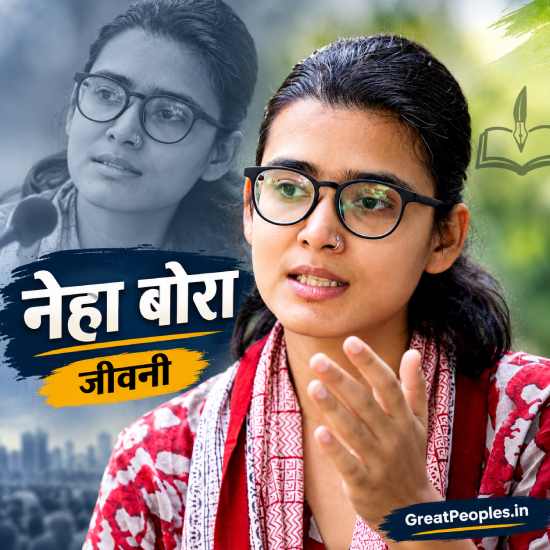
नेहा बोरा
(शेरनी)
| उम्र | 29 वर्ष (2026 तक) |
| जन्म स्थान | खटीमा, उत्तराखंड |
| निवास स्थान | वर्तमान में दिल्ली में |
| पिता | भारतीय सेना में अधिकारी (सेवानिवृत्त) |
| माता | गृहिणी |
| वैवाहिक हि. | अविवाहित |
| शिक्षा | कक्षा 10वीं और 12वीं पश्चिम बंगाल से की। |
| कॉलेज | स्नातक (BA): दिल्ली विश्वविद्यालय के हिंदू कॉलेज से समाजशास्त्र में। |
| विश्वविद्यालय | जवाहरलाल नेहरू विश्वविद्यालय (JNU) के स्कूल ऑफ आर्ट्स एंड एस्थेटिक्स में थिएटर और परफॉर्मेंस स्टडीज में शोधार्थी। |
| पेशा | शोधार्थी, थिएटर कलाकार, वामपंथी छात्र नेता और जन आंदोलनों की सशक्त वक्ता |
| राष्ट्रीयता | भारतीय |
नेहा बोरा जीवनी—
इक्कीसवीं सदी के तीसरे दशक में भारतीय राजनीति और सामाजिक आंदोलनों के इतिहास में एक ऐसा नाम उभरा है, जिसने न केवल छात्र राजनीति बल्कि राष्ट्रीय राजनीति के गलियारों में भी अपनी अमिट छाप छोड़ी है। यह नाम है — नेहा बोरा। एक शोधार्थी, थिएटर कलाकार, वामपंथी छात्र नेता और जन आंदोलनों की सशक्त वक्ता के रूप में नेहा बोरा ने कम समय में ही एक ऐसी पहचान बनाई है, जो पारंपरिक राजनीतिक ढांचों को चुनौती देती है। वे अखिल भारतीय छात्र संघ की राष्ट्रीय अध्यक्ष हैं और भारत के जेन-जेड आंदोलनों का सबसे चर्चित चेहरा बन चुकी हैं। उनका जीवन संघर्ष, बौद्धिकता, कला और राजनीतिक प्रतिबद्धता का एक अनूठा संगम है।
प्रारंभिक जीवन और पारिवारिक पृष्ठभूमि—
नेहा बोरा का जन्म 1997 में उत्तराखंड के खटीमा नामक स्थान पर हुआ था। खटीमा उत्तराखंड के ऊधम सिंह नगर जिले में स्थित एक छोटा-सा कस्बा है, जो नेपाल सीमा के निकट होने के कारण अपनी सामरिक और सांस्कृतिक विशिष्टता के लिए जाना जाता है। नेहा का जन्म एक ऐसे परिवार में हुआ, जिसका भारतीय सेना से गहरा संबंध रहा है। उनके पिता भारतीय सेना में अधिकारी थे। सेना में होने के कारण उनके पिता का स्थानांतरण अक्सर होता रहता था, जिसके कारण नेहा का बचपन विभिन्न शहरों और सैन्य छावनियों में बीता। यह अनुभव उनके व्यक्तित्व में एक विशेष प्रकार की लचीलापन और अनुकूलनशीलता लेकर आया, जो आगे चलकर उनके राजनीतिक जीवन में काम आया।
नेहा की माता एक गृहिणी हैं। उनके परिवार का झुकाव भारतीय जनता पार्टी की ओर था। नेहा ने स्वयं कई साक्षात्कारों में बताया है कि उनका परिवार भारतीय जनता पार्टी का “प्रबल समर्थक” रहा है, और जब उन्होंने वामपंथी विचारधारा की ओर झुकाव दिखाया, तो परिवार के भीतर गहरे वैचारिक मतभेद उत्पन्न हुए। यह मतभेद इतना गहरा था कि उनके पिता ने वर्षों तक उनसे बात नहीं की। एक साक्षात्कार में नेहा ने खुद कहा था,
“मेरे पिता ने वामपंथी राजनीति से जुड़े होने के कारण वर्षों से मुझसे बात नहीं की है”।
यह तथ्य उनके साहस और अपनी वैचारिक प्रतिबद्धता के प्रति दृढ़ता को दर्शाता है कि उन्होंने पारिवारिक अस्वीकृति के बावजूद अपने सिद्धांतों का पालन किया।
नेहा की प्रारंभिक शिक्षा पश्चिम बंगाल में हुई। उन्होंने अपनी दसवीं और बारहवीं कक्षा की पढ़ाई पश्चिम बंगाल के सिलीगुड़ी स्थित दिल्ली पब्लिक स्कूल से पूरी की। पश्चिम बंगाल में बिताए गए इन वर्षों ने उनके राजनीतिक चेतना के विकास में महत्वपूर्ण भूमिका निभाई। इसी दौरान उन्होंने कम्युनिस्ट और क्रांतिकारी विचारक चारु मजूमदार, कवि पाब्लो नेरुदा और लेखिका अरुंधति रॉय जैसे विचारकों और साहित्यकारों की रचनाओं को पढ़ना शुरू किया। इन विचारकों के अध्ययन ने उनके भीतर सामाजिक न्याय, समानता और शोषण के प्रति एक गहरी संवेदनशीलता पैदा की, जो आगे चलकर उनकी राजनीतिक विचारधारा की नींव बनी।
नेहा के बचपन और किशोरावस्था का एक और महत्वपूर्ण पहलू यह रहा कि उन्होंने अपने जीवन के शुरुआती वर्षों में ही विविधता और विषमताओं को निकट से देखा। एक सैन्य परिवार में जन्म लेने के कारण उन्हें देश के विभिन्न हिस्सों में रहने का अवसर मिला, जिससे उनकी दृष्टि व्यापक हुई। उन्होंने स्वयं स्वीकार किया है कि उनका बचपन बहुत सामान्य था, और यही सामान्यता उन्हें आम लोगों की समस्याओं से जोड़ती है।
शिक्षा का सफर—
नेहा बोरा का शैक्षणिक सफर उनके राजनीतिक और वैचारिक विकास का एक महत्वपूर्ण दर्पण है। बारहवीं कक्षा पूरी करने के बाद वे उच्च शिक्षा के लिए दिल्ली आ गईं। उन्होंने दिल्ली विश्वविद्यालय के प्रतिष्ठित हिंदू कॉलेज से समाजशास्त्र में स्नातक की डिग्री प्राप्त की। हिंदू कॉलेज में अध्ययन के दौरान ही उनका राजनीतिक और सामाजिक सरोकार गहरा हुआ। यहीं पर उन्होंने थिएटर की दुनिया से परिचय किया, जो आगे चलकर उनके जीवन की दिशा बदलने वाला साबित हुआ।
स्नातक पूरा करने के बाद नेहा ने डॉ. बी.आर. अंबेडकर विश्वविद्यालय, दिल्ली से परफॉर्मेंस स्टडीज में स्नातकोत्तर (एम.ए.) की डिग्री प्राप्त की। परफॉर्मेंस स्टडीज का यह क्षेत्र उनके लिए केवल एक शैक्षणिक विषय नहीं था, बल्कि यह उनके थिएटर के अनुभव और सामाजिक वास्तविकताओं को समझने की एक विधि बन गया। इसके बाद उन्होंने जवाहरलाल नेहरू विश्वविद्यालय के स्कूल ऑफ आर्ट्स एंड एस्थेटिक्स में थिएटर और परफॉर्मेंस स्टडीज में पीएचडी कार्यक्रम में दाखिला लिया। वर्तमान में वे जेएनयू में डॉक्टरेट शोधार्थी हैं और अपना शोध कार्य कर रही हैं। उनका शोध विषय थिएटर और परफॉर्मेंस स्टडीज से जुड़ा है, जो उनके कलात्मक और बौद्धिक दोनों पक्षों को समेटे हुए है।
उल्लेखनीय है कि नेहा की शैक्षणिक यात्रा केवल डिग्रियों तक सीमित नहीं रही। उन्होंने अपनी पढ़ाई के दौरान ही सामाजिक और राजनीतिक मुद्दों पर सक्रिय रूप से भाग लेना शुरू कर दिया था। जेएनयू जैसे परिसर में रहते हुए उनका परिचय देश की सबसे जीवंत छात्र राजनीति से हुआ, जहाँ विचारों की टकराहट और बहस की परंपरा ने उनके राजनीतिक कौशल को और भी निखारा। उनकी शिक्षा और राजनीतिक सक्रियता का यह संगम ही उन्हें एक साधारण छात्र नेता से एक राष्ट्रीय स्तर के वक्ता और आंदोलनकारी में बदलने में सहायक सिद्ध हुआ।
थिएटर और कला की दुनिया—
नेहा बोरा के जीवन में थिएटर का स्थान सबसे महत्वपूर्ण और आधारभूत है। उन्होंने स्वयं कई बार कहा है कि यदि थिएटर नहीं होता, तो शायद वे राजनीति तक नहीं पहुँच पातीं। स्नातक के दौरान दिल्ली विश्वविद्यालय में उन्होंने थिएटर ग्रुप जॉइन किया था। बाद में वे दिल्ली स्थित स्ट्रीट थिएटर समूह “संगवारी” से जुड़ीं। संगवारी के साथ उन्होंने सड़कों पर और वंचित समुदायों के बीच नाटकों का मंचन किया, जिससे उन्हें समाज के उन तबकों की वास्तविकताओं को निकट से देखने और समझने का अवसर मिला, जिनसे वे पहले अपरिचित थीं।
थिएटर ने नेहा को केवल अभिनय का हुनर नहीं सिखाया, बल्कि उन्हें दूसरों के दृष्टिकोण को समझने की कला भी सिखाई। उन्होंने एक साक्षात्कार में कहा था, “ऐसा कोई किरदार हो सकता है, जिससे यदि आप वास्तविक जीवन में मिलें, तो आप उससे असहमत हों, आप उसे पसंद न करें। लेकिन थिएटर करने का अर्थ है यह समझना कि वह व्यक्ति कहाँ से आता है”। यह विचार उनके राजनीतिक दृष्टिकोण का भी आधार बना — सुनने, समझने और तर्क करने की क्षमता। थिएटर ने उन्हें भाषण कला, मंचीय आत्मविश्वास और जनसमूह से जुड़ने का हुनर दिया, जो आगे चलकर उनकी राजनीतिक पहचान का अभिन्न अंग बन गया।
संगवारी के साथ उनकी भागीदारी ने उन्हें उस समय के प्रगतिशील बौद्धिक और सामाजिक कार्यकर्ताओं के संपर्क में लाया। समूह द्वारा आयोजित चर्चाओं और सामाजिक न्याय पर आधारित विमर्शों ने उनके राजनीतिक विचारों को आकार दिया। थिएटर के माध्यम से ही उन्होंने सामाजिक असमानता, जाति, वर्ग और लैंगिक भेदभाव जैसे मुद्दों को गहराई से समझा। यही कारण है कि जब वे राजनीति में आईं, तो उनकी बातों में एक सहज मानवीय संवेदना और सैद्धांतिक गहराई दोनों दिखाई देती है।
राजनीतिक सक्रियता की शुरुआत—
नेहा बोरा की राजनीतिक यात्रा का आरंभिक बिंदु 2019-2020 के नागरिकता संशोधन कानून (सीएए) विरोधी आंदोलन को माना जाता है। इस आंदोलन के दौरान उन्होंने देखा कि कैसे छात्र कक्षाओं से बाहर निकलकर सड़कों पर उतर आए और अपने अधिकारों के लिए लड़ने लगे। नेहा ने स्वयं कहा है कि इस आंदोलन ने उन्हें वह साहस और प्रेरणा दी, जिसकी उन्हें तलाश थी। उन्होंने देखा कि जो बातें उन्होंने अब तक केवल किताबों में पढ़ी थीं, वे उनके सामने साकार रूप में घटित हो रही थीं। इस अनुभव ने उन्हें सक्रिय राजनीति में शामिल होने के लिए प्रेरित किया।
सीएए विरोध प्रदर्शनों के बाद नेहा ने औपचारिक रूप से अखिल भारतीय छात्र संघ (AISA) की सदस्यता ग्रहण की। एआईएसए भारतीय कम्युनिस्ट पार्टी (मार्क्सवादी-लेनिनवादी) लिबरेशन का छात्र संगठन है, जो शिक्षा, छात्र अधिकारों और सामाजिक न्याय के मुद्दों पर सक्रिय रहता है। एआईएसए के माध्यम से उन्होंने छात्र राजनीति में अपनी सक्रिय भागीदारी शुरू की और धीरे-धीरे संगठन के भीतर महत्वपूर्ण पदों पर पहुँचीं। उनकी मेहनत, वक्तृत्व कौशल और जमीनी स्तर पर लोगों से जुड़ने की क्षमता ने उन्हें संगठन में एक विशेष स्थान दिलाया।
एआईएसए के भीतर उनका उत्थान पारंपरिक राजनीतिक गतिविधियों तक सीमित नहीं था। उन्होंने परिसर में छात्रों के मुद्दों को उठाया, परीक्षा संबंधी समस्याओं, शिक्षा में समान अवसरों और व्यापक सामाजिक-राजनीतिक चिंताओं पर आवाज उठाई। उनकी यह सक्रियता केवल जेएनयू तक सीमित नहीं रही, बल्कि धीरे-धीरे राष्ट्रीय स्तर तक पहुँची। 2024 में वे एआईएसए की राष्ट्रीय अध्यक्ष बनीं। यह पद उनके लिए केवल एक औपचारिक जिम्मेदारी नहीं थी, बल्कि एक ऐसा मंच था, जहाँ से उन्होंने देश भर के छात्रों और युवाओं की आवाज को राष्ट्रीय बहस तक पहुँचाया।
AISA और छात्र राजनीति में उदय—
अखिल भारतीय छात्र संघ (AISA) भारत की सबसे पुरानी और महत्वपूर्ण वामपंथी छात्र संगठनों में से एक है। यह संगठन भारतीय कम्युनिस्ट पार्टी (मार्क्सवादी-लेनिनवादी) लिबरेशन से संबद्ध है और शिक्षा के क्षेत्र में सामाजिक न्याय, समानता और लोकतांत्रिक अधिकारों के लिए काम करता है। जेएनयू जैसे विश्वविद्यालयों में एआईएसए की मजबूत उपस्थिति रही है, भले ही वामपंथी दलों का व्यापक चुनावी आधार सिकुड़ता गया हो।
नेहा बोरा के नेतृत्व में एआईएसए ने छात्र हितों से जुड़े कई महत्वपूर्ण मुद्दों को उठाया। उनके नेतृत्व में संगठन ने न केवल परिसर स्तर पर बल्कि राष्ट्रीय स्तर पर भी सक्रियता दिखाई। जब 2025 में जेएनयू छात्र संघ चुनाव हुए, तो एआईएसए, भारतीय कम्युनिस्ट पार्टी (मार्क्सवादी) के छात्र संगठन स्टूडेंट्स फेडरेशन ऑफ इंडिया (एसएफआई) और डेमोक्रेटिक स्टूडेंट्स फेडरेशन (डीएसएफ) के गठबंधन ने चारों केंद्रीय पैनल पदों पर जीत हासिल की। यह गठबंधन की राजनीतिक शक्ति और नेहा के नेतृत्व कौशल का प्रमाण था। अंबेडकर विश्वविद्यालय दिल्ली में भी एआईएसए ने अच्छा प्रदर्शन किया, जहाँ उसने छह छात्र परिषद सीटें जीतीं। हैदराबाद विश्वविद्यालय में भी वामपंथी-अंबेडकरवादी गठबंधन ने सफलता प्राप्त की, जिसमें एआईएसए ने संयुक्त सचिव पद और दो पार्षद सीटें जीतीं।
नेहा का नेतृत्व केवल चुनावी राजनीति तक सीमित नहीं रहा। उन्होंने एआईएसए को एक आंदोलनकारी संगठन के रूप में स्थापित करने पर जोर दिया, जो सड़कों पर उतरकर छात्रों और युवाओं की समस्याओं के लिए लड़ सके। उनका मानना था कि छात्र संगठनों को केवल परिसर तक सीमित नहीं रहना चाहिए, बल्कि व्यापक सामाजिक और राजनीतिक मुद्दों पर भी अपनी आवाज उठानी चाहिए। यही कारण है कि उनके नेतृत्व में एआईएसए ने शिक्षा नीति, बेरोजगारी, परीक्षा पेपर लीक और चुनावी प्रक्रिया जैसे मुद्दों पर सक्रिय रूप से हस्तक्षेप किया।
प्रमुख आंदोलन और भूमिका—
नीट पेपर लीक और 23 दिन की भूख हड़ताल—
नेहा बोरा को राष्ट्रीय स्तर पर सबसे अधिक पहचान 2026 में नीट (राष्ट्रीय पात्रता सह प्रवेश परीक्षा) पेपर लीक के खिलाफ हुए आंदोलन के दौरान मिली। जुलाई 2026 में शिक्षाविद् और पर्यावरणविद् सोनम वांगचुक ने परीक्षा में अनियमितताओं के विरोध में जंतर-मंतर पर अनिश्चितकालीन भूख हड़ताल शुरू की। नेहा बोरा और एआईएसए के कुछ अन्य सदस्य भी इस भूख हड़ताल में शामिल हो गए। यह आंदोलन शिक्षा मंत्री धर्मेंद्र प्रधान के इस्तीफे की मांग पर केंद्रित था और इसे “कॉकरोच जनता पार्टी” (सीजेपी) आंदोलन का नाम दिया गया।
नेहा ने इस भूख हड़ताल में 23 दिनों तक बिना अन्न ग्रहण किए भाग लिया। इस दौरान उनका वजन 8 किलोग्राम से अधिक कम हो गया, लेकिन उन्होंने हार नहीं मानी। जब सोनम वांगचुक को अस्पताल में भर्ती कराया गया, तब भी उन्होंने अपना अनशन जारी रखा। अंततः शिक्षा मंत्री धर्मेंद्र प्रधान को इस्तीफा देना पड़ा, और यह आंदोलन अपने लक्ष्य में सफल रहा। यह नेहा के राजनीतिक जीवन का एक निर्णायक मोड़ साबित हुआ। इस आंदोलन ने उन्हें एक ऐसे नेता के रूप में स्थापित किया, जो केवल भाषण नहीं देता, बल्कि अपने शरीर का बलिदान देकर भी अपने सिद्धांतों के लिए खड़ा रहता है।
23 दिन की भूख हड़ताल के बाद नेहा ने कहा था,
“लड़ाई जारी है। एक बार ठीक होने के बाद, हम अपने अधिकार के लिए लड़ाई जारी रखने के लिए फिर से सड़कों पर मिलेंगे”।
यह कथन उनकी दृढ़ता और आंदोलन के प्रति उनकी प्रतिबद्धता को दर्शाता है। भूख हड़ताल के दौरान उनके स्वास्थ्य की स्थिति गंभीर हो गई थी, और बाद में उन्होंने बताया कि उनके शरीर को “फिर से खाना सीखना” पड़ रहा था। यह उनके बलिदान की गंभीरता को रेखांकित करता है।
मुख्य चुनाव आयुक्त और मतदाता सूची विरोध—
नीट पेपर लीक आंदोलन के बाद नेहा बोरा ने मुख्य चुनाव आयुक्त ज्ञानेश कुमार के इस्तीफे की मांग को लेकर हुए विरोध प्रदर्शनों का नेतृत्व किया। यह आंदोलन विशेष गहन पुनरीक्षण (एसआईआर) और मतदाता सूची में कथित अनियमितताओं के खिलाफ था। आंदोलनकारियों का आरोप था कि मतदाता सूची से लगभग 13 करोड़ नाम हटा दिए गए हैं, जिससे सत्तारूढ़ भारतीय जनता पार्टी को अनुचित लाभ मिल सकता है। चुनाव आयोग ने किसी भी पक्षपात के आरोपों को खारिज किया, लेकिन युवाओं का आक्रोश कम नहीं हुआ।
इस आंदोलन के दौरान नेहा ने असाधारण साहस और नेतृत्व का परिचय दिया। जब पुलिस ने जंतर-मंतर को “अधिसूचित” करने से इनकार कर दिया और प्रदर्शनकारियों को वहाँ पहुँचने से रोका, तो उन्होंने तुरंत वैकल्पिक स्थान की घोषणा की। उन्होंने सोशल मीडिया पर लिखा,
“आज दिल्ली हाट जंतर-मंतर बन गया है! वहाँ मिलते हैं!”।
यह उनकी रणनीतिक सूझबूझ और संकट के क्षण में भी आंदोलन को जीवित रखने की क्षमता को दर्शाता है। इसके बाद वे प्रदर्शनकारियों के साथ दिल्ली हाट की ओर बढ़ीं, लेकिन पुलिस ने उन्हें हिरासत में ले लिया। हिरासत से छूटने के बाद वे फिर से सड़कों पर उतरीं और आंदोलन जारी रखा।
इस आंदोलन के दौरान उन्हें कई बार हिरासत में लिया गया, लेकिन हर बार वे छूटने के बाद फिर से आंदोलन में शामिल हो गईं। एक बार जब पुलिस उन्हें पुलिस वैन में ले जा रही थी, तो उन्होंने खिड़की से नारे लगाए। दूसरी बार जब उन्हें छोड़ा गया, तो वे तुरंत दूसरी सड़क की ओर भागीं, पीठ पर बैग टांगे, और पुलिस फिर उनका पीछा करने लगी। ये दृश्य सोशल मीडिया पर वायरल हो गए और उन्हें “जेन-जेड की आइकन” के रूप में स्थापित कर दिया। न्यूयॉर्क टाइम्स ने उन्हें
“भारत के युवा प्रदर्शनकारियों का चेहरा” कहा और उनकी वीरता की तुलना एक “एक्शन हीरो”
से की।
जेन-जेड राइजिंग टूर—
नीट और चुनाव आयुक्त विरोध के बाद नेहा बोरा ने अपने आंदोलन को और व्यापक बनाने के लिए “जेन-जेड राइजिंग” नामक एक राष्ट्रव्यापी यात्रा शुरू की। यह यात्रा अगस्त 2026 में इलाहाबाद विश्वविद्यालय से शुरू हुई और देश के विभिन्न हिस्सों में जारी रही। इसका उद्देश्य देश भर के युवाओं और छात्रों को एक सूत्र में बाँधना और उनके सामूहिक साहस को एकजुट करना था। नेहा ने हैदराबाद में एक सभा को संबोधित करते हुए कहा, “हम यह जेन-जेड राइजिंग इसलिए कर रहे हैं, ताकि जो हिम्मत हमें महसूस हो रही है, वह कहीं बिखर न जाए... रांची के आंदोलन में जो हिम्मत उभरी है, चेन्नई में नीट के खिलाफ छात्रों ने जो हिम्मत दिखाई है, नलसर के छात्रों ने जो हिम्मत दिखाई है, उस हिम्मत को हमें एक सूत्र में पिरोना है”।
इस यात्रा के दौरान उन्होंने कोलकाता, विजयवाड़ा, बेंगलुरु, लखनऊ और अन्य शहरों का दौरा किया। कोलकाता में उन्होंने प्रेस क्लब में एक संवाददाता सम्मेलन को संबोधित किया और राजनीतिक जवाबदेही, राष्ट्रीय परीक्षा एजेंसी (एनटीए) को खत्म करने और शिक्षा नीति में सुधार जैसे मुद्दों पर अपनी बात रखी। विजयवाड़ा में उन्होंने युवाओं से सामाजिक विभाजनों के खिलाफ लड़ने का आह्वान किया। लखनऊ में उन्होंने उत्तर प्रदेश सरकार की शिक्षा और रोजगार नीतियों की कड़ी आलोचना की। बेंगलुरु में उन्होंने छात्र सक्रियता के उदय पर अपने विचार साझा किए।
यह यात्रा केवल एक राजनीतिक दौरा नहीं थी, बल्कि यह एक ऐसा मंच था, जहाँ से उन्होंने देश भर के युवाओं को यह संदेश दिया कि उनकी आवाज़ें अलग-अलग नहीं हैं, बल्कि एक ही संघर्ष का हिस्सा हैं। उन्होंने युवाओं को यह विश्वास दिलाया कि सामूहिक प्रयास से व्यवस्था में बदलाव लाया जा सकता है।
अन्य आंदोलन और सक्रियता—
नीट और चुनाव आयुक्त विरोध के अलावा नेहा बोरा ने कई अन्य महत्वपूर्ण आंदोलनों में भी सक्रिय भागीदारी की। उन्होंने झारखंड में जेपीएससी और जेएसएससी परीक्षाओं में कथित अनियमितताओं के खिलाफ हुए छात्र आंदोलन में भाग लिया। रांची में इस आंदोलन के दौरान उन पर स्याही से हमला किया गया, लेकिन उन्होंने हार नहीं मानी और कहा कि इस घटना से उन्हें डराया नहीं जा सकता। यह घटना भारत में असहमति के माहौल पर एक गंभीर बहस छेड़ने वाली साबित हुई।
इसके अलावा उन्होंने सीएए और एनआरसी के खिलाफ हुए विरोध प्रदर्शनों में भी भाग लिया। उन्होंने बेरोजगारी, शिक्षा नीति और सामाजिक न्याय से जुड़े विभिन्न मुद्दों पर लगातार अपनी आवाज उठाई। उनकी सक्रियता केवल दिल्ली तक सीमित नहीं रही, बल्कि उन्होंने देश के विभिन्न हिस्सों में हो रहे छात्र आंदोलनों के साथ एकजुटता दिखाई। उन्होंने कई बार पुलिस हिरासत का सामना किया, लेकिन हर बार वे और अधिक दृढ़ता के साथ लौटीं। उनका यह साहस और समर्पण उन्हें अन्य छात्र नेताओं से अलग बनाता है।
वैचारिक झुकाव और राजनीतिक दृष्टिकोण—
नेहा बोरा की राजनीतिक विचारधारा वामपंथी और प्रगतिशील परंपरा से प्रेरित है। वे अखिल भारतीय छात्र संघ (एआईएसए) की राष्ट्रीय अध्यक्ष हैं, जो भारतीय कम्युनिस्ट पार्टी (मार्क्सवादी-लेनिनवादी) लिबरेशन से संबद्ध है। उनका राजनीतिक दर्शन सामाजिक न्याय, समानता, धर्मनिरपेक्षता और लोकतांत्रिक अधिकारों पर आधारित है। वे शिक्षा के क्षेत्र में निजीकरण और व्यावसायीकरण की तीव्र आलोचक हैं और सार्वजनिक शिक्षा प्रणाली को मजबूत करने की पैरवी करती हैं।
नेहा का मानना है कि भारत में लोकतंत्र की सबसे बड़ी चुनौती असहमति के लिए जगह का सिकुड़ना है। उन्होंने कहा है कि सत्तारूढ़ भारतीय जनता पार्टी ने पिछले एक दशक में “लोकतंत्र की सीमाओं, जवाबदेही की सीमाओं और असहमति की सीमाओं को फिर से परिभाषित किया है”। वे मानती हैं कि सड़कों पर उतरना और अपनी आवाज उठाना जवाबदेही की दिशा में पहला कदम है। उनका यह विश्वास कि “लोग सड़कों पर आने से नहीं डर रहे हैं” और “सरकार वास्तव में रक्षात्मक स्थिति में है”, उनके राजनीतिक विश्लेषण की गहराई को दर्शाता है।
उनका राजनीतिक दृष्टिकोण केवल आलोचना तक सीमित नहीं है, बल्कि वे रचनात्मक विकल्प भी प्रस्तुत करती हैं। वे राष्ट्रीय परीक्षा एजेंसी (एनटीए) को खत्म करने, राष्ट्रीय शिक्षा नीति (एनईपी) को पूरी तरह से वापस लेने और सार्वजनिक शिक्षा प्रणाली में निवेश बढ़ाने की मांग करती हैं। उनका मानना है कि शिक्षा में हो रहे घोटाले और पेपर लीक केवल कानून-व्यवस्था का मुद्दा नहीं हैं, बल्कि एक “प्रणालीगत समस्या” हैं। वे शिक्षा को लाभ का साधन बनाने वाली नीतियों की कड़ी आलोचना करती हैं और इसे एक सार्वजनिक वस्तु के रूप में स्थापित करने की वकालत करती हैं।
नेहा के राजनीतिक विचारों में एक महत्वपूर्ण तत्व “आशा” का है। वे मानती हैं कि आक्रोश आंदोलन को बनाए नहीं रख सकता, बल्कि आशा ही लोगों को एकजुट कर सकती है। उन्होंने कहा था, “डर संक्रामक है, बिल्कुल। लेकिन आशा भी संक्रामक है। लोगों में अब साहस है क्योंकि उन्हें लगता है कि वे साहसी हो सकते हैं”। यह कथन उनके नेतृत्व की एक सकारात्मक और प्रेरणादायक दिशा को दर्शाता है। वे केवल सरकार के खिलाफ नारे नहीं लगातीं, बल्कि युवाओं को यह विश्वास भी दिलाती हैं कि बदलाव संभव है।
व्यक्तिगत जीवन और व्यक्तित्व—
नेहा बोरा का व्यक्तित्व उनके सार्वजनिक जीवन से कहीं अधिक जटिल और बहुआयामी है। वे एक संवेदनशील कलाकार, एक गंभीर शोधार्थी और एक दृढ़ राजनीतिक कार्यकर्ता के गुणों को अपने भीतर समेटे हुए हैं। उनके सहपाठी और सहयोगी उन्हें एक ऐसे व्यक्ति के रूप में वर्णित करते हैं, जो सुनने में धैर्यवान है, लेकिन अपने सिद्धांतों पर अडिग है। संगवारी थिएटर ग्रुप के एक वरिष्ठ सदस्य ने उन्हें “सीखने के जोश से भरा एक युवा” बताया था।
नेहा सार्वजनिक जीवन में अंग्रेजी के “they/them” सर्वनाम का इस्तेमाल करती हैं। यह उनकी लैंगिक पहचान और समावेशिता के प्रति उनकी प्रतिबद्धता को दर्शाता है। वे एक ऐसे समाज की कल्पना करती हैं, जहाँ हर व्यक्ति को उसकी पहचान के लिए सम्मान मिले। उनका यह रुख उन्हें समकालीन भारतीय राजनीति में एक अलग और आधुनिक पहचान देता है।
उनका व्यक्तिगत जीवन सादगी और संघर्ष से भरा रहा है। पारिवारिक अस्वीकृति के बावजूद उन्होंने अपना रास्ता चुना और उस पर डटी रहीं। उन्होंने कभी अपने परिवार के राजनीतिक विचारों की सार्वजनिक रूप से आलोचना नहीं की, बल्कि केवल यह स्वीकार किया कि उनके और उनके परिवार के विचारों में गहरा अंतर है। यह उनकी भावनात्मक परिपक्वता और संयम को दर्शाता है।
नेहा को सोशल मीडिया पर भी काफी सक्रिय माना जाता है, जहाँ वे अपने विचारों और आंदोलनों की जानकारी साझा करती हैं। लेकिन वे “व्यक्तिगत पूजा” (fetishization) की तीव्र आलोचक हैं। उन्होंने कई बार कहा है कि वे एक बड़े आंदोलन का केवल एक हिस्सा हैं, और किसी एक व्यक्ति को नायक बनाना आंदोलन के लिए हानिकारक हो सकता है। यह विनम्रता उन्हें एक परिपक्व राजनीतिक नेता के रूप में स्थापित करती है।
मीडिया और सार्वजनिक छवि—
नेहा बोरा की सार्वजनिक छवि एक साहसी, मुखर और दृढ़निश्चयी युवा नेता की है। मीडिया ने उन्हें “जेन-जेड का फायरब्रांड आइकन”, “भारत के युवा प्रदर्शनकारियों का चेहरा” और “कॉकरोच युवा आंदोलन का नया चेहरा” जैसे विभिन्न विशेषणों से संबोधित किया है। उनकी छवि एक ऐसी युवा महिला की है, जो पुलिस बैरिकेड्स फांदती है, हिरासत में ली जाती है, लेकिन हर बार और अधिक साहस के साथ लौटती है। यह छवि उन्हें एक “एक्शन हीरो” जैसी लोकप्रियता दिलाती है, विशेषकर युवाओं के बीच।
हालाँकि, उनकी सार्वजनिक छवि विवादों से भी अछूती नहीं रही। उनके बांग्लादेश में हुए जेन-जेड आंदोलन की तुलना भारत के आंदोलन से करने पर भारतीय जनता पार्टी ने उन पर “शासन परिवर्तन” का आरोप लगाया। उन्होंने कहा था कि बांग्लादेश के जेन-जेड आंदोलन ने उन्हें और अन्य लोगों को “रास्ता दिखाया” है। इस बयान को लेकर राजनीतिक बवाल खड़ा हो गया, हालाँकि नेहा ने बाद में स्पष्टीकरण दिया कि उनका आशय केवल युवाओं की एकजुटता से था, न कि किसी असंवैधानिक बदलाव से। यह विवाद उनकी बढ़ती राजनीतिक प्रासंगिकता और सत्ता प्रतिष्ठान के लिए उनसे उत्पन्न होने वाली चुनौती को दर्शाता है।
मीडिया ने उनके नेतृत्व को कांग्रेस और वामपंथ के बीच के संबंधों के संदर्भ में भी देखा है। जब अक्टूबर 2026 में इंडिया ब्लॉक के विरोध मार्च में राहुल गांधी और प्रियंका गांधी वाड्रा के साथ नेहा बोरा नजर आईं, तो यह चर्चा शुरू हो गई कि क्या वे कांग्रेस की ओर बढ़ रही हैं। कुछ राजनीतिक विश्लेषकों ने उन्हें “कांग्रेस की नई दुलारी” कहा, तो कुछ ने इसे वामपंथ के लिए एक अवसर बताया। हालाँकि, नेहा ने अभी तक किसी भी पार्टी में शामिल होने की घोषणा नहीं की है और वे स्वयं को एआईएसए और वामपंथी राजनीति से जुड़ी हुई बताती हैं।
विवाद और चुनौतियाँ—
नेहा बोरा के राजनीतिक जीवन में विवादों और चुनौतियों की कोई कमी नहीं रही। उन्हें कई बार पुलिस हिरासत का सामना करना पड़ा, कभी स्याही से हमला हुआ, तो कभी मानहानि के आरोपों का सामना करना पड़ा। 4 अक्टूबर 2026 को दिल्ली पुलिस ने उन्हें एक बिना नंबर की निजी गाड़ी में हिरासत में लिया, जिसमें कोई महिला अधिकारी मौजूद नहीं थी। पुलिस ने इन आरोपों को “निराधार” बताया, लेकिन यह घटना पुलिस की कार्यप्रणाली पर सवाल उठाने वाली साबित हुई।
उनके खिलाफ राजनीतिक दलों द्वारा लगाए गए आरोप भी उनकी चुनौतियों का हिस्सा हैं। भारतीय जनता पार्टी ने उन पर “बांग्लादेश जैसी शासन परिवर्तन” की साजिश का आरोप लगाया। इन आरोपों का उन्होंने मुकाबला किया और अपने बयानों को स्पष्ट किया। उनकी राजनीतिक यात्रा में सबसे बड़ी चुनौती शायद उनके अपने परिवार से मिली अस्वीकृति रही है। एक सैन्य परिवार में जन्म लेकर वामपंथी विचारधारा अपनाना और फिर उस पर डटे रहना, यह अपने आप में एक बहुत बड़ा संघर्ष है। उन्होंने इस संघर्ष का सामना गरिमा और संयम से किया।
प्रभाव और विरासत—
नेहा बोरा का भारतीय राजनीति और समाज पर पड़ने वाला प्रभाव बहुआयामी है। उन्होंने साबित किया है कि युवा केवल भविष्य नहीं हैं, बल्कि वे वर्तमान में भी बदलाव के वाहक हो सकते हैं। उनके नेतृत्व में हुए आंदोलनों ने शिक्षा मंत्री के इस्तीफे से लेकर चुनावी प्रक्रिया पर सवाल उठाने तक, ठोस परिणाम दिए हैं। उन्होंने यह भी दिखाया है कि शांतिपूर्ण और लोकतांत्रिक तरीके से सरकार को जवाबदेह ठहराया जा सकता है।
उनकी सबसे बड़ी विरासत शायद यह है कि उन्होंने जेन-जेड पीढ़ी को राजनीति में सक्रिय होने के लिए प्रेरित किया है। उनके “जेन-जेड राइजिंग” अभियान ने देश भर के युवाओं को एक मंच प्रदान किया, जहाँ वे अपनी समस्याओं को साझा कर सकें और सामूहिक कार्रवाई के लिए प्रेरित हो सकें। उन्होंने यह संदेश दिया कि छात्र राजनीति केवल परिसर तक सीमित नहीं है, बल्कि यह व्यापक सामाजिक परिवर्तन का एक शक्तिशाली साधन हो सकती है।
नेहा बोरा की कहानी एक ऐसी लड़की की कहानी है, जिसने थिएटर के मंच से निकलकर राजनीति के मैदान में कदम रखा और वहाँ अपनी एक अलग पहचान बनाई। उन्होंने यह साबित किया कि साहस, ईमानदारी और जनता से जुड़ाव ही सच्चे नेतृत्व की कसौटी है। वे एक ऐसी पीढ़ी की प्रतीक हैं, जो पुरानी राजनीति से ऊब चुकी है और नए, समावेशी और न्यायपूर्ण भारत की कल्पना करती है।
50 रोचक जानकारियाँ (50 Interesting Facts)—
- नेहा बोरा का जन्म 1997 में उत्तराखंड के खटीमा में हुआ था।
- उनके पिता भारतीय सेना में अधिकारी थे, जिसके कारण उनका बचपन कई शहरों और सैन्य छावनियों में बीता।
- उन्होंने 10वीं और 12वीं की पढ़ाई पश्चिम बंगाल के सिलीगुड़ी स्थित दिल्ली पब्लिक स्कूल से पूरी की।
- स्कूली वर्षों में उन्होंने चारु मजूमदार, पाब्लो नेरुदा और अरुंधति रॉय जैसे विचारकों और लेखकों को पढ़ना शुरू किया।
- उन्होंने दिल्ली विश्वविद्यालय के हिंदू कॉलेज से समाजशास्त्र में स्नातक किया।
- स्नातकोत्तर में उन्होंने डॉ. बी.आर. अंबेडकर विश्वविद्यालय, दिल्ली से परफॉर्मेंस स्टडीज में एम.ए. किया।
- वर्तमान में वे जवाहरलाल नेहरू विश्वविद्यालय (JNU) के स्कूल ऑफ आर्ट्स एंड एस्थेटिक्स में थिएटर और परफॉर्मेंस स्टडीज में पीएचडी शोधार्थी हैं।
- वे पिछले लगभग एक दशक से अखिल भारतीय छात्र संघ (AISA) से जुड़ी हैं और पिछले दो वर्षों से संगठन की राष्ट्रीय अध्यक्ष हैं।
- AISA भारतीय कम्युनिस्ट पार्टी (मार्क्सवादी-लेनिनवादी) लिबरेशन का छात्र संगठन है।
- वे सार्वजनिक जीवन में “they/them” सर्वनाम का इस्तेमाल करती हैं और एक नॉन-बाइनरी व्यक्ति के रूप में पहचानी जाती हैं।
- उनका परिवार भारतीय जनता पार्टी का “प्रबल समर्थक” रहा है, और इस वैचारिक अंतर के कारण परिवार में गहरे मतभेद उभरे।
- एक साक्षात्कार में उन्होंने बताया था कि वामपंथी राजनीति से जुड़ने के कारण उनके पिता ने वर्षों तक उनसे बात नहीं की।
- उनकी माँ का नाम लीला बोरा है, जो भूख हड़ताल के 22वें दिन जंतर-मंतर पर उनसे मिलने आई थीं।
- उन्होंने दिल्ली के स्ट्रीट थिएटर समूह “संगवारी” के साथ काम किया है।
- संगवारी के साथ उन्होंने सड़कों और वंचित समुदायों में नाटकों का मंचन किया, जिससे उन्हें जमीनी सामाजिक मुद्दों को निकट से समझने का मौका मिला।
- उन्होंने स्वयं कहा है कि थिएटर ने उन्हें “सार्वजनिक रूप से बोलना, आवाज़ का उतार-चढ़ाव, अभिव्यक्ति” और “सहानुभूति का मानवीय अभ्यास” सिखाया।
- उनका राजनीतिक सफर 2019–2020 के नागरिकता संशोधन कानून (CAA) विरोधी आंदोलन के दौरान शुरू हुआ।
- उन्हें राष्ट्रीय पहचान 2026 में नीट पेपर लीक के खिलाफ हुए आंदोलन से मिली।
- जुलाई 2026 में उन्होंने शिक्षाविद् सोनम वांगचुक के साथ जंतर-मंतर पर 23 दिनों तक भूख हड़ताल की।
- इस भूख हड़ताल के दौरान उनका वजन 8 किलोग्राम से अधिक कम हो गया था।
- भूख हड़ताल के बाद उन्होंने कहा था, “लड़ाई जारी है। ठीक होने के बाद हम फिर सड़कों पर मिलेंगे”।
- यह आंदोलन तत्कालीन शिक्षा मंत्री धर्मेंद्र प्रधान के इस्तीफे के साथ समाप्त हुआ।
- उन्होंने झारखंड में JPSC और JSSC परीक्षाओं में कथित अनियमितताओं के खिलाफ रांची में हुए छात्र आंदोलन में भाग लिया।
- रांची के एक विरोध मार्च में एक अज्ञात व्यक्ति ने उन पर स्याही फेंकी, लेकिन उन्होंने कहा कि यह घटना उन्हें डरा नहीं सकती।
- स्याही हमले के बाद उन्होंने एक तस्वीर साझा की जिसमें उनके चेहरे पर स्याही के धब्बे थे, और कहा कि वे इस स्याही को “गर्व से” पहनती हैं।
- अक्टूबर 2026 में मुख्य चुनाव आयुक्त ज्ञानेश कुमार के इस्तीफे और विशेष गहन पुनरीक्षण (SIR) के खिलाफ विरोध प्रदर्शनों का नेतृत्व किया।
- आंदोलनकारियों का आरोप था कि SIR प्रक्रिया में लगभग 13 करोड़ नाम मतदाता सूची से हटा दिए गए।
- जब दिल्ली पुलिस ने जंतर-मंतर को “डिनोटिफाई” कर दिया, तो उन्होंने तुरंत दिल्ली हाट को वैकल्पिक विरोध स्थल घोषित किया और कहा, “आज दिल्ली हाट जंतर-मंतर बन गया है!”।
- उन्हें इस आंदोलन के दौरान कई बार पुलिस हिरासत में लिया गया, लेकिन हर बार छूटने के बाद वे फिर आंदोलन में लौट आईं।
- एक बार पुलिस उन्हें पुलिस वैन में ले जा रही थी, तो उन्होंने खिड़की से नारे लगाए; छूटने के बाद वे दूसरी सड़क की ओर भागीं और पुलिस फिर उनका पीछा करने लगी।
- एक अन्य घटना में दिल्ली पुलिस ने उनके जैसी दिखने वाली एक अन्य महिला प्रदर्शनकारी को गलती से नेहा बोरा समझकर हिरासत में ले लिया, जबकि असली नेहा पहले ही बैरिकेड्स पार कर चुकी थीं।
- न्यूयॉर्क टाइम्स ने उन्हें “भारत के युवा प्रदर्शनकारियों का चेहरा” बताया और उनकी तुलना एक “एक्शन हीरो” से की।
- उन्होंने “जेन-जेड राइजिंग” नाम से एक राष्ट्रव्यापी यात्रा शुरू की, जो अगस्त 2026 में इलाहाबाद विश्वविद्यालय से शुरू हुई।
- इस यात्रा के दौरान उन्होंने कोलकाता, विजयवाड़ा, बेंगलुरु, लखनऊ और अन्य शहरों का दौरा किया।
- वे “व्यक्तिगत पूजा” (fetishization) की तीव्र आलोचक हैं और बार-बार कहती हैं कि वे एक बड़े आंदोलन का केवल एक हिस्सा हैं।
- उनका मानना है कि “डर संक्रामक है, लेकिन आशा भी संक्रामक है”।
- उन्होंने कहा है कि “सड़कों ने हमेशा इस देश की राजनीति की दिशा तय की है”।
- उनका राजनीतिक विश्लेषण है कि सत्तारूढ़ भाजपा ने “लोकतंत्र की सीमाओं, जवाबदेही की सीमाओं और असहमति की सीमाओं को फिर से परिभाषित किया है”।
- उन्होंने राहुल गांधी और प्रियंका गांधी वाड्रा के साथ अक्टूबर 2026 के विपक्षी विरोध मार्च में भाग लिया।
- उनके नेतृत्व में AISA ने 2025 के जेएनयू छात्र संघ चुनावों में SFI और DSF के साथ गठबंधन करके चारों केंद्रीय पैनल पदों पर जीत हासिल की।
- उन्होंने उत्तर प्रदेश में मुख्यमंत्री योगी आदित्यनाथ के खिलाफ कथित “आपत्तिजनक टिप्पणियों” को लेकर भाजपा द्वारा दर्ज कराई गई कई पुलिस शिकायतों का सामना किया।
- उन्हें मौत की धमकियाँ भी मिलीं, जिसके बाद AISA ने उत्तर प्रदेश में प्राथमिकी दर्ज करने की मांग की।
- उनका सोशल मीडिया हैंडल (@neha_aisa) सक्रिय है, और वे X तथा Instagram पर अपने विचार और आंदोलनों की जानकारी साझा करती हैं।
- उन्होंने 1942 के भारत छोड़ो आंदोलन का जिक्र करते हुए जेन-जेड से जहाँ भी रोका जाए, वहीं प्रदर्शन जारी रखने की अपील की।
- उनका जीवन एक सैन्य परिवार की रूढ़िवादी पृष्ठभूमि से निकलकर वामपंथी छात्र राजनीति तक के सफर का प्रतीक है।
- उन्होंने कभी अपने परिवार के राजनीतिक विचारों की सार्वजनिक रूप से आलोचना नहीं की, बल्कि केवल वैचारिक मतभेद स्वीकार किया।
- उनका मानना है कि पेपर लीक “प्रणालीगत समस्या” है, केवल कानून-व्यवस्था का मुद्दा नहीं।
- वे राष्ट्रीय परीक्षा एजेंसी (NTA) को खत्म करने और सार्वजनिक शिक्षा प्रणाली में निवेश बढ़ाने की मांग करती हैं।
- उन्हें “जेन-जेड का फायरब्रांड आइकन” और “कॉकरोच युवा आंदोलन का चेहरा” जैसे विशेषणों से संबोधित किया गया है।
- 29 वर्ष की आयु में वे भारतीय राजनीति में युवाओं की असहमति और सड़क आंदोलनों का सबसे चर्चित चेहरा बन चुकी हैं।
50 अक्सर पूछे जाने वाले प्रश्न (50 FAQ)—
प्रश्न 1: नेहा बोरा कौन हैं?
उत्तर: नेहा बोरा अखिल भारतीय छात्र संघ (AISA) की राष्ट्रीय अध्यक्ष और जवाहरलाल नेहरू विश्वविद्यालय (JNU) में थिएटर और परफॉर्मेंस स्टडीज की पीएचडी शोधार्थी हैं। वे 2026 के नीट पेपर लीक और SIR विरोधी आंदोलनों की प्रमुख चेहरा रही हैं।
प्रश्न 2: नेहा बोरा की उम्र कितनी है?
उत्तर: वे 29 वर्ष की हैं।
प्रश्न 3: नेहा बोरा का जन्म कब और कहाँ हुआ?
उत्तर: उनका जन्म 1997 में उत्तराखंड के खटीमा में हुआ था।
प्रश्न 4: नेहा बोरा के पिता कौन हैं और क्या करते थे?
उत्तर: उनके पिता भारतीय सेना में अधिकारी थे और अब सेवानिवृत्त हो चुके हैं।
प्रश्न 5: नेहा बोरा की माँ का नाम क्या है?
उत्तर: उनकी माँ का नाम लीला बोरा है।
प्रश्न 6: नेहा बोरा की शिक्षा कहाँ हुई?
उत्तर: उन्होंने हिंदू कॉलेज, दिल्ली विश्वविद्यालय से समाजशास्त्र में स्नातक, अंबेडकर विश्वविद्यालय दिल्ली से परफॉर्मेंस स्टडीज में एम.ए. और JNU से थिएटर और परफॉर्मेंस स्टडीज में पीएचडी कार्यक्रम में दाखिला लिया।
प्रश्न 7: नेहा बोरा किस राजनीतिक संगठन से जुड़ी हैं?
उत्तर: वे अखिल भारतीय छात्र संघ (AISA) से जुड़ी हैं, जो CPI(ML) लिबरेशन का छात्र संगठन है।
प्रश्न 8: नेहा बोरा AISA की राष्ट्रीय अध्यक्ष कब बनीं?
उत्तर: वे पिछले लगभग दो वर्षों से AISA की राष्ट्रीय अध्यक्ष हैं।
प्रश्न 9: नेहा बोरा के राजनीतिक विचार क्या हैं?
उत्तर: उनके विचार वामपंथी, प्रगतिशील और सामाजिक न्याय, समानता तथा लोकतांत्रिक अधिकारों पर आधारित हैं। वे सार्वजनिक शिक्षा और असहमति की स्वतंत्रता की पैरवी करती हैं।
प्रश्न 10: नेहा बोरा के परिवार का राजनीतिक झुकाव क्या है?
उत्तर: उनका परिवार भारतीय जनता पार्टी का प्रबल समर्थक रहा है, जिसके कारण उनके साथ वैचारिक मतभेद उभरे।
प्रश्न 11: क्या नेहा बोरा के पिता उनसे बात नहीं करते?
उत्तर: एक साक्षात्कार में उन्होंने बताया था कि वामपंथी राजनीति से जुड़ने के कारण उनके पिता ने वर्षों तक उनसे बात नहीं की।
प्रश्न 12: नेहा बोरा किन सर्वनामों का इस्तेमाल करती हैं?
उत्तर: वे “they/them” सर्वनाम का इस्तेमाल करती हैं।
प्रश्न 13: क्या नेहा बोरा नॉन-बाइनरी हैं?
उत्तर: रिपोर्टों में उन्हें नॉन-बाइनरी व्यक्ति बताया गया है जो they/them सर्वनाम का इस्तेमाल करती हैं।
प्रश्न 14: नेहा बोरा का थिएटर से क्या संबंध है?
उत्तर: वे एक प्रशिक्षित थिएटर कलाकार हैं और दिल्ली के स्ट्रीट थिएटर समूह “संगवारी” से जुड़ी रही हैं।
प्रश्न 15: संगवारी क्या है?
उत्तर: संगवारी दिल्ली स्थित एक स्ट्रीट थिएटर समूह है, जिसके साथ नेहा ने सामाजिक और राजनीतिक मुद्दों पर नाटकों में भाग लिया।
प्रश्न 16: थिएटर ने नेहा बोरा के राजनीतिक जीवन को कैसे प्रभावित किया?
उत्तर: थिएटर ने उन्हें सार्वजनिक भाषण कौशल, सहानुभूति और विभिन्न दृष्टिकोणों को समझने की क्षमता दी, जो उनके राजनीतिक व्यक्तित्व का आधार बना।
प्रश्न 17: नेहा बोरा ने 23 दिन की भूख हड़ताल क्यों की?
उत्तर: उन्होंने जुलाई 2026 में सोनम वांगचुक के साथ नीट पेपर लीक और परीक्षा अनियमितताओं के विरोध में जंतर-मंतर पर 23 दिनों की भूख हड़ताल की, जिसमें शिक्षा मंत्री के इस्तीफे की मांग की गई।
प्रश्न 18: भूख हड़ताल के दौरान उनका स्वास्थ्य कैसा रहा?
उत्तर: इस दौरान उनका वजन 8 किलोग्राम से अधिक कम हो गया और सोनम वांगचुक को अस्पताल में भर्ती कराया गया, लेकिन नेहा ने अनशन जारी रखा।
प्रश्न 19: नीट भूख हड़ताल का क्या परिणाम हुआ?
उत्तर: इस आंदोलन के परिणामस्वरूप तत्कालीन शिक्षा मंत्री धर्मेंद्र प्रधान को इस्तीफा देना पड़ा।
प्रश्न 20: नेहा बोरा ने रांची में किस आंदोलन का नेतृत्व किया?
उत्तर: उन्होंने झारखंड में JPSC और JSSC परीक्षाओं में कथित अनियमितताओं के खिलाफ छात्र आंदोलन में भाग लिया और इस दौरान उन पर स्याही फेंकी गई।
प्रश्न 21: स्याही हमले के बाद नेहा बोरा की क्या प्रतिक्रिया थी?
उत्तर: उन्होंने कहा कि यह घटना उन्हें डरा नहीं सकती और उन्होंने स्याही लगी अपनी तस्वीर साझा करते हुए कहा कि वे इसे “गर्व से” पहनती हैं।
प्रश्न 22: SIR क्या है और नेहा बोरा इसका विरोध क्यों कर रही हैं?
उत्तर: SIR (विशेष गहन पुनरीक्षण) मतदाता सूची की समीक्षा प्रक्रिया है। नेहा और अन्य आंदोलनकारियों का आरोप है कि इससे करोड़ों वैध मतदाताओं के नाम हटा दिए गए हैं, जिससे चुनावी प्रक्रिया प्रभावित हो सकती है।
प्रश्न 23: SIR के तहत कितने नाम हटाए गए?
उत्तर: आंदोलनकारियों का दावा है कि लगभग 13 करोड़ नाम मतदाता सूची से हटाए गए हैं।
प्रश्न 24: नेहा बोरा ने जंतर-मंतर के डिनोटिफिकेशन पर क्या कहा?
उत्तर: उन्होंने कहा, “जंतर-मंतर को हटाने से प्रतिरोध नहीं हटेगा। लोकतंत्र को ‘डिनोटिफाई’ करने के आपके सभी प्रयास विफल होंगे। जनता जीतेगी!”।
प्रश्न 25: जंतर-मंतर बंद होने पर नेहा बोरा ने वैकल्पिक स्थल कैसे चुना?
उत्तर: उन्होंने तुरंत दिल्ली हाट को वैकल्पिक विरोध स्थल घोषित किया और कहा, “आज दिल्ली हाट जंतर-मंतर बन गया है!”।
प्रश्न 26: क्या नेहा बोरा को कई बार गिरफ्तार किया गया है?
उत्तर: हाँ, SIR और अन्य विरोध प्रदर्शनों के दौरान उन्हें दिल्ली पुलिस ने कई बार हिरासत में लिया है。
प्रश्न 27: पुलिस हिरासत के दौरान नेहा बोरा ने क्या किया?
उत्तर: एक बार जब उन्हें पुलिस वैन में ले जाया जा रहा था, तो उन्होंने खिड़की से नारे लगाए; छूटने के बाद वे दूसरी सड़क की ओर भागीं और पुलिस फिर उनका पीछा करने लगी।
प्रश्न 28: क्या पुलिस ने कभी नेहा बोरा की जगह किसी और को गलती से पकड़ा?
उत्तर: हाँ, एक बार दिल्ली पुलिस ने उनके जैसी दिखने वाली एक अन्य महिला को गलती से नेहा समझकर हिरासत में ले लिया, जबकि असली नेहा पहले ही बैरिकेड्स पार कर चुकी थीं।
प्रश्न 29: “जेन-जेड राइजिंग” क्या है?
उत्तर: यह नेहा बोरा द्वारा अगस्त 2026 में शुरू की गई एक राष्ट्रव्यापी यात्रा है, जिसका उद्देश्य देश भर के युवाओं और छात्रों को एकजुट करना और उनके सामूहिक साहस को एक सूत्र में पिरोना है।
प्रश्न 30: नेहा बोरा किन शहरों में जेन-जेड राइजिंग के तहत गईं?
उत्तर: इस यात्रा के दौरान उन्होंने कोलकाता, विजयवाड़ा, बेंगलुरु, लखनऊ और अन्य शहरों का दौरा किया।
प्रश्न 31: नेहा बोरा का “कॉकरोच जनता पार्टी” (CJP) से क्या संबंध है?
उत्तर: वे CJP की सदस्य नहीं हैं, लेकिन उन्होंने शिक्षा सुधारों और चुनावी मुद्दों पर CJP के आंदोलनों का समर्थन किया और उनमें भाग लिया।
प्रश्न 32: CJP आंदोलन क्या है?
उत्तर: CJP एक जेन-जेड नेतृत्व वाला व्यंग्यात्मक आंदोलन है, जिसने शिक्षा सुधारों और चुनावी जवाबदेही के मुद्दों पर दिल्ली में सप्ताहों तक विरोध प्रदर्शन किया।
प्रश्न 33: नेहा बोरा ने राहुल गांधी के साथ कब मार्च किया?
उत्तर: अक्टूबर 2026 में इंडिया ब्लॉक के विरोध मार्च में उन्होंने राहुल गांधी और प्रियंका गांधी वाड्रा के साथ भाग लिया।
प्रश्न 34: क्या नेहा बोरा कांग्रेस में शामिल हो रही हैं?
उत्तर: इस बारे में कोई आधिकारिक पुष्टि नहीं है। हालाँकि उनके कांग्रेस नेताओं के साथ नजर आने से राजनीतिक अटकलें लगाई जा रही हैं, लेकिन उन्होंने स्वयं को AISA और वामपंथी राजनीति से जुड़ा बताया है।
प्रश्न 35: नेहा बोरा के खिलाफ क्या विवाद हैं?
उत्तर: उनके बांग्लादेश के जेन-जेड आंदोलन की तुलना भारत से करने पर भाजपा ने “शासन परिवर्तन” का आरोप लगाया। इसके अलावा उत्तर प्रदेश में मुख्यमंत्री के खिलाफ कथित टिप्पणियों को लेकर पुलिस शिकायतें भी दर्ज हुईं।
प्रश्न 36: क्या नेहा बोरा को मौत की धमकियाँ मिली हैं?
उत्तर: हाँ, रिपोर्टों के अनुसार उन्हें मौत की धमकियाँ मिलीं, जिसके बाद AISA ने प्राथमिकी दर्ज करने की मांग की।
प्रश्न 37: नेहा बोरा “व्यक्तिगत पूजा” के बारे में क्या कहती हैं?
उत्तर: वे व्यक्तिगत पूजा (fetishization) की आलोचक हैं और बार-बार कहती हैं कि वे एक बड़े आंदोलन का केवल एक हिस्सा हैं, किसी एक व्यक्ति को नायक बनाना आंदोलन के लिए हानिकारक हो सकता है।
प्रश्न 38: नेहा बोरा का आशा के बारे में क्या विचार है?
उत्तर: उनका मानना है कि “डर संक्रामक है, लेकिन आशा भी संक्रामक है” और आशा ही लोगों को एकजुट कर सकती है।
प्रश्न 39: नेहा बोरा सड़क आंदोलनों के महत्व के बारे में क्या कहती हैं?
उत्तर: उन्होंने कहा है कि “सड़कों ने हमेशा इस देश की राजनीति की दिशा तय की है” और सामाजिक बदलाव संसद में बैठे लोगों से नहीं, बल्कि सड़कों से आते हैं।
प्रश्न 40: नेहा बोरा का लोकतंत्र और असहमति पर क्या विचार है?
उत्तर: उनका मानना है कि असहमति के लिए जगह खोलना जवाबदेही की दिशा में पहला कदम है और सत्तारूढ़ भाजपा ने लोकतंत्र, जवाबदेही और असहमति की सीमाओं को फिर से परिभाषित किया है।
प्रश्न 41: नेहा बोरा का पेपर लीक पर क्या रुख है?
उत्तर: वे इसे “प्रणालीगत समस्या” मानती हैं और केवल दंड बढ़ाने से इसे हल नहीं मानतीं; वे शिक्षा प्रणाली में सुधार और NTA को खत्म करने की मांग करती हैं।
प्रश्न 42: नेहा बोरा ने किन परीक्षा सुधारों की मांग की है?
उत्तर: वे राष्ट्रीय परीक्षा एजेंसी (NTA) को खत्म करने, राष्ट्रीय शिक्षा नीति (NEP) को वापस लेने और सार्वजनिक शिक्षा प्रणाली में निवेश बढ़ाने की मांग करती हैं।
प्रश्न 43: नेहा बोरा का सोशल मीडिया हैंडल क्या है?
उत्तर: उनका X (ट्विटर) हैंडल @neha_aisa है, और वे Instagram पर भी सक्रिय हैं।
प्रश्न 44: क्या नेहा बोरा ने कभी चुनाव लड़ा है?
उत्तर: उपलब्ध सार्वजनिक रिकॉर्ड में उनके किसी चुनावी पद के लिए लड़ने की जानकारी नहीं है; वे मुख्य रूप से छात्र संगठन की नेता और आंदोलनकारी के रूप में सक्रिय हैं।
प्रश्न 45: नेहा बोरा की राजनीतिक यात्रा कहाँ से शुरू हुई?
उत्तर: उनकी राजनीतिक यात्रा 2019–2020 के CAA विरोधी आंदोलन के दौरान सक्रिय हुई, जिसके बाद वे AISA से जुड़ीं और धीरे-धीरे संगठन में ऊपर उठीं।
प्रश्न 46: नेहा बोरा ने JNU में क्या पढ़ाई की?
उत्तर: वे JNU के स्कूल ऑफ आर्ट्स एंड एस्थेटिक्स में थिएटर और परफॉर्मेंस स्टडीज में पीएचडी कर रही हैं।
प्रश्न 47: नेहा बोरा के शोध का विषय क्या है?
उत्तर: उनका शोध थिएटर और परफॉर्मेंस स्टडीज से जुड़ा है, विशेष रूप से उत्तराखंड की लोक थिएटर परंपराओं पर केंद्रित है।
प्रश्न 48: नेहा बोरा का परिवार अब भी उनके राजनीतिक विचारों का विरोध करता है?
उत्तर: रिपोर्टों के अनुसार शुरुआत में गहरे मतभेद थे, लेकिन बाद में उनकी माँ ने दिल्ली आकर पुलिस कार्रवाई देखी और प्रदर्शनकारियों के प्रति समर्थन व्यक्त किया।
प्रश्न 49: नेहा बोरा को किन उपाधियों से नवाजा गया है?
उत्तर: मीडिया ने उन्हें “जेन-जेड का फायरब्रांड आइकन”, “भारत के युवा प्रदर्शनकारियों का चेहरा”, “कॉकरोच युवा आंदोलन का नया चेहरा” और “नेशनल क्रश” जैसे विशेषणों से संबोधित किया है।
प्रश्न 50: नेहा बोरा भारतीय राजनीति में क्यों महत्वपूर्ण हैं?
उत्तर: उन्होंने 29 वर्ष की आयु में शिक्षा मंत्री के इस्तीफे से लेकर चुनावी प्रक्रिया पर सवाल उठाने तक ठोस परिणाम दिए हैं। वे जेन-जेड पीढ़ी की असहमति, सड़क आंदोलनों और राजनीतिक जवाबदेही की मांग का सबसे प्रभावशाली और चर्चित चेहरा बन चुकी हैं।
निष्कर्ष—
नेहा बोरा का जीवन संघर्ष, समर्पण और साहस की एक प्रेरक गाथा है। उत्तराखंड के एक छोटे से कस्बे से निकलकर दिल्ली विश्वविद्यालय, अंबेडकर विश्वविद्यालय और जेएनयू तक का उनका शैक्षणिक सफर, और फिर वहाँ से जंतर-मंतर की सड़कों तक का उनका राजनीतिक सफर, यह दर्शाता है कि दृढ़ संकल्प और निष्ठा से किसी भी लक्ष्य को प्राप्त किया जा सकता है। उन्होंने पारिवारिक अस्वीकृति, पुलिस हिरासत और राजनीतिक आरोपों का सामना किया, लेकिन कभी अपने सिद्धांतों से समझौता नहीं किया।
वे केवल एक छात्र नेता नहीं हैं, बल्कि एक विचारक, कलाकार और समाज सुधारक भी हैं। उनका थिएटर के प्रति प्रेम, शिक्षा के प्रति समर्पण और सामाजिक न्याय के प्रति प्रतिबद्धता उन्हें एक बहुआयामी व्यक्तित्व बनाती है। उनका जीवन युवाओं के लिए एक संदेश है कि वे अपनी आवाज़ उठाएँ, सवाल पूछें और बदलाव के लिए खड़े हों। नेहा बोरा भारतीय लोकतंत्र की उस जीवंतता और शक्ति का प्रतीक हैं, जो हर पीढ़ी में नए रूप में प्रकट होती है। उनकी कहानी अभी पूरी नहीं हुई है; यह तो केवल एक नई शुरुआत है।
Neha Bora: Biography—
In the third decade of the twenty-first century, a name has emerged in the history of Indian politics and social movements that has left an indelible mark not only on student politics but also in the corridors of national politics. This name is — Neha Bora. As a research scholar, theatre artist, leftist student leader, and powerful voice of mass movements, Neha Bora has established an identity in a short time that challenges traditional political structures. She is the National President of the All India Students' Association (AISA) and has become the most talked-about face of India's Gen-Z movements. Her life is a unique confluence of struggle, intellect, art, and political commitment.
This biography is a humble attempt to present Neha Bora's multifaceted personality through her birth, family background, education, love for theatre, political activism, role in major movements, ideological approach, and various aspects of public life. This is not just the story of one person, but also a document of contemporary India's youth anger, hope, and aspiration for change.
Early Life and Family Background—
Neha Bora was born in 1997 in Khatima, Uttarakhand. Khatima is a small town in the Udham Singh Nagar district of Uttarakhand, known for its strategic and cultural distinctiveness due to its proximity to the Nepal border. Neha was born into a family with deep ties to the Indian Army. Her father was an officer in the Indian Army. Due to his service, her father was frequently transferred, which meant Neha's childhood was spent in various cities and military cantonments. This experience brought a certain flexibility and adaptability to her personality, which later proved useful in her political life.
Neha's mother is a homemaker. Her family leaned towards the Bharatiya Janata Party. Neha herself has stated in several interviews that her family has been a "strong supporter" of the Bharatiya Janata Party, and when she showed an inclination towards leftist ideology, deep ideological differences arose within the family. These differences were so profound that her father did not speak to her for years. In an interview, Neha herself said, "My father has not spoken to me for years because I am associated with leftist politics." This fact demonstrates her courage and determination towards her ideological commitment, that she followed her principles despite family rejection.
Neha's early education took place in West Bengal. She completed her Class 10 and Class 12 education at Delhi Public School in Siliguri, West Bengal. These years spent in West Bengal played a significant role in the development of her political consciousness. During this time, she began reading the works of communist and revolutionary thinker Charu Majumdar, poet Pablo Neruda, and writer Arundhati Roy. The study of these thinkers created a deep sensitivity within her towards social justice, equality, and exploitation, which later became the foundation of her political ideology.
Another important aspect of Neha's childhood and adolescence was that she witnessed diversity and disparities up close early in life. Being born into a military family gave her the opportunity to live in different parts of the country, which broadened her perspective. She herself has admitted that her childhood was very ordinary, and this ordinariness connects her to the problems of common people.
Educational Journey—
Neha Bora's academic journey is an important mirror of her political and ideological development. After completing Class 12, she came to Delhi for higher education. She obtained her Bachelor's degree in Sociology from the prestigious Hindu College of Delhi University. It was during her studies at Hindu College that her political and social concerns deepened. It was here that she was introduced to the world of theatre, which later proved to be a turning point in her life.
After completing her graduation, Neha obtained her Master's degree (M.A.) in Performance Studies from Dr. B.R. Ambedkar University, Delhi. The field of Performance Studies was not just an academic subject for her; it became a method for understanding her theatre experience and social realities. After this, she enrolled in the PhD program in Theatre and Performance Studies at the School of Arts and Aesthetics, Jawaharlal Nehru University. Currently, she is a doctoral research scholar at JNU and is working on her research. Her research topic is related to Theatre and Performance Studies, encompassing both her artistic and intellectual sides.
It is noteworthy that Neha's academic journey was not limited to degrees alone. She began actively participating in social and political issues during her studies. Living in a campus like JNU, she was introduced to the country's most vibrant student politics, where the tradition of clash of ideas and debate further honed her political skills. This confluence of her education and political activism helped transform her from an ordinary student leader into a national-level speaker and activist.
The World of Theatre and Art—
The place of theatre in Neha Bora's life is most important and fundamental. She has said many times that if it weren't for theatre, she might never have reached politics. During her graduation at Delhi University, she joined a theatre group. Later, she became associated with the Delhi-based street theatre group "Sangwari." With Sangwari, she performed plays on the streets and among marginalized communities, which gave her the opportunity to closely see and understand the realities of those sections of society with whom she was previously unfamiliar.
Theatre taught Neha not only the skill of acting but also the art of understanding others' perspectives. She said in an interview, "There may be a character whom, if you meet in real life, you might disagree with, you might not like. But doing theatre means understanding where that person comes from." This thought also became the basis of her political approach — the ability to listen, understand, and argue. Theatre gave her public speaking skills, stage confidence, and the ability to connect with crowds, which later became an integral part of her political identity.
Her participation with Sangwari brought her into contact with progressive intellectuals and social activists of that time. The discussions organized by the group and deliberations based on social justice shaped her political ideas. It was through theatre that she deeply understood issues like social inequality, caste, class, and gender discrimination. This is why when she entered politics, both a natural human sensitivity and theoretical depth are visible in her words.
Beginning of Political Activism—
The starting point of Neha Bora's political journey is considered to be the 2019-2020 Citizenship Amendment Act (CAA) protest movement. During this movement, she saw how students came out of classrooms onto the streets and began fighting for their rights. Neha herself has said that this movement gave her the courage and inspiration she was looking for. She saw that the things she had only read about in books until now were happening before her eyes in tangible form. This experience inspired her to join active politics.
After the CAA protests, Neha formally became a member of the All India Students' Association (AISA). AISA is the student organization of the Communist Party of India (Marxist-Leninist) Liberation, active on issues of education, student rights, and social justice. Through AISA, she began her active participation in student politics and gradually reached important positions within the organization. Her hard work, oratory skills, and ability to connect with people at the grassroots level earned her a special place in the organization.
Her rise within AISA was not limited to traditional political activities. She raised students' issues on campus, voiced concerns about examination-related problems, equal opportunities in education, and broader socio-political concerns. Her activism was not limited to JNU alone but gradually reached the national level. In 2024, she became the National President of AISA. This position was not just a formal responsibility for her, but a platform from which she brought the voice of students and youth across the country to national debate.
Rise in AISA and Student Politics—
The All India Students' Association (AISA) is one of India's oldest and most important leftist student organizations. This organization is affiliated with the Communist Party of India (Marxist-Leninist) Liberation and works for social justice, equality, and democratic rights in the field of education. AISA has had a strong presence in universities like JNU, even though the broader electoral base of leftist parties has been shrinking.
Under Neha Bora's leadership, AISA raised several important issues related to student interests. Under her leadership, the organization showed activism not only at the campus level but also at the national level. When JNU students' union elections were held in 2025, the alliance of AISA, the Students' Federation of India (SFI) — the student organization of the Communist Party of India (Marxist) — and the Democratic Students' Federation (DSF) won all four central panel positions. This was proof of the alliance's political strength and Neha's leadership skills. AISA also performed well at Ambedkar University Delhi, where it won six student council seats. At Hyderabad University too, the leftist-Ambedkarite alliance achieved success, with AISA winning the Joint Secretary position and two councillor seats.
Neha's leadership was not limited to electoral politics alone. She emphasized establishing AISA as a movement-oriented organization that could take to the streets to fight for the problems of students and youth. She believed that student organizations should not remain limited to campuses but should also raise their voice on broader social and political issues. This is why, under her leadership, AISA actively intervened on issues like education policy, unemployment, examination paper leaks, and the electoral process.
Major Movements and Role—
NEET Paper Leak and 23-Day Hunger Strike—
Neha Bora gained the most national recognition during the movement against the NEET (National Eligibility cum Entrance Test) paper leak in 2026. In July 2026, academic and environmentalist Sonam Wangchuk began an indefinite hunger strike at Jantar Mantar in protest against irregularities in the examination. Neha Bora and some other AISA members also joined this hunger strike. This movement was centered on the demand for the resignation of Education Minister Dharmendra Pradhan and was named the "Cockroach Janata Party" (CJP) movement.
Neha participated in this hunger strike for 23 days without consuming food. During this time, she lost more than 8 kilograms of weight, but she did not give up. Even when Sonam Wangchuk was hospitalized, she continued her fast. Ultimately, Education Minister Dharmendra Pradhan had to resign, and the movement succeeded in its objective. This proved to be a decisive turning point in Neha's political life. This movement established her as a leader who not only gives speeches but also stands by her principles by sacrificing her body.
After the 23-day hunger strike, Neha said, "The fight continues. Once I recover, we will meet again on the streets to continue the fight for our rights." This statement reflects her determination and commitment to the movement. During the hunger strike, her health condition became critical, and later she said her body had to "learn to eat again." This underscores the seriousness of her sacrifice.
Chief Election Commissioner and Voter List Protest—
After the NEET paper leak movement, Neha Bora led protests demanding the resignation of Chief Election Commissioner Gyanesh Kumar. This movement was against the Special Intensive Revision (SIR) and alleged irregularities in the voter list. Protesters alleged that approximately 13 crore names had been removed from the voter list, which could give an unfair advantage to the ruling Bharatiya Janata Party. The Election Commission rejected all allegations of bias, but the youth's anger did not subside.
During this movement, Neha demonstrated extraordinary courage and leadership. When the police refused to "notify" Jantar Mantar and prevented protesters from reaching there, she immediately announced an alternative location. She wrote on social media, "Today Delhi Haat has become Jantar Mantar! Meet you there!" This reflects her strategic acumen and ability to keep the movement alive even in moments of crisis. She then marched with protesters towards Delhi Haat, but the police took her into custody. After being released from custody, she returned to the streets and continued the movement.
During this movement, she was taken into custody several times, but each time after release, she rejoined the movement. Once, while police were taking her away in a police van, she raised slogans from the window. Another time, when she was released, she immediately ran towards another street with a bag on her back, and the police began chasing her again. These scenes went viral on social media and established her as a "Gen-Z icon." The New York Times called her "the face of India's young protesters" and compared her bravery to an "action hero."
Gen-Z Rising Tour—
After the NEET and Election Commissioner protests, Neha Bora launched a nationwide journey called "Gen-Z Rising" to further expand her movement. This journey began in August 2026 from Allahabad University and continued in various parts of the country. Its objective was to unite youth and students across the country and consolidate their collective courage. Addressing a gathering in Hyderabad, Neha said, "We are doing this Gen-Z Rising so that the courage we are feeling does not scatter... the courage that emerged in the Ranchi movement, the courage that students showed against NEET in Chennai, the courage that Nalsar students showed, we need to string that courage together."
During this journey, she visited Kolkata, Vijayawada, Bengaluru, Lucknow, and other cities. In Kolkata, she addressed a press conference at the Press Club and spoke on issues like political accountability, abolishing the National Testing Agency (NTA), and improving education policy. In Vijayawada, she called upon youth to fight against social divisions. In Lucknow, she strongly criticized the Uttar Pradesh government's education and employment policies. In Bengaluru, she shared her thoughts on the rise of student activism.
This journey was not just a political tour, but a platform from which she conveyed to the youth across the country that their voices are not separate but part of the same struggle. She instilled in the youth the belief that change in the system can be brought about through collective effort.
Other Movements and Activism—
Besides the NEET and Election Commissioner protests, Neha Bora actively participated in several other important movements. She participated in the student movement in Jharkhand against alleged irregularities in JPSC and JSSC examinations. During this movement in Ranchi, ink was thrown at her, but she did not give up and said that this incident cannot intimidate her. This incident proved to be one that sparked a serious debate on the climate of dissent in India.
In addition, she participated in protests against CAA and NRC. She consistently raised her voice on various issues related to unemployment, education policy, and social justice. Her activism was not limited to Delhi alone, but she showed solidarity with student movements happening in various parts of the country. She faced police custody several times, but each time she returned with greater determination. This courage and dedication distinguish her from other student leaders.
Ideological Leanings and Political Approach—
Neha Bora's political ideology is inspired by the leftist and progressive tradition. She is the National President of the All India Students' Association (AISA), which is affiliated with the Communist Party of India (Marxist-Leninist) Liberation. Her political philosophy is based on social justice, equality, secularism, and democratic rights. She is a fierce critic of privatization and commercialization in education and advocates strengthening the public education system.
Neha believes that the biggest challenge to democracy in India is the shrinking space for dissent. She has said that the ruling Bharatiya Janata Party has "redefined the limits of democracy, the limits of accountability, and the limits of dissent" over the past decade. She believes that taking to the streets and raising one's voice is the first step towards accountability. Her belief that "people are not afraid to come to the streets" and "the government is actually in a defensive position" reflects the depth of her political analysis.
Her political approach is not limited to criticism alone; she also presents constructive alternatives. She demands the abolition of the National Testing Agency (NTA), complete withdrawal of the National Education Policy (NEP), and increased investment in the public education system. She believes that the scams and paper leaks in education are not just a law-and-order issue but a "systemic problem." She strongly criticizes policies that make education a means of profit and advocates establishing it as a public good.
An important element in Neha's political ideas is "hope." She believes that anger cannot sustain a movement; only hope can unite people. She has said, "Fear is contagious, absolutely. But hope is also contagious. People now have courage because they feel they can be courageous." This statement reflects a positive and inspiring direction in her leadership. She does not merely raise slogans against the government but also instills in the youth the belief that change is possible.
Personal Life and Personality—
Neha Bora's personality is far more complex and multifaceted than her public life. She embodies the qualities of a sensitive artist, a serious research scholar, and a determined political activist. Her classmates and colleagues describe her as someone who is patient in listening but firm in her principles. A senior member of the Sangwari theatre group described her as "a young person full of enthusiasm for learning."
Neha uses the English pronoun "they/them" in public life. This reflects her commitment to gender identity and inclusivity. She envisions a society where every person is respected for their identity. This stance gives her a distinct and modern identity in contemporary Indian politics.
Her personal life has been filled with simplicity and struggle. Despite family rejection, she chose her path and stood firm on it. She never publicly criticized her family's political views but only acknowledged that there is a deep difference between her and her family's views. This reflects her emotional maturity and restraint.
Neha is also considered quite active on social media, where she shares her views and information about movements. But she is a fierce critic of "fetishization." She has said many times that she is just a part of a larger movement, and making any one person a hero can be harmful to the movement. This humility establishes her as a mature political leader.
Media and Public Image—
Neha Bora's public image is that of a courageous, outspoken, and determined young leader. The media has addressed her with various epithets like "Gen-Z's firebrand icon," "the face of India's young protesters," and "the new face of the cockroach youth movement." Her image is of a young woman who jumps over police barricades, is taken into custody, but returns each time with greater courage. This image gives her "action hero" popularity, especially among the youth.
However, her public image has not been untouched by controversies. When she compared the Gen-Z movement in Bangladesh to India's movement, the Bharatiya Janata Party accused her of "regime change." She had said that the Gen-Z movement in Bangladesh "showed the way" to her and others. This statement created a political storm, although Neha later clarified that her intention was only about youth solidarity, not any unconstitutional change. This controversy reflects her growing political relevance and the challenge she poses to the establishment.
The media has also viewed her leadership in the context of the relationship between Congress and the left. When Neha Bora appeared with Rahul Gandhi and Priyanka Gandhi Vadra in the India Block protest march in October 2026, discussions began about whether she was moving towards Congress. Some political analysts called her "Congress's new darling," while others saw it as an opportunity for the left. However, Neha has not yet announced joining any party and describes herself as associated with AISA and leftist politics.
Controversies and Challenges—
There has been no dearth of controversies and challenges in Neha Bora's political life. She has faced police custody several times, was attacked with ink, and faced defamation allegations. On October 4, 2026, Delhi Police took her into custody in an unnumbered private vehicle in which no woman officer was present. The police called these allegations "baseless," but this incident raised questions about police functioning.
Allegations made by political parties are also part of her challenges. The Bharatiya Janata Party accused her of conspiring for "regime change like Bangladesh." She countered these allegations and clarified her statements. The biggest challenge in her political journey has perhaps been the rejection from her own family. Being born into a military family, adopting leftist ideology, and then standing firm on it is in itself a very big struggle. She faced this struggle with dignity and restraint.
Impact and Legacy—
Neha Bora's impact on Indian politics and society is multifaceted. She has proven that youth are not just the future; they can also be agents of change in the present. The movements under her leadership have produced concrete results, from the resignation of the Education Minister to questioning the electoral process. She has also shown that the government can be held accountable through peaceful and democratic means.
Her greatest legacy is perhaps that she has inspired the Gen-Z generation to become active in politics. Her "Gen-Z Rising" campaign provided a platform to youth across the country where they could share their problems and be inspired for collective action. She conveyed the message that student politics is not limited to campuses but can be a powerful tool for broader social change.
Neha Bora's story is that of a girl who stepped out of the theatre stage onto the political battlefield and carved out a distinct identity there. She has proven that courage, honesty, and connection with the people are the true tests of leadership. She is a symbol of a generation that is tired of old politics and envisions a new, inclusive, and just India.
Conclusion—
Neha Bora's life is an inspiring saga of struggle, dedication, and courage. Her academic journey from a small town in Uttarakhand to Delhi University, Ambedkar University, and JNU, and then her political journey from there to the streets of Jantar Mantar, demonstrates that any goal can be achieved through determination and commitment. She faced family rejection, police custody, and political allegations, but never compromised on her principles.
She is not just a student leader but also a thinker, artist, and social reformer. Her love for theatre, dedication to education, and commitment to social justice make her a multifaceted personality. Her life is a message to the youth to raise their voices, ask questions, and stand up for change. Neha Bora is a symbol of the vitality and power of Indian democracy, which manifests in new forms in every generation. Her story is not yet complete; it is only a new beginning.
50 Interesting Facts—
Neha Bora was born in 1997 in Khatima, Uttarakhand.
Her father was an officer in the Indian Army, due to which her childhood was spent in many cities and military cantonments.
She completed her 10th and 12th education at Delhi Public School, Siliguri, West Bengal.
During her school years, she began reading thinkers and writers like Charu Majumdar, Pablo Neruda, and Arundhati Roy.
She graduated in Sociology from Hindu College, Delhi University.
For her post-graduation, she completed an M.A. in Performance Studies from Dr. B.R. Ambedkar University, Delhi.
Currently, she is a PhD research scholar in Theatre and Performance Studies at the School of Arts and Aesthetics, Jawaharlal Nehru University (JNU).
She has been associated with the All India Students' Association (AISA) for nearly a decade and has been the National President of the organization for the past two years.
AISA is the student organization of the Communist Party of India (Marxist-Leninist) Liberation.
She uses the pronoun "they/them" in public life and is identified as a non-binary person.
Her family has been a "strong supporter" of the Bharatiya Janata Party, and deep differences arose within the family due to this ideological gap.
In an interview, she revealed that her father did not speak to her for years because of her association with leftist politics.
Her mother's name is Leela Bora, who came to meet her at Jantar Mantar on the 22nd day of the hunger strike.
She has worked with the Delhi-based street theatre group "Sangwari."
With Sangwari, she performed plays on the streets and among marginalized communities, which gave her an opportunity to closely understand grassroots social issues.
She herself has said that theatre taught her "public speaking, voice modulation, expression," and "human practice of empathy."
Her political journey began during the 2019–2020 Citizenship Amendment Act (CAA) protest movement.
She gained national recognition in 2026 from the movement against the NEET paper leak.
In July 2026, she undertook a 23-day hunger strike at Jantar Mantar along with academic Sonam Wangchuk.
During this hunger strike, she lost more than 8 kilograms of weight.
After the hunger strike, she said, "The fight continues. Once recovered, we will meet again on the streets."
This movement ended with the resignation of then Education Minister Dharmendra Pradhan.
She participated in the student movement in Ranchi against alleged irregularities in JPSC and JSSC examinations in Jharkhand.
During a protest march in Ranchi, an unknown person threw ink at her, but she said this incident cannot intimidate her.
After the ink attack, she shared a picture with ink stains on her face and said she wears this ink "with pride."
In October 2026, she led protests demanding the resignation of Chief Election Commissioner Gyanesh Kumar and against the Special Intensive Revision (SIR).
Protesters alleged that approximately 13 crore names were removed from the voter list during the SIR process.
When Delhi Police "de-notified" Jantar Mantar, she immediately declared Delhi Haat as the alternative protest site and said, "Today Delhi Haat has become Jantar Mantar!"
She was taken into police custody several times during this movement, but each time after release, she returned to the movement.
Once, while police were taking her away in a police van, she raised slogans from the window; after release, she ran towards another street and police began chasing her again.
In another incident, Delhi Police mistakenly detained another woman protester who looked like her, thinking she was Neha Bora, while the real Neha had already crossed the barricades.
The New York Times called her "the face of India's young protesters" and compared her bravery to an "action hero."
She launched a nationwide journey called "Gen-Z Rising," which began in August 2026 from Allahabad University.
During this journey, she visited Kolkata, Vijayawada, Bengaluru, Lucknow, and other cities.
She is a fierce critic of "fetishization" and repeatedly says she is just a part of a larger movement.
She believes that "fear is contagious, but hope is also contagious."
She has said that "the streets have always determined the direction of this country's politics."
Her political analysis is that the ruling BJP has "redefined the limits of democracy, accountability, and dissent."
She participated in the opposition protest march in October 2026 along with Rahul Gandhi and Priyanka Gandhi Vadra.
Under her leadership, AISA, in alliance with SFI and DSF, won all four central panel positions in the 2025 JNU students' union elections.
She faced several police complaints filed by the BJP in Uttar Pradesh over alleged "objectionable remarks" against Chief Minister Yogi Adityanath.
She also received death threats, after which AISA demanded the registration of an FIR in Uttar Pradesh.
Her social media handle (@neha_aisa) is active, and she shares her views and information about movements on X and Instagram.
Referring to the 1942 Quit India Movement, she appealed to Gen-Z to continue protesting wherever they are stopped.
Her life symbolizes the journey from a conservative military family background to leftist student politics.
She never publicly criticized her family's political views but only acknowledged ideological differences.
She believes that paper leaks are a "systemic problem," not just a law-and-order issue.
She demands the abolition of the National Testing Agency (NTA) and increased investment in the public education system.
She has been addressed with epithets like "Gen-Z's firebrand icon" and "the face of the cockroach youth movement."
At the age of 29, she has become the most talked-about face of youth dissent and street movements in Indian politics.
50 Frequently Asked Questions (FAQ)—
Question 1: Who is Neha Bora?
Answer: Neha Bora is the National President of the All India Students' Association (AISA) and a PhD research scholar in Theatre and Performance Studies at Jawaharlal Nehru University (JNU). She was a prominent face of the 2026 NEET paper leak and SIR protest movements.
Question 2: How old is Neha Bora?
Answer: She is 29 years old.
Question 3: When and where was Neha Bora born?
Answer: She was born in 1997 in Khatima, Uttarakhand.
Question 4: Who is Neha Bora's father and what did he do?
Answer: Her father was an officer in the Indian Army and is now retired.
Question 5: What is the name of Neha Bora's mother?
Answer: Her mother's name is Leela Bora.
Question 6: Where did Neha Bora receive her education?
Answer: She graduated in Sociology from Hindu College, Delhi University, completed an M.A. in Performance Studies from Ambedkar University Delhi, and enrolled in the PhD program in Theatre and Performance Studies at JNU.
Question 7: With which political organization is Neha Bora associated?
Answer: She is associated with the All India Students' Association (AISA), which is the student organization of CPI(ML) Liberation.
Question 8: When did Neha Bora become the National President of AISA?
Answer: She has been the National President of AISA for the past two years.
Question 9: What are Neha Bora's political views?
Answer: Her views are leftist, progressive, and based on social justice, equality, and democratic rights. She advocates public education and freedom of dissent.
Question 10: What is the political leaning of Neha Bora's family?
Answer: Her family has been a strong supporter of the Bharatiya Janata Party, due to which ideological differences arose with her.
Question 11: Is it true that Neha Bora's father does not speak to her?
Answer: In an interview, she revealed that her father did not speak to her for years because of her association with leftist politics.
Question 12: Which pronouns does Neha Bora use?
Answer: She uses the pronoun "they/them."
Question 13: Is Neha Bora non-binary?
Answer: Reports describe her as a non-binary person who uses they/them pronouns.
Question 14: What is Neha Bora's connection to theatre?
Answer: She is a trained theatre artist and has been associated with the Delhi-based street theatre group "Sangwari."
Question 15: What is Sangwari?
Answer: Sangwari is a Delhi-based street theatre group with which Neha participated in plays on social and political issues.
Question 16: How did theatre influence Neha Bora's political life?
Answer: Theatre gave her public speaking skills, empathy, and the ability to understand different perspectives, which became the foundation of her political personality.
Question 17: Why did Neha Bora undertake a 23-day hunger strike?
Answer: In July 2026, she undertook a 23-day hunger strike at Jantar Mantar along with Sonam Wangchuk in protest against the NEET paper leak and examination irregularities, demanding the resignation of the Education Minister.
Question 18: How was her health during the hunger strike?
Answer: During this time, she lost more than 8 kilograms of weight, and Sonam Wangchuk was hospitalized, but Neha continued her fast.
Question 19: What was the result of the NEET hunger strike?
Answer: As a result of this movement, then Education Minister Dharmendra Pradhan had to resign.
Question 20: Which movement did Neha Bora lead in Ranchi?
Answer: She participated in the student movement against alleged irregularities in JPSC and JSSC examinations in Jharkhand, during which ink was thrown at her.
Question 21: What was Neha Bora's reaction after the ink attack?
Answer: She said this incident cannot intimidate her and shared a picture with ink on her face, saying she wears it "with pride."
Question 22: What is SIR and why is Neha Bora protesting against it?
Answer: SIR (Special Intensive Revision) is a voter list review process. Neha and other protesters allege that crores of valid voters' names have been removed, which could affect the electoral process.
Question 23: How many names were removed under SIR?
Answer: Protesters claim that approximately 13 crore names were removed from the voter list.
Question 24: What did Neha Bora say about the de-notification of Jantar Mantar?
Answer: She said, "Removing Jantar Mantar will not remove resistance. All your attempts to 'de-notify' democracy will fail. The people will win!"
Question 25: How did Neha Bora choose an alternative site when Jantar Mantar was closed?
Answer: She immediately declared Delhi Haat as the alternative protest site and said, "Today Delhi Haat has become Jantar Mantar!"
Question 26: Has Neha Bora been arrested multiple times?
Answer: Yes, during SIR and other protests, Delhi Police took her into custody several times.
Question 27: What did Neha Bora do during police custody?
Answer: Once, while being taken in a police van, she raised slogans from the window; after release, she ran towards another street and police chased her again.
Question 28: Did the police ever mistakenly detain someone else instead of Neha Bora?
Answer: Yes, once Delhi Police mistakenly detained another woman who looked like her, thinking she was Neha, while the real Neha had already crossed the barricades.
Question 29: What is "Gen-Z Rising"?
Answer: It is a nationwide journey launched by Neha Bora in August 2026, aimed at uniting youth and students across the country and stringing together their collective courage.
Question 30: Which cities did Neha Bora visit under Gen-Z Rising?
Answer: During this journey, she visited Kolkata, Vijayawada, Bengaluru, Lucknow, and other cities.
Question 31: What is Neha Bora's connection to the "Cockroach Janata Party" (CJP)?
Answer: She is not a member of CJP, but she supported and participated in CJP's movements on education reforms and electoral issues.
Question 32: What is the CJP movement?
Answer: CJP is a Gen-Z-led satirical movement that held weeks-long protests in Delhi on issues of education reforms and electoral accountability.
Question 33: When did Neha Bora march with Rahul Gandhi?
Answer: In October 2026, she participated in the India Block protest march along with Rahul Gandhi and Priyanka Gandhi Vadra.
Question 34: Is Neha Bora joining Congress?
Answer: There is no official confirmation. Although her appearance with Congress leaders has led to political speculation, she has described herself as associated with AISA and leftist politics.
Question 35: What are the controversies surrounding Neha Bora?
Answer: The BJP accused her of "regime change" after she compared Bangladesh's Gen-Z movement to India's. Police complaints were also filed over alleged remarks against the Chief Minister in Uttar Pradesh.
Question 36: Has Neha Bora received death threats?
Answer: Yes, according to reports, she received death threats, after which AISA demanded the registration of an FIR.
Question 37: What does Neha Bora say about "fetishization"?
Answer: She is a critic of fetishization and repeatedly says she is just a part of a larger movement; making one person a hero can be harmful to the movement.
Question 38: What is Neha Bora's view on hope?
Answer: She believes that "fear is contagious, but hope is also contagious," and hope can unite people.
Question 39: What does Neha Bora say about the importance of street movements?
Answer: She has said that "the streets have always determined the direction of this country's politics," and social change comes not from those sitting in Parliament but from the streets.
Question 40: What is Neha Bora's view on democracy and dissent?
Answer: She believes that opening space for dissent is the first step towards accountability, and the ruling BJP has redefined the limits of democracy, accountability, and dissent.
Question 41: What is Neha Bora's stance on paper leaks?
Answer: She considers it a "systemic problem" and does not believe it can be solved merely by increasing penalties; she demands reform of the education system and the abolition of the NTA.
Question 42: What examination reforms has Neha Bora demanded?
Answer: She demands the abolition of the National Testing Agency (NTA), withdrawal of the National Education Policy (NEP), and increased investment in the public education system.
Question 43: What is Neha Bora's social media handle?
Answer: Her X (Twitter) handle is @neha_aisa, and she is also active on Instagram.
Question 44: Has Neha Bora ever contested an election?
Answer: Available public records do not show her contesting any electoral post; she is primarily active as a student organization leader and activist.
Question 45: Where did Neha Bora's political journey begin?
Answer: Her political journey became active during the 2019–2020 CAA protest movement, after which she joined AISA and gradually rose within the organization.
Question 46: What did Neha Bora study at JNU?
Answer: She is pursuing a PhD in Theatre and Performance Studies at the School of Arts and Aesthetics, JNU.
Question 47: What is Neha Bora's research topic?
Answer: Her research is related to Theatre and Performance Studies, specifically focused on the folk theatre traditions of Uttarakhand.
Question 48: Does Neha Bora's family still oppose her political views?
Answer: According to reports, there were deep differences initially, but later her mother came to Delhi, observed police action, and expressed support for the protesters.
Question 49: What titles have been bestowed upon Neha Bora?
Answer: The media has addressed her with epithets like "Gen-Z's firebrand icon," "the face of India's young protesters," "the new face of the cockroach youth movement," and "national crush."
Question 50: Why is Neha Bora important in Indian politics?
Answer: At the age of 29, she has achieved concrete results, from the resignation of the Education Minister to questioning the electoral process. She has become the most influential and talked-about face of Gen-Z's dissent, street movements, and demands for political accountability.
Conclusion
Neha Bora's life is an inspiring saga of struggle, dedication, and courage. Her academic journey from a small town in Uttarakhand to Delhi University, Ambedkar University, and JNU, and then her political journey from there to the streets of Jantar Mantar, demonstrates that any goal can be achieved through determination and commitment. She faced family rejection, police custody, and political allegations, but never compromised on her principles.
She is not just a student leader but also a thinker, artist, and social reformer. Her love for theatre, dedication to education, and commitment to social justice make her a multifaceted personality. Her life is a message to the youth to raise their voices, ask questions, and stand up for change. Neha Bora is a symbol of the vitality and power of Indian democracy, which manifests in new forms in every generation. Her story is not yet complete; it is only a new beginning.