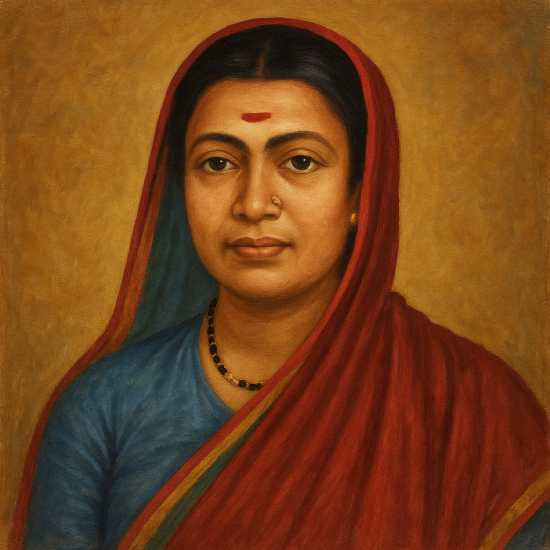
सावित्रीबाई फुले
| जन्म तिथि | 03 January 1831 |
| जन्म स्थान | महाराष्ट्र के सतारा जिल, खंडाला तहसील के नायगाँव नामक स्थान |
| पिता | खण्डोजी नेवसे |
| माता | लक्ष्मीबाई |
| जीवनसंगी | ज्योतिराव फुले |
| शिक्षा | नॉर्मल स्कूल, पूना शिक्षक प्रशिक्षण कार्यक्रम, अहमदनगर |
| राष्ट्रीयता | भारतीय |
| धर्म | हिन्दू |
| रचनाएँ | काव्य फुले, बावनकशी सुबोधरत्नाकर |
| मृत्यु | 10 मार्च 1897 (आयु 66) पूना , बॉम्बे प्रेसीडेंसी, ब्रिटिश भारत |
जन्म एवं प्रारम्भिक शिक्षा :-
सावित्रीबाई फुले का जन्म महाराष्ट्र के सतारा जिल, खंडाला तहसील के नायगाँव नामक स्थान पर 3 जनवरी सन् 1831 को हुआ। उनके पिता का नाम खण्डोजी नेवसे और माता का नाम लक्ष्मीबाई था। सतारा के माली समाज में इनके कुल को श्रेष्ठ गिना जाता था। उस दौर में दलितों के साथ बहुत भेदभाव होता था। उन्हे शिक्षा का अधिकार नहीं था। सावित्रीबाई फुले बाल्यकाल से पठन-पाठन में रूचि थी। उस समय महिलाओं की शिक्षा को बुरा माना जाता था। गाँव के एक मेले में एक पादरी ने यीशु के जीवन चरित्र छपी एक पुस्तक सावित्रीबाई को यह कहकर दी कि यह भगवान की पुस्तक है। तुम पढ़ तो नही पाओगी पर चित्र देखकर तुम्हारे चित्त को बहुत आनंद आयेगा।" तत्समय 8 वर्ष की उम्र में ही सावित्रीबाई फुले एक पुस्तक अपने घर ले आईं जिसे उनके पिताजी ने फेंक देने को कहा। सावित्रीबाई ने यह कहकर किताब फेंकने से मना कर दिया कि "यह मुझे भगवान के नाम पर दी गई है। मैं भगवान का निरादर नहीं करूंगी, भले ही समाज मुझे फांसी पर लटका दे"। इस प्रकार परिवार समाज से इस बारे में विद्रोह कर दिया। सन् 1840 में मात्र नौ वर्ष की आयु में ही उनका विवाह बारह वर्ष के ज्योतिबा फुले से हुआ। महात्मा ज्योतिबा फुले स्वयं एक महान शिक्षक, विचारक, कार्यकर्ता, समाज सुधारक, लेखक, दार्शनिक, संपादक और क्रांतिकारी थे।
स्वयं हुईं शिक्षित और छेड़ी महिला-शिक्षा की मुहीम :-
महात्मा ज्योतिबा फुले स्वयं एक महान शिक्षक, विचारक, कार्यकर्ता, समाज सुधारक, लेखक, दार्शनिक, संपादक और क्रांतिकारी थे। सावित्रीबाई पढ़ी-लिखी नहीं थीं। ज्योतिबा शिक्षा के माध्यम से समाज में जागृति लाने और नारी शिक्षा के पक्षधर थे, परन्तु समाज के विरोध के कारण प्रयास सफल नहीं हो पा रहा था। यह समस्या उन्होंने अपनी मौसी सगुणाबाई और पत्नी सावित्रीबाई के समक्ष रखी। सगुणाबाई का कथन था कि हमें शिक्षा की आवश्यकता है और तुम्हारे पास शिक्षा देने की सामर्थ्य है। उन्होंने कहा कि किसी समाज को बदलना है तो उस समाज की स्त्रियों को शिक्षित करना आवश्यक है। शिक्षित माताये ही समाज को संस्कारवान पुत्र देती है। दोनों महिलायें तत्काल नारी शिक्षा के लक्ष्य की प्रथम छात्रायें बन गईं। अगले दिन से गाँव की अमराई की छाँव में अस्पृश्य नारी शिक्षा की पहली पाठशाला प्रारम्भ हुई। यह महाराष्ट्र में दलित नारी शिक्षा का पहला और ऐतिहासिक प्रयास था। साधनों के अभाव में आम की लकड़ी की कलम बनी और जमीन को लेखन पट्टिका बनाया गया। इसके साथ ही अक्षर ज्ञान आरम्भ हो गया।
सावित्रीबाई ने सर्वप्रथम वह ईसाई पुस्तक पढी जो ईसाई पादरी ने मेले में दी थी। इसके बाद उन्होंने ज्योतिबा और सगुणाबाई द्वारा लाई गई भारतीय दर्शन, राजनीति, समाज और इतिहास आदि की पुस्तके पढ़ी। इनसे जो ज्ञान प्राप्त हुआ उससे उन्हें समाज में व्याप्त प्रथा-कुप्रथा के विषय में पता चला।
नारी शिक्षा का शुभारंभ करने हेतु ज्योतिबा द्वारा सहृदय ब्राह्मण तात्यासहब भिड़े के सहयोग से 01 जनवरी 1848 को पुणे महाराष्ट्र में पहला विधिवत विद्यालय खोला गया जिसमें गिनती की 6 छात्राओ ने पहले दिन प्रवेश लिया। इस प्रथम विद्यालय में सावित्रीबाई प्रथम स्त्री शिक्षिका बनी। उन्होंने शीघ्र ही दिखा दिया कि वह जितनी जिज्ञासु छात्रा रही है उतनी ही कुशल अध्यापिका भी हैं। सावित्रीबाई ने छात्राओं से मातृवत् व्यवहार करते हुए स्नेहपूर्वक अक्षरज्ञान कराया। वह पंचतंत्र की छोटी-छोटी कहानियों छात्राओं को चुन-चुन कर सुनाकर उन्हें व्यावहारिक ज्ञान देती थीं। वह भारत की सामाजिक व्यवस्था पर भी प्रकाश डालती और सच्चे समाज और मानव के विषय में कहती थीं कि "जब तक हम इस बात का ज्ञान नहीं कर लेते कि मनुष्य एक ही ईश्वर की संतान हैं, तब तक ईश्वर का सही रूप समझाना कठिन है। ईश्वर की पहचान की पहली शर्त यह है कि हमें मानना होगा कि हम सभी भाई-भाई है।"
धीरे-धीरे पुणे में इस विद्यालय की चर्चा हुई और छात्राओं की संख्या में वृद्धि होती गई। सावित्रीबाई फुले कहा करती थीं-
"अब बिलकुल भी खाली मत बैठो, जाओ शिक्षा प्राप्त करो !
शादी के बाद ज्योतिबा ने ही उन्हें पढ़ना-लिखना सिखाया। बाद में सावित्रीबाई ने दलित समाज की ही नहीं, बल्कि देश की प्रथम शिक्षिका होने का गौरव प्राप्त किया। उस समय लडकियों की दशा अत्यंत दयनीय थी और उन्हें पढ़ने लिखने
की अनुमति तक नहीं थी। आज से लगभग 171 वर्ष पूर्व 3 जनवरी 1848 को अपने 18वें जन्मदिन पर पुणे में अपने पति के साथ मिलकर विभिन्न जातियों की नौ छात्राओं के साथ उन्होंने महिलाओं के लिए एक विद्यालय की स्थापना की। एक वर्ष में सावित्रीबाई और महात्मा फुले पाँच नये विद्यालय खोलने में सफल हुए। तत्कालीन सरकार ने इन्हें सम्मानित भी किया। एक महिला प्रिंसिपल के लिये सन् 1848 में बालिका विद्यालय चलाना कितना मुश्किल रहा होगा, इसकी कल्पना शायद आज नहीं की जा सकती। लड़कियों की शिक्षा पर उस समय सामाजिक पाबंदी थी। सावित्रीबाई फुले उस दौर में न सिर्फ खुद पढी, बल्कि दूसरी लडकियों के पढ़ने का भी बंदोबस्त किया। उन्होंने देश के पहले किसान स्कूल की भी स्थापना की थी। 1852 में उन्होंने दलित बालिकाओं के लिए एक विद्यालय की स्थापना की।
समाज का विरोध :-
सावित्रीबाई फुले स्वयं इस विद्यालय में लड़कियों को पढ़ाने के लिए जाती थीं। लेकिन यह सब इतना आसान नहीं था। उन्हें लोगों के कड़े विरोध का सामना करना पड़ा। उन्होंने न केवल लोगों की गालियाँ सहीं अपितु लोगों द्वारा फेंके जाने वाले पत्थरों की मार तक झेली। स्कूल जाते समय धर्म के ठेकेदार व स्त्री शिक्षा के विरोधी सावित्रीबाई फुले पर कूड़ा करकट, कीचड़ व गोबर ही नहीं मानव-मल भी फेंक देते थे। इससे सावित्रीबाई के कपडे बहुत गंदे हो जाते थे अत वो अपने साथ एक दूसरी साड़ी भी साथ ले जाती थीं जिसे स्कूल में जाकर बदल लेती थीं। इस सब के बावजूद उन्होंने हार नही मानी व स्त्री शिक्षा, समाजोद्धार व समाजोत्थान का कार्य जारी रखा।
फुले दंपति के दलित समाज उत्थान एवं शिक्षा का जितना तेजी से प्रचार-प्रसार हो रहा था उतनी की प्रबलता से समाज के कतिपय उच्च वर्ग द्वारा उनका प्रबल विरोध भी हो रहा था। फुले दंपति द्वारा चाणक्य मंत्र कि "देशहित के लिए राज्यहित, राज्य हित के लिए ग्रामहित और ग्रामहित के लिए पारिवारिक हितों का त्याग करना ही राष्ट्र धर्म है सामाजिक हित के लिए यदि प्रिय से प्रिय का भी त्याग करना पड़े तो सच्चे मानव को यह त्याग कर देना चाहिए" को आत्मसात किया और समाज के विरोध के चलते फुले दंपति अपना धनकवाड़ी का घर छोड़कर पुणे आ गये। यहाँ पर उन्हे समाज से भरपूर सहयोग मिल रहा था। गाँव के लोग आकर उनसे अपने गाँव में स्कूल खोलने का आग्रह करते थे। दिसम्बर 1849 तक वे दस विद्यालय स्थापित कर चुके थे। यह एक ऐतिहासिक उपलब्धि थी। फुले दंपति द्वारा दी जाने वाली शिक्षा कार्यक्रमों में और भी विषय जुड़ गए थे। इनमें बाल-विवाह, छुआछूत, शिशु-हत्या जैसी सामाजिक कुरीतियों का विरोध एवं जनचेतना जागृत करना था।
विधवा पुनर्विवाह के लिए संघर्ष :-
स्त्री शिक्षा के साथ ही विधवाओं की शोचनीय दशा को देखते हुए उन्होंने विधवा पुनर्विवाह की भी शुरुआत की। 1854 ज्योतिबा और सावित्रीबाई फुले ने एक अनाथ आश्रम खोला, यह भारत में किसी व्यक्ति द्वारा खोला गया पहला अनाथ आश्रम था। साथ ही अनचाही गर्भावस्था की वजह से होने वाली शिशु हत्या को रोकने के लिए उन्होंने बालहत्या प्रतिबंधक गृह भी स्थापित किया। आज देश में बढ़ती कन्या भ्रूण हत्या की प्रवृत्ति को देखते हुए उस समय कन्या शिशु हत्या की समस्या पर ध्यान केंद्रित करना और उसे रोकने के प्रयास करना कितना महत्त्वपूर्ण था इस बात का अंदाजा लगाना मुश्किल नहीं।
विधवाओं की स्थिति को सुधारने और सती प्रथा को रोकने व विधवाओं के पुनर्विवाह के लिए भी उन्होंने बहुत प्रयास किए। सावित्रीबाई
फुले ने अपने पति के साथ मिलकर काशीबाई नामक एक गर्भवती विधवा महिला को न केवल आत्महत्या करने से रोका अपितु उसे अपने घर पर रखकर उसकी देखभाल की और समय पर प्रसव कराया। बाद में उन्होने उसके पुत्र यशवंत को दत्तक पुत्र के रूप में गोद ले लिया और खूब पढ़ाया-लिखाया जो बाद में एक प्रसिद्ध डॉक्टर बना।
साहित्य सृजन :-
सावित्रीबाई द्वारा लिखा गया गद्य एवं पद्म में साहित्य यद्यपि कम उपलब्ध है, पर जितना उपलब्धा है वह उनके आन्तरिक ज्ञान का दर्पण है। उन्हें आधुनिक मराठी काव्य का अग्रदूत माना जाता है। कवयित्री के रूप में
सावित्रीबाई फुले ने दो काव्य पुस्तकें लिखीं-
1. 'काव्य फुले
2. 'बावनकशी सुबोधरत्नाकर
बच्चों को विद्यालय आने के लिए प्रेरित करने के लिए वे कहा करती थीं। मराठी में रचित उनकी कुछ कविताओं का हिन्दी रूपान्तर निम्न प्रकार मिलता है:-
1. "सुनहरे दिन का उदय हुआ, आओ प्यारे बच्चों आज। हर्ष उल्लास से तुम्हारा, स्वागत करती हू आज ।।"
2. "करे नित पढ़ाई ज्ञान पाने के लिए विद्या को समझकर सर्वोच्च लीजिए लाभ विद्या का मन के एकाग्र करते हुए।"
3. "विद्या ही धन है. सभी धन-दौलत से सर्वश्रेष्ठ अच्छा जिसके पास है ज्ञान का भण्डार, है वह ज्ञानी जनता की नजरों मे सच्चा"
4. "जाओ जाकर पढो-लिखो, बनो आत्मनिर्भर, बनो मेहनती काम करो ज्ञान और धन इकट्ठा करो"
दलित उत्थान में अतुलनीय योगदान :-
सावित्रीबाई फुले ने कभी पीछे मुड़कर नहीं देखा। समाजोत्थान के अपने मिशन पर कार्य करते हुए ज्योतिबा ने 24 सितंबर 1873 को अपने अनुयायियों के साथ 'सत्यशोधक समाज नामक संस्था का निर्माण किया। वे स्वयं इसके अध्यक्ष थे और सावित्रीबाई फुले महिला विभाग की प्रमुख। इस सस्था का मुख्य उद्देश्य शूद्रों और अति शूद्रो को उच्च जातियों के शोषण से मुक्त कराना था। ज्योतिबा के कार्य में सावित्रीबाई ने बराबर का योगदान दिया। ज्योतिबा फुले ने जीवन भर निम्न जाति, महिलाओं और दलितों के उद्धार के लिए कार्य किया। इस कार्य में उनकी धर्मपत्नी सावित्रीबाई फुले ने जो योगदान दिया वह अद्वितीय है। यहाँ तक की कई बार ज्योतिबा फुले स्वय पत्नी सावित्रीबाई से मार्गदर्शन प्राप्त करते थे।
नारी शिक्षा, दलित शिक्षा के प्रचार प्रसार और सामाजिक कुप्रथाओं के विरुद्ध जो दीप जलाया था वह मशाल बनकर जल रहा था। सन् 1852 तक उनके द्वारा 18 विद्यालय स्थापित कर दिये थे। भारत के इस शैक्षणिक जागरण के प्रयासों को अग्रेज सरकार ने भी प्रोत्साहित किया। अग्रेज सरकार द्वारा इन स्कूलों के संस्थापक फुले दंपति को सम्मानित करने के लिए पुणे में एक भव्य समारोह आयोजित किया गया। इस समारोह में फुले दपति को अभिनंदन पत्र दिया गया, जिसे ज्यातिबा ने अपनी सहधर्मिणी को सौंपा और गर्व भरे स्वर में कहा, 'यह गौरव तुम्हारा ही गौरव है। मैं तो स्कूल खोलने का निमित्त मात्र था, परंतु उनके सफल संचालन का श्रेय तुम्हें जाता है।" सावित्रीबाई ने यह अभिनंदन
पत्र अपने श्वसुर को समर्पित किया और उनके चरण स्पर्श कर आशीर्वाद लिया।
सावित्रीबाई ने नारी को शून्य से शिखर तक यात्रा करने का मार्ग दिखा दिया था और उस मार्ग पर कतारो में नारियों पथिक बन गई थी। उनके सघन प्रयासों से शिक्षा संस्था का पहला सत्र इतना सफल सिद्ध हुआ कि शिक्षिकों का अभाव समाप्त हो गया। यह ऐतिहासिक उपलब्धि थी। सावित्रीबाई का समर्पण अद्वितीय था। उन्होंने ककल्पनीय कार्य सिद्ध किया।
सावित्रीबाई पर अपने पति के विचारों का पूर्ण प्रभाव रहा। अध्ययन के बाद वह गहन चिंतन की जो प्रवृत्ति ज्योतिबा में थी, उसे सावित्रीबाई ने भी ग्राहय कर लिया था। वे सामाजिक दर्शन में प्रवीण थी और विचारों की अभिव्यक्ति की सरता के साथ तत्व भी सम्मिलित कर देती थीं। 1853 में उन्होने "शिक्षा और सामाजिक परिवेश" विषय पर अपना सिद्धान्त पेश कर विद्वानों को भी चौका दिया था।
"छात्र-छात्राएं जिस समाज और परिस्थिति से आते हैं, उसका प्रभाव उनके ज्ञानार्जन पर अवश्य पडता है। समाज के निर्माण में बहुत से तत्व सहायक संसाधन के रूप मे कार्य करते है, परतु सबसे मुख्य तत्व माता की भूमिका है। सुशिक्षित माताओं द्वारा भी शिक्षा के पाठ बच्चों में कुशलता से हृदयंगम कराए जा सकते हैं।"
समाज सेवा और परलोकगमन :-
28 नवम्बर 1890 को महात्मा ज्योतिबा फुले की मृत्यु के बाद उनके अनुयायियों के साथ ही सावित्रीबाई फुले ने भी सत्य शोधक समाज को दूर-दूर तक पहुँचाने, अपने पति महात्मा ज्योतिबा फुले के अधूरे कार्यों को पूरा करने व समाज सेवा का कार्य जारी रखा। सन् 1897 में पुणे में भयंकर प्लेग फैला। प्लेग के रोगियों की सेवा करते हुए
सावित्रीबाई फुले स्वयं भी प्लेग की चपेट में आ गईं और 10 मार्च सन् 1897 को उनका भी देहावसान हो गया।
उस जमाने में ये सब कार्य करने इतने सरल नहीं थे जितने आज लग सकते हैं। अनेक कठिनाइयों और समाज के प्रबल विरोध के बावजूद महिलाओं का जीवन स्तर सुधारने व उन्हें शिक्षित तथा रूढ़िमुक्त करने में सावित्रीबाई फुले का जो महत्त्वपूर्ण योगदान रहा है उसके लिए देश हमेशा उनका ऋणी रहेगा। सचमुच जहाँ आज भी हम लैंगिक समानता के लिए संघर्ष कर रहे है वही अंग्रेजों के जमाने में सावित्रीबाई फुले ने एक दलित महिला होते हुए महिलाओं की शिक्षा, उत्थान और हिन्दू समाज में व्याप्त कुरीतियों के खिलाफ जो संघर्ष किया वह
अभूतपूर्व और बेहद प्रेरणादायक है। ऐसी महान आत्मा को शत-शत नमन !
सावित्रीबाई फुले के कुछ प्रसिद्ध उद्धरण (Quotes) :-
"एक स्त्री शिक्षित होती है तो वह केवल स्वयं को ही नहीं, बल्कि पूरे समाज को शिक्षित करती है।"
"हमेशा सत्य का साथ दो, चाहे कितनी भी कठिनाइयाँ आएँ।"
"शिक्षा ही महिलाओं को अपने अधिकारों के प्रति जागरूक बना सकती है।"
"मुझे उन लोगों पर तरस आता है जो अंधविश्वास के अंधकार में जीते हैं।"
"स्त्री को शिक्षा से वंचित रखना, समाज को अंधकार में धकेलने के समान है।"
"यदि कोई स्त्री अपने अधिकारों के लिए खड़ी नहीं होती, तो समाज उसे कभी न्याय नहीं देगा।"
"जितना बड़ा अन्याय, उतनी ही बड़ी जिम्मेदारी उसे मिटाने की।"
"हमेशा अपने आत्मबल को पहचानो, यही तुम्हारा सबसे बड़ा साथी है।"
सावित्रीबाई फुले से संबंधित कुछ महत्वपूर्ण प्रश्न और उनके उत्तर:-
Birth and Early Education:-
Savitribai Phule was born on 3 January 1831 at a place called Naigaon in Khandala Tehsil, Satara district of Maharashtra. Her father's name was Khandoji Nevse and mother's name was Lakshmibai. Their clan was considered superior in the Mali community of Satara. In those days, there was a lot of discrimination against Dalits. They did not have the right to education. Savitribai Phule was interested in reading and writing since childhood. At that time, women's education was considered bad. In a village fair, a priest gave a book printed with the biography of Jesus to Savitribai saying that this is God's book. You will not be able to read it but your mind will get a lot of pleasure by seeing the pictures." At that time, at the age of 8, Savitribai Phule brought a book to her home which her father asked her to throw away. Savitribai refused to throw the book saying that "This has been given to me in the name of God. I will not disrespect God, even if the society hangs me". Thus, she rebelled against the family and society. In 1840, at the age of only nine, she was married to twelve-year-old Jyotiba Phule. Mahatma Jyotiba Phule himself was a great teacher, thinker, activist, social reformer, writer, philosopher, editor and revolutionary.
She herself was educated and started a campaign for women's education:-
Mahatma Jyotiba Phule himself was a great teacher, thinker, activist, social reformer, writer, philosopher, editor and revolutionary. Savitribai was not educated. Jyotiba was in favour of bringing awareness in the society through education and women's education, but due to the opposition of the society, the effort was not being successful. He put this problem before his aunt Sagunabai and wife Savitribai. Sagunabai said that we need education and you have the ability to give education. She said that if a society has to be changed, then it is necessary to educate the women of that society. Educated mothers Only they give cultured sons to the society. Both the women immediately became the first students of the goal of women education. From the next day, the first school for untouchable women education started in the shade of the village's orchard. This was the first and historic attempt of Dalit women education in Maharashtra. In the absence of resources, a pen was made of mango wood and the ground was made a writing board. With this, the learning of alphabets began.
Savitribai first read the Christian book which the Christian priest had given in the fair. After this, she read the books on Indian philosophy, politics, society and history etc. brought by Jyotiba and Sagunabai. The knowledge she gained from these came to know about the customs and bad practices prevalent in the society.
To start women education, Jyotiba, with the help of kind-hearted Brahmin Tatyasahab Bhide, opened the first formal school in Pune, Maharashtra on 01 January 1848, in which only 6 students took admission on the first day. Savitribai became the first female teacher in this first school. She soon showed that she was as inquisitive as she was knowledgeable. She was as skilled a teacher as she was a student. Savitribai taught the students alphabets lovingly while behaving like a mother. She used to impart practical knowledge to the students by narrating short stories from Panchtantra to them. She also shed light on the social system of India and used to say about the true society and human beings that "Until we understand that humans are children of the same God, it is difficult to understand the true form of God. The first condition of identifying God is that we have to accept that we are all brothers."
Gradually, this school was discussed in Pune and the number of students increased. Savitribai Phule used to say-
"Now don't sit idle at all, go and get an education!
After marriage, Jyotiba taught her to read and write. Later, Savitribai achieved the honour of being the first teacher not only of the Dalit society but of the country. At that time, the condition of girls was very pathetic and they were not even allowed to read and write. About 171 years ago, on 3 January 1848, on her 18th birthday, she established a school for women in Pune along with her husband and nine students from different castes. In one year, Savitribai and Mahatma Phule succeeded in opening five new schools. The then government also honoured them. It is perhaps impossible to imagine today how difficult it would have been for a woman principal to run a girls' school in 1848. There was a social ban on girls' education at that time. Savitribai Phule not only studied herself in that era, but also made arrangements for other girls to study. She also established the country's first farmer's school. In 1852, she established a school for Dalit girls.
Opposition from the society:-
Savitribai Phule herself used to go to this school to teach girls. But all this was not so easy. She had to face strong opposition from the people. She not only faced abuses from the people but also had to bear the brunt of the stones thrown by them. While going to school, the contractors of religion and those opposed to women's education used to throw not only garbage, mud and cow dung but also human excreta on Savitribai Phule. Due to this, Savitribai's clothes used to get very dirty, so she used to take another saree with her which she used to change after reaching the school. Despite all this, she did not give up and continued the work of women's education, social upliftment and social upliftment.
As fast as the Phule couple's Dalit society upliftment and education was spreading, they were also being strongly opposed by some upper class of the society. The Phule couple imbibed the Chanakya mantra that "To sacrifice the state's interest for the country's interest, the village's interest for the state's interest and the family's interest for the village's interest is the national duty. If one has to sacrifice even the dearest for the social interest, then a true human should sacrifice it" and due to the opposition of the society, the Phule couple left their Dhankawadi house and came to Pune. Here they were getting full support from the society. The villagers would come and request them to open a school in their village. By December 1849, they had established ten schools. This was a historic achievement. More subjects were added to the education programs given by the Phule couple. These included opposition to social evils like child marriage, untouchability, infanticide and awakening public consciousness.
Struggle for widow remarriage:-
Along with women's education, they also started widow remarriage, seeing the pitiable condition of widows. 1854 Jyotiba and Savitribai Phule opened an orphanage, it was the first orphanage opened by a person in India. Along with this, they also established a child murder prevention home to stop infanticide due to unwanted pregnancy. Seeing the increasing trend of female foeticide in the country today, it is not difficult to imagine how important it was to focus on the problem of female infanticide and make efforts to stop it at that time.
They also made a lot of efforts to improve the condition of widows and to stop the practice of Sati and to remarry widows. Savitribai
Phule, along with her husband, not only stopped a pregnant widow named Kashibai from committing suicide but also took care of her by keeping her at their home and got her delivery done on time. Later, they adopted her son Yashwant as their son and gave him good education, who later became a famous doctor.
Literary Creation:-
Although the literature written by Savitribai in prose and poetry is less available, whatever is available is a mirror of her inner knowledge. She is considered to be the pioneer of modern Marathi poetry. As a poetess, Savitribai Phule wrote two poetry books-
1. 'Kaavya Phule'
2. 'Baavankashi Subodh Ratnakar'
She used to say to motivate children to come to school. The Hindi translation of some of her poems written in Marathi is as follows:-
1. "A golden day has dawned today, come dear children. I welcome you with joy and happiness today."
2. "Study regularly to gain knowledge, understand education and take the maximum benefit of education by concentrating the mind."
3. "Education is wealth. The best of all wealth is the one who has the storehouse of knowledge, he is a learned person in the eyes of the people"
4. "Go and study, become self-reliant, be hardworking, accumulate knowledge and wealth"
Incomparable contribution in Dalit upliftment: -
Savitribai Phule never looked back. While working on his mission of social upliftment, Jyotiba formed an organization named 'Satyashodhak Samaj' with his followers on 24 September 1873. He himself was its president and Savitribai Phule was the head of the women's department. The main objective of this organization was to free the Shudras and Ati Shudras from the exploitation of the upper castes. Savitribai contributed equally to Jyotiba's work. Jyotiba Phule worked throughout his life for the upliftment of the lower castes, women and Dalits. The contribution made by his wife Savitribai Phule in this work is unique. Jyotiba Phule himself used to seek guidance from his wife Savitribai many times. The lamp that he had lit for women education, Dalit education and against social evils was burning like a torch. By 1852, he had established 18 schools. The British government also encouraged the efforts of this educational awakening of India. A grand ceremony was organized in Pune by the British government to honor the Phule couple, the founders of these schools. In this ceremony, the Phule couple was given a letter of congratulation, which Jyotiba handed over to his wife and said in a proud voice, 'This pride is yours. I was just the medium to open the school, but the credit for its successful operation goes to you.' Savitribai dedicated this letter of congratulation to her father-in-law and took his blessings by touching his feet.
Savitribai had shown the path to women to travel from zero to the peak and women became travelers in queues on that path. Due to her intense efforts, the first session of the educational institution proved so successful that the shortage of teachers ended. This was a historic achievement. Savitribai's dedication was unique. She accomplished the unimaginable task.
Savitribai was completely influenced by her husband's thoughts. After studies, Jyotiba's tendency of deep contemplation was accepted by Savitribai as well. She was proficient in social philosophy and used to include elements along with the simplicity of expression of thoughts. In 1853, she surprised scholars by presenting her theory on the subject of "Education and Social Environment".
"The society and circumstances from which students come, definitely have an impact on their acquisition of knowledge. Many elements work as helpful resources in the formation of society, but the most important element is the role of the mother. Lessons of education can also be inculcated in the minds of children by well-educated mothers."
Social service and death: -
After the death of Mahatma Jyotiba Phule on 28 November 1890, Savitribai Phule, along with his followers, continued the work of spreading Satya Shodhak Samaj far and wide, completing the unfinished work of her husband Mahatma Jyotiba Phule and social service. In 1897, a terrible plague spread in Pune. While serving the plague patients, Savitribai Phule herself also fell prey to the plague and she also died on 10 March 1897.
In those times, doing all these works was not as easy as it may seem today. Despite many difficulties and strong opposition from the society, the country will always be indebted to Savitribai Phule for her important contribution in improving the standard of living of women and educating and freeing them from stereotypes. Indeed, while we are still struggling for gender equality, the struggle that Savitribai Phule, being a Dalit woman, waged during the British rule for women's education, upliftment and against the evils prevalent in Hindu society is unprecedented and extremely inspiring. Hundreds of salutations to such a great soul! Some famous quotes of Savitribai Phule:- "When a woman is educated, she educates not only herself, but the entire society." "Always support the truth, no matter how many difficulties come." "Only education can make women aware of their rights." "I feel pity for those who live in the darkness of superstition." "Depriving a woman of education is like pushing the society into darkness." "If a woman does not stand up for her rights, society will never give her justice."
"The bigger the injustice, the bigger the responsibility to eradicate it."
"Always recognize your self-confidence, it is your greatest companion."
Some important questions and their answers related to Savitribai Phule:-
Question 1: Who was Savitribai Phule?
Answer: Savitribai Phule was India's first female teacher, social reformer and poet. She opened the doors of education for women and Dalits and started girl education.
Question 2: What work did Savitribai Phule do along with her husband?
Answer: Along with her husband Jyotiba Phule, she established the first girl school in Pune in 1848, which was the first school for girls in India.
Question 3: When and where was Savitribai Phule born?
Answer: Savitribai Phule was born on 3 January 1831 in Naigaon village of Satara district of Maharashtra.
Question 4: What kind of poems did Savitribai Phule write?
Answer: She used to write poems on social awareness, women education, against untouchability and casteism. Her poems inspired change and struggle.
Question 5: With which title is Savitribai Phule honored?
Answer: She is called the "Mother of Women's Education" in India.
Question 6: When did Savitribai Phule die?
Answer: She died on 10 March 1897 while serving plague patients.
Question 7: What kind of social reform work did Savitribai Phule do?
Answer: She promoted girl education, supported widow remarriage, opposed Sati Pratha and child marriage and raised her voice against untouchability.
Question 8: When and where did Savitribai Phule start the first school?
Answer: She started the first girl school in Bhide Wada, Pune on 1 January 1848.
Question 9: For which social class of people did Savitribai Phule raise her voice for education and rights?
Answer: She raised her voice for education and rights for women, Dalits, Shudras and backward classes of the society.
Question 10: Who taught Savitribai Phule to study?
Answer: Her husband Jyotirao Phule taught her to read and write and inspired her to become a teacher in future.
Question 11: What are the names of the famous works of Savitribai Phule?
Answer: Her major poetic works are - "Kavya Phule" (1854) and "Baavan Kashi" (1892).
Question 12: What was Savitribai Phule's contribution to society during the epidemic?
Answer: During the plague epidemic in 1897, she served plague victims and also started a plague relief center. She died during this service.
Question 13: Which social organization was founded by Savitribai Phule?
Answer: She founded "Mahila Seva Mandal", which worked for the rights and upliftment of women.
Question 14: What difficulty did Savitribai Phule face when she went to teach?
Answer: When she went to school, people of the society used to throw mud and cow dung on her, yet she continued to work for education without fear.