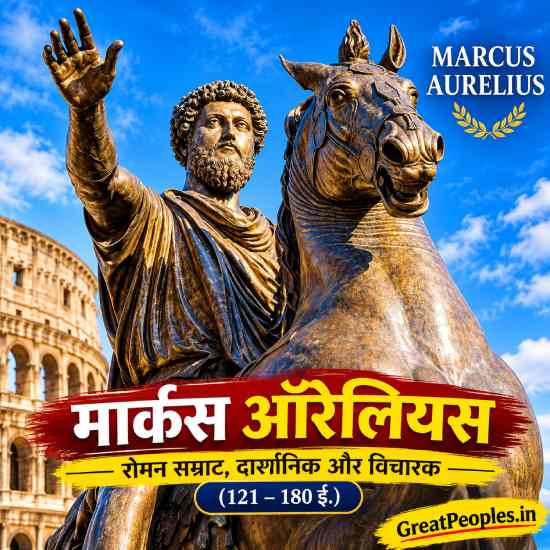
मार्कस ऑरेलियस
(मेडिटेशन्स)
| जन्म स्थान | 26 अप्रैल 121 ईस्वी को रोम |
| पिता | एंटोनिनस पायस |
| माता | डोमिशिया लुसिला |
| पेशा | सम्राट |
मार्कस ऑरेलियस (Marcus Aurelius) जीवनी—
प्राचीन रोम के सबसे प्रसिद्ध सम्राटों में से एक हैं, जो 161 से 180 ईस्वी तक शासनकाल के दौरान "पाँच अच्छे सम्राटों" में से अंतिम थे, और साथ ही स्टोइक दर्शन के एक उत्कृष्ट प्रतिनिधि थे। उनका जीवन दर्शन और सत्ता के आदर्श संयोजन का प्रतीक है—एक ओर वे विशाल साम्राज्य की जिम्मेदारियों को वहन करते थे, सीमाओं पर युद्ध और महामारी का सामना करते थे, दूसरी ओर वे युद्ध के बीच में भी अपने भीतर की ओर देखते थे, और अपने व्यक्तिगत दार्शनिक चिंतन को विश्व साहित्य के इतिहास में एक क्लासिक कृति "मेडिटेशन्स" (Meditations, जिसे "अपने आप से बातें" भी कहा जाता है) में बदल दिया।
प्रारंभिक जीवन और शिक्षा—
मार्कस ऑरेलियस का जन्म 26 अप्रैल 121 ईस्वी को रोम में हुआ था, उनका मूल नाम मार्कस एनियस वेरस (Marcus Annius Verus) था। उनका परिवार सम्मानित था, और स्पेनिश मूल का था, उनके पिता का परिवार रोमन सीनेटर वर्ग से संबंधित था, और माता डोमिशिया लुसिला एक धनी विरासत वाली महिला थीं। जब मार्कस बहुत छोटे थे, तब उनके पिता की मृत्यु हो गई, और उनका पालन-पोषण उनके दादा मार्कस एनियस वेरस ने किया।
बचपन से ही मार्कस ने असाधारण बुद्धिमत्ता और सत्य के प्रति प्रेम दिखाया। सम्राट हैड्रियन ने एक बार उन्हें "वेरिसिमस" (Verissimus, जिसका अर्थ है "सबसे सच्चा") कहकर संबोधित किया, जो उनकी सत्य की खोज की भावना की प्रशंसा थी। हैड्रियन ने उनकी शिक्षा पर बहुत ध्यान दिया और उन्हें उस समय के सबसे उत्कृष्ट विद्वानों से सीखने की व्यवस्था की। मार्कस ने प्रसिद्ध वक्ता फ्रोंटो से लैटिन वक्तृत्व कला सीखी, हेरोड्स एटिकस से ग्रीक वक्तृत्व कला सीखी, और बाद में स्टोइक दार्शनिक रस्टिकस के माध्यम से एपिक्टेटस के विचारों से परिचित हुए, जिसने उनके जीवन की दिशा पूरी तरह से बदल दी।
138 ईस्वी में, हैड्रियन ने एंटोनिनस पायस को अपना उत्तराधिकारी बनाया, और एंटोनिनस पायस को मार्कस और दिवंगत उत्तराधिकारी लुसियस एलियस के बेटे लुसियस वेरस दोनों को गोद लेने की शर्त रखी। इस प्रकार, मार्कस राजवंश का हिस्सा बन गए और उनका नाम मार्कस एलियस ऑरेलियस वेरस रखा गया।
सिंहासन पर बैठना और सह-शासन—
7 मार्च 161 ईस्वी को एंटोनिनस पायस की मृत्यु हो गई। सीनेट ने मार्कस को "ऑगस्टस" (Augustus) की उपाधि दी और सिंहासन पर बैठाया। रोमन इतिहास में एक उल्लेखनीय घटना घटी: मार्कस ने दृढ़ता से सीनेट से उनके गोद लिए हुए भाई लुसियस वेरस को समान शक्ति और स्थिति प्रदान करने का अनुरोध किया। इस प्रकार, लुसियस वेरस रोम के पहले सह-शासक (सह-सम्राट) बने, दोनों ने साम्राज्य पर संयुक्त रूप से शासन किया। यह व्यवस्था 169 ईस्वी में लुसियस वेरस की मृत्यु तक चली, उसके बाद मार्कस ने अकेले शासन किया।
उनके सिंहासन पर बैठने के समय साम्राज्य को गंभीर चुनौतियों का सामना करना पड़ा। एंटोनिनस पायस के शांतिपूर्ण शासनकाल के विपरीत, मार्कस के शासनकाल में लगभग लगातार युद्ध और आपदाएँ आईं: ब्रिटेन में विद्रोह, पूर्व में पार्थियन साम्राज्य का पुनरुत्थान, और उत्तर में जर्मनिक जनजातियों का दबाव।
युद्ध और आपदाओं का सामना—
पार्थियन युद्ध: शासनकाल की शुरुआत में ही, पूर्व में पार्थियन साम्राज्य ने फिर से आक्रमण किया। मार्कस ने लुसियस वेरस को सेना का नेतृत्व करके पूर्व की ओर जाने के लिए भेजा। 164 ईस्वी में, रोमन सेनाओं ने महत्वपूर्ण जीत हासिल की, पार्थियन राजधानी क्टेसिफोन को बर्खास्त किया। हालाँकि, विजय के साथ-साथ, सेना ने साम्राज्य में एक भयानक महामारी (जिसे अक्सर "एंटोनिन प्लेग" कहा जाता है) भी लाई, जिसने विशाल जनसंख्या हानि और सामाजिक अराजकता उत्पन्न की।
मार्कोमैनिक युद्ध: उत्तर में, जर्मनिक जनजातियाँ जैसे मार्कोमैनी, क्वाडी और सरमाटियन्स डेन्यूब नदी की सीमा पर भारी दबाव डाल रहे थे। मार्कस ने व्यक्तिगत रूप से सेना का नेतृत्व किया और कई वर्षों तक सीमा पर युद्ध किया। ये युद्ध अत्यंत कठिन थे, न केवल सैन्य टकराव, बल्कि महामारी और संसाधनों की कमी के खिलाफ संघर्ष भी था। इस अवधि के दौरान, उन्होंने युद्ध के बीच में "मेडिटेशन्स" लिखा, जो उनके आंतरिक शांति और दृढ़ता को दर्शाता है।
पूर्वी विद्रोह: 175 ईस्वी में, पूर्वी सेना के कमांडर एविडियस कैसियस ने सम्राट होने का दावा करते हुए विद्रोह किया। मार्कस को पूर्व की ओर वापस जाना पड़ा, लेकिन विद्रोह शीघ्र ही दबा दिया गया। इस घटना ने मार्कस को गहरा आघात पहुँचाया, क्योंकि कैसियस कभी उनके विश्वसनीय सहयोगी थे।
दार्शनिक विरासत: "मेडिटेशन्स"—
"मेडिटेशन्स" मार्कस ऑरेलियस की एकमात्र जीवित कृति है, और यह मूल रूप से प्रकाशन के लिए नहीं लिखी गई थी, बल्कि उनके लिए अपने आप को सलाह देने, आत्म-चिंतन करने का एक तरीका था। यह पुस्तक ग्रीक में लिखी गई है, जिसमें बारह खंड हैं, जो मुख्य रूप से उनके सैन्य अभियानों के दौरान लिखे गए थे।
पुस्तक में स्टोइक दर्शन के मुख्य विचारों को दर्शाया गया है: बाहरी चीजों को नियंत्रित नहीं किया जा सकता, लेकिन अपनी प्रतिक्रियाओं को नियंत्रित किया जा सकता है; सद्गुण (बुद्धिमत्ता, साहस, न्याय, संयम) ही एकमात्र सच्चा मूल्य है; और मृत्यु और परिवर्तन प्रकृति के नियम हैं, जिन्हें शांतिपूर्वक स्वीकार करना चाहिए। यह पुस्तक केवल दर्शनशास्त्र का ग्रंथ नहीं है, बल्कि एक ऐसे व्यक्ति का आत्म-संवाद है जो सत्ता के शिखर पर खड़ा होकर भी आंतरिक शांति बनाए रखने का प्रयास कर रहा है, जो इसे आज भी पढ़ने योग्य बनाता है।
परिवार और उत्तराधिकार—
145 ईस्वी में, मार्कस ने एंटोनिनस पायस की बेटी फॉस्टिना (जो उनकी चचेरी बहन भी थीं) से विवाह किया। उनके कई बच्चे थे, लेकिन अधिकांश की बीमारी या अन्य कारणों से कम उम्र में ही मृत्यु हो गई। उनके जीवित बचे बच्चों में सबसे प्रसिद्ध उनके बेटे कमोडस (Commodus) हैं, जिनका जन्म 161 ईस्वी में हुआ था। 177 ईस्वी में, मार्कस ने कमोडस को सह-शासक बनाया, जिससे उत्तराधिकार सुनिश्चित हुआ।
इतिहास में फॉस्टिना के बारे में मतभेद हैं, कुछ स्रोतों ने उन पर अश्लीलता का आरोप लगाया, लेकिन मार्कस ने हमेशा उनका सम्मान किया। फॉस्टिना ने कई सैन्य अभियानों में उनका साथ दिया, और "शिविरों की माता" की उपाधि प्राप्त की।
मृत्यु और विरासत—
17 मार्च 180 ईस्वी को, मार्कस ऑरेलियस की मृत्यु डेन्यूब नदी के तट पर एक सैन्य शिविर (संभवतः वियना या सिरमियम) में हुई, संभवतः महामारी या लंबी बीमारी के कारण। मृत्यु से पहले, जब सलाहकारों ने पूछा कि युवा कमोडस की देखभाल कौन करेगा, तो उन्होंने कहा: "यदि वह योग्य है, तो आप सभी।"। उनकी मृत्यु के बाद, सीनेट ने उन्हें देवता घोषित किया, और रोमन लोगों ने उन्हें गहराई से शोक किया।
मार्कस ऑरेलियस का शासनकाल "रोमन शांति" (Pax Romana) की समाप्ति का प्रतीक माना जाता है। उनके बेटे कमोडस के शासनकाल में, साम्राज्य उत्तराधिकार संकट और राजनीतिक अस्थिरता की ओर बढ़ने लगा। लेकिन मार्कस की व्यक्तिगत छवि हमेशा "दार्शनिक सम्राट" के आदर्श रूप के रूप में बनी रही, और "मेडिटेशन्स" आज भी दुनिया भर के पाठकों को शक्ति और शांति प्रदान करता है।
50 रोचक तथ्य (50 रोचक जानकारी)—
मार्कस ऑरेलियस का जन्म 26 अप्रैल 121 ईस्वी को रोम में हुआ था।
उनका जन्म नाम मार्कस एनियस वेरस (Marcus Annius Verus) था।
सम्राट हेड्रियन ने उन्हें "वेरिसिमस" (Verissimus) कहा था, जिसका अर्थ है "सबसे सच्चा", क्योंकि वे कभी झूठ नहीं बोलते थे।
उनका परिवार रोम के दूसरे राजा नूमा पोम्पिलियस से अपनी वंशावली का दावा करता था।
पिता की मृत्यु के बाद उनका पालन-पोषण उनके दादा ने किया।
लगभग 12 वर्ष की आयु में उन्होंने स्टोइक दर्शनशास्त्र से परिचय प्राप्त किया।
उनके शिक्षकों में प्रसिद्ध वक्ता फ्रंटो, यूनानी विद्वान हेरोड्स एटिकस और स्टोइक दार्शनिक रस्टिकस शामिल थे।
रस्टिकस ने ही उन्हें एपिक्टेटस की शिक्षाओं से परिचित कराया, जिसने उनके जीवन की दिशा बदल दी।
161 ईस्वी में उनके पिता एंटोनिनस पायस की मृत्यु के बाद वे सम्राट बने।
उन्होंने अपने पालक भाई लुसियस वेरस के साथ सिंहासन साझा करने पर जोर दिया, जिससे रोम में पहली बार दो समान सह-सम्राट हुए।
लुसियस वेरस की 169 ईस्वी में मृत्यु के बाद उन्होंने अकेले शासन किया।
उन्हें "पाँच अच्छे सम्राटों" (Five Good Emperors) में अंतिम माना जाता है।
उनका शासनकाल युद्ध, महामारी और आपदाओं से भरा था, जो उनके पूर्ववर्ती शांतिपूर्ण शासनकाल के विपरीत था।
161-166 ईस्वी तक पार्थियन युद्ध लड़ा गया।
विजयी सेना के साथ "एंटोनिन प्लेग" (संभवतः चेचक) रोमन साम्राज्य में आया, जिससे भारी जनसंख्या हानि हुई।
मार्कोमैनिक युद्धों में उन्होंने स्वयं सेना का नेतृत्व किया और डेन्यूब नदी पार करके शत्रु क्षेत्र में प्रवेश किया।
युद्ध के लिए धन जुटाने के लिए उन्होंने ट्राजन फोरम में अपनी व्यक्तिगत संपत्ति (सोने के बर्तन, कलाकृतियाँ, गहने) नीलाम कीं।
175 ईस्वी में उनके विश्वसनीय सेनापति एविडियस कैसियस ने विद्रोह करके स्वयं को सम्राट घोषित किया, जिसने उन्हें गहरा आघात पहुँचाया।
उन्हें रक्तपात से घृणा थी। एक बार रस्सी पर चलने वाले कलाकार के गिरने पर उन्होंने तुरंत अपनी आँखें ढक ली थीं।
इस घटना के बाद उन्होंने रस्सी पर चलने वाले प्रदर्शनों के नीचे गद्दे बिछाने का आदेश दिया।
उन्होंने ग्लेडिएटर्स को मारक हथियारों के बजाय कुंद हथियार इस्तेमाल करने का आदेश दिया, ताकि घातक चोटों से बचा जा सके।
सम्राट होने के बावजूद उनका जीवन सादगीपूर्ण था, जो उनके पिता एंटोनिनस पायस के प्रभाव का परिणाम था।
सैन्य शिविर में वे साधारण सैनिकों के साथ वही भोजन करते और वही कठिनाइयाँ सहते थे।
युवावस्था में उन्होंने रोम के बाहर एक विला में छुट्टियाँ बिताईं, जहाँ उनकी दिनचर्या में शिकार, पढ़ना, लिखना, अंगूर तोड़ना और किसानों की बातें सुनना शामिल था।
उन्होंने कैटो का कृषि-संबंधी ग्रंथ पढ़ा और एक अच्छे किसान बनना सीखा।
"मेडिटेशन्स" (Meditations) उनकी एकमात्र जीवित कृति है, जो मूल रूप से प्रकाशन के लिए नहीं लिखी गई थी।
यह पुस्तक यूनानी भाषा में लिखी गई है, न कि रोम की आधिकारिक भाषा लैटिन में।
यह 12 खंडों में है और अधिकांश भाग सैन्य शिविरों में लिखा गया था।
पहला खंड लगभग पूरी तरह से उन लोगों के प्रति आभार व्यक्त करने के लिए है जिन्होंने उनके जीवन को प्रभावित किया।
पुस्तक में डेन्यूब नदी के किनारे स्थित कर्नंटम (आधुनिक वियना के पास) का उल्लेख है, जो इस बात का प्रमाण है कि वे युद्ध के मोर्चे पर लिख रहे थे।
इसमें क्वाडी जनजाति के क्षेत्र में बहने वाली ग्रान नदी (आधुनिक स्लोवाकिया में ह्रोन नदी) का भी उल्लेख है, जो दर्शाता है कि वे शत्रु क्षेत्र की गहराई में गए थे।
महामारी के दौरान पेंगुइन क्लासिक्स संस्करण की बिक्री में 350% से अधिक की वृद्धि हुई थी।
बिल क्लिंटन और गोल्फर रोरी मैकइलरॉय ने कहा है कि वे इस पुस्तक को अपने बिस्तर के पास रखते हैं।
उन्हें "दार्शनिक सम्राट" का सर्वोत्कृष्ट उदाहरण माना जाता है, जिसने प्लेटो के "दार्शनिक राजा" के आदर्श को साकार किया।
145 ईस्वी में उन्होंने अपनी चचेरी बहन फॉस्टिना द यंगर से विवाह किया।
उनके कम से कम 14 बच्चे थे, लेकिन अधिकांश की बीमारी या अन्य कारणों से कम उम्र में ही मृत्यु हो गई।
फॉस्टिना ने सेना के साथ रहते हुए "शिविरों की माता" (Mater Castrorum) की उपाधि प्राप्त की।
177 ईस्वी में उन्होंने अपने बेटे कमोडस को सह-सम्राट बनाया।
17 मार्च 180 ईस्वी को डेन्यूब फ्रंट (संभवतः वियना या सिरमियम) में उनकी मृत्यु हो गई।
मृत्यु से पहले जब पूछा गया कि युवा कमोडस की देखभाल कौन करेगा, तो उन्होंने कहा: "यदि वह योग्य है, तो आप सभी"।
उनकी मृत्यु के बाद सीनेट ने उन्हें देवता घोषित किया।
उनके अवशेष हैड्रियन के मकबरे (आज का सेंट एंजेलो कैसल) में रखे गए।
उनके बेटे कमोडस का शासन रोमन साम्राज्य के पतन की शुरुआत का प्रतीक माना जाता है, जिसके कारण मार्कस के वंशानुगत उत्तराधिकार की आलोचना भी होती है।
वे "पाँच अच्छे सम्राटों" में एकमात्र ऐसे सम्राट थे जिनका अपना जैविक पुत्र उत्तराधिकारी बना।
"मेडिटेशन्स" आज भी दुनिया भर में स्टोइक दर्शनशास्त्र की सबसे लोकप्रिय प्रवेश-पुस्तकों में से एक है।
उनकी छवि हमेशा "आदर्श शासक" के रूप में बनी रही है जो सत्ता के शिखर पर भी आंतरिक शांति बनाए रखता है।
बीबीसी इतिहासकार मैरी बियर्ड ने उनके युवा पत्रों के आधार पर बताया कि वे अपरिपक्व और भावुक थे, जो पारंपरिक "परिपक्व दार्शनिक" की छवि से भिन्न है।
युवावस्था में उन्होंने अपने शिक्षक फ्रंटो को बहुत अधिक भावनात्मक पत्र लिखे, जिनमें "मेरे सबसे प्यारे शिक्षक", "मेरा सबसे मीठा शहद" जैसे शब्दों का प्रयोग किया, जिससे इतिहासकारों में चर्चा हुई।
उन्होंने कभी खुद को पूरी तरह से एक दार्शनिक नहीं माना, बल्कि "मेडिटेशन्स" में स्वयं को सलाह दी कि वे अभी भी दर्शनशास्त्र से दूर हैं।
उनका सबसे प्रसिद्ध उद्धरण है: "जल्द ही तुम सब कुछ भूल जाओगे; जल्द ही सब कुछ तुम्हें भूल जाएगा।"
50 अक्सर पूछे जाने वाले प्रश्न (FAQ)—
मार्कस ऑरेलियस कौन थे?
वे रोमन साम्राज्य के 16वें सम्राट (161-180 ईस्वी) और स्टोइक दर्शनशास्त्र के प्रतिनिधि थे, जिन्होंने "मेडिटेशन्स" लिखी।
उनका जन्म कब हुआ?
26 अप्रैल 121 ईस्वी।
उनका जन्म कहाँ हुआ?
रोम में।
उनका मूल नाम क्या था?
मार्कस एनियस वेरस।
वे किस राजवंश से संबंधित थे?
एंटोनिन राजवंश (Antonine dynasty)।
"पाँच अच्छे सम्राट" क्या है?
नर्वा से लेकर मार्कस ऑरेलियस तक लगातार पाँच सम्राट, जिन्हें बाद के इतिहासकारों ने आदर्श शासक माना, और मार्कस अंतिम थे।
वे किस दर्शनशास्त्र का पालन करते थे?
स्टोइक दर्शनशास्त्र (Stoicism)।
उन पर सबसे अधिक प्रभाव किसका था?
एपिक्टेटस की शिक्षाओं का, जिनसे उन्हें उनके शिक्षक रस्टिकस ने परिचित कराया।
उनके पालक पिता कौन थे?
एंटोनिनस पायस, जिन्होंने 138 ईस्वी में उन्हें गोद लिया।
उत्तराधिकार की व्यवस्था किसने की?
सम्राट हेड्रियन ने एंटोनिनस पायस को उत्तराधिकारी नियुक्त करते समय शर्त रखी कि वे मार्कस और लुसियस वेरस दोनों को गोद लें।
वे सिंहासन पर कब बैठे?
161 ईस्वी में एंटोनिनस पायस की मृत्यु के बाद।
क्या उनका सह-सम्राट था?
हाँ, उनके पालक भाई लुसियस वेरस, 169 ईस्वी में लुसियस की मृत्यु तक।
उनकी पत्नी कौन थीं?
फॉस्टिना द यंगर (Faustina the Younger), जो उनकी चचेरी बहन भी थीं।
उनके कितने बच्चे थे?
कम से कम 14, लेकिन अधिकांश की कम उम्र में मृत्यु हो गई।
उनका उत्तराधिकारी कौन था?
उनके जैविक पुत्र कमोडस (Commodus), जो 177 ईस्वी से सह-शासक थे और 180 ईस्वी से एकछत्र शासक बने।
"मेडिटेशन्स" का अंग्रेजी नाम क्या है?
Meditations।
"मेडिटेशन्स" किस भाषा में लिखी गई?
यूनानी।
उन्होंने यूनानी में क्यों लिखा?
उन्हें अच्छी यूनानी शिक्षा मिली थी, और यूनानी स्टोइक दर्शनशास्त्र की पारंपरिक भाषा थी।
"मेडिटेशन्स" किसके लिए लिखी गई?
स्वयं के लिए, आत्म-चिंतन और मानसिक अभ्यास के रूप में, प्रकाशन के लिए नहीं।
इसमें कितने खंड हैं?
12 खंड।
क्या इसकी कोई स्पष्ट संरचना है?
नहीं, यह मुख्य रूप से बिखरे हुए सूक्तियों और टिप्पणियों का संग्रह है।
उन्होंने इसे कहाँ लिखा?
मुख्य रूप से डेन्यूब फ्रंट के सैन्य शिविरों में, जिनमें कर्नंटम और अन्य स्थान शामिल हैं।
उनके शासनकाल में कौन सी बड़ी आपदा आई?
"एंटोनिन प्लेग", जो संभवतः चेचक था, जिससे साम्राज्य में भारी जनसंख्या हानि हुई।
यह महामारी कैसे आई?
संभवतः पार्थियन युद्ध से लौटी रोमन सेना द्वारा लाई गई।
उन्होंने कौन से मुख्य युद्ध लड़े?
पार्थियन युद्ध (161-166 ईस्वी) और मार्कोमैनिक युद्ध (लगभग 166-180 ईस्वी)।
मार्कोमैनिक युद्ध में शत्रु कौन थे?
डेन्यूब नदी के उत्तर में जर्मनिक जनजातियाँ, जिनमें मार्कोमैनी, क्वाडी आदि शामिल थीं।
क्या उन्होंने स्वयं युद्ध में भाग लिया?
हाँ, 169 ईस्वी में लुसियस की मृत्यु के बाद उन्होंने स्वयं उत्तरी फ्रंट पर सेना का नेतृत्व किया।
सैन्य शिविर में उनका जीवन कैसा था?
सादगीपूर्ण, सैनिकों के साथ कठिनाइयाँ सहते हुए, एक सुख-सुविधा भोगी दार्शनिक की तरह नहीं।
175 ईस्वी में क्या विद्रोह हुआ?
पूर्वी सेना के कमांडर एविडियस कैसियस ने स्वयं को सम्राट घोषित किया, लेकिन विद्रोह जल्द ही विफल हो गया।
कैसियस के विद्रोह ने उन्हें इतना क्यों झकझोरा?
कैसियस उनके विश्वसनीय लोगों में से एक थे।
उन्होंने ग्लेडिएटर खेलों में क्या सुधार किया?
उन्होंने ग्लेडिएटर्स को कुंद हथियारों का उपयोग करने का आदेश दिया, ताकि घातक चोटों से बचा जा सके।
रस्सी पर चलने वाले प्रदर्शन के बारे में उनका क्या रवैया था?
एक बच्चे को गिरते देखकर उन्होंने प्रदर्शन के नीचे गद्दे बिछाने का आदेश दिया।
क्या उन्होंने कभी अपनी संपत्ति नीलाम की?
हाँ, युद्ध के लिए धन जुटाने के लिए उन्होंने ट्राजन फोरम में व्यक्तिगत क़ीमती सामान नीलाम किए।
"थंडरिंग लीजन" की कहानी क्या है?
किंवदंती है कि पानी की कमी के समय एक ईसाई सेना ने प्रार्थना की, जिसके बाद बारिश हुई और बिजली से शत्रु भाग गए, और मार्कस ने उस सेना को यह नाम दिया।
उनकी मृत्यु कैसे हुई?
180 ईस्वी में डेन्यूब फ्रंट पर बीमारी से।
उनकी मृत्यु कहाँ हुई?
विंडोबोना (आज का वियना) या सिरमियम, सटीक स्थान पर विवाद है।
मृत्यु के बाद उन्हें देवता बनाया गया?
हाँ, सीनेट ने उन्हें देवता घोषित किया।
उनका मकबरा कहाँ है?
हैड्रियन का मकबरा, जो आज रोम का सेंट एंजेलो कैसल है।
उनका शासनकाल एक बिंदु क्यों माना जाता है?
उनके बेटे कमोडस का शासन आमतौर पर "रोमन शांति" की समाप्ति और साम्राज्य के अशांत काल की शुरुआत का प्रतीक माना जाता है।
कमोडस एक अच्छे सम्राट थे?
ऐतिहासिक मूल्यांकन आमतौर पर नकारात्मक है, जो मार्कस के बुद्धिमान शासन के विपरीत है।
क्या मार्कस "दार्शनिक सम्राट" थे?
हाँ, वे इतिहास में "दार्शनिक सम्राट" के सबसे अधिक उद्धृत उदाहरण हैं।
उनका रूप-रंग कैसा था?
सामान्य मूर्तियों और सिक्कों पर वे घने घुंघराले बालों और दार्शनिक दाढ़ी वाले दिखते हैं, लेकिन 18 वर्ष की मूर्ति में वे मुंडे हुए हैं।
"मेडिटेशन्स" आज भी बेस्टसेलर है?
हाँ, महामारी के दौरान बिक्री में भारी वृद्धि हुई, और यह आज भी स्टोइक दर्शनशास्त्र की सबसे लोकप्रिय प्रवेश-पुस्तकों में से एक है।
कौन से प्रसिद्ध पाठक हैं?
बिल क्लिंटन, रोरी मैकइलरॉय आदि शामिल हैं।
क्या उन्होंने अन्य पुस्तकें लिखीं?
"मेडिटेशन्स" ही एकमात्र ऐसी कृति है जो संरक्षित है।
क्या उनके पत्र संरक्षित हैं?
उनके शिक्षक फ्रंटो के साथ कुछ पत्राचार संरक्षित हैं, जो उनके प्रारंभिक जीवन को समझने के लिए महत्वपूर्ण सामग्री हैं।
युवावस्था में उनका व्यक्तित्व कैसा था?
आधुनिक विद्वानों के विश्लेषण के अनुसार, युवा मार्कस कुछ हद तक अपरिपक्व, भावुक और "चिपकने वाले" थे, जो बाद की स्थिर दार्शनिक सम्राट की छवि से काफी भिन्न है।
फ्रंटो के साथ उनका संबंध कैसा था?
भावनात्मक रूप से गहरा, कुछ पत्रों की भाषा इतनी स्नेहपूर्ण थी कि आधुनिक विद्वानों में चर्चा हुई, लेकिन अधिकांश का मानना है कि यह एक किशोर का अपने आकर्षक शिक्षक के प्रति तीव्र प्रशंसा थी।
उन्होंने कमोडस को उत्तराधिकारी क्यों चुना?
वे उनके जैविक पुत्र थे और 177 ईस्वी में सह-सम्राट बना दिए गए थे। रोम में यह अनिवार्य नहीं था, लेकिन मार्कस ने रक्त-आधारित उत्तराधिकार चुना।
उनका सबसे प्रसिद्ध उद्धरण क्या है?
"जल्द ही तुम सब कुछ भूल जाओगे; जल्द ही सब कुछ तुम्हें भूल जाएगा।"
Marcus Aurelius Biography—
He is one of the most famous emperors of ancient Rome, the last of the "Five Good Emperors" during his reign from 161 to 180 AD, and also an outstanding representative of Stoic philosophy. His life symbolizes the ideal combination of philosophy and power—on one hand, he bore the responsibilities of a vast empire, facing wars and plagues on the frontiers; on the other hand, even amid war, he looked inward and transformed his personal philosophical reflections into a classic work of world literature, Meditations (also called "Conversations with Himself").
Early Life and Education—
Marcus Aurelius was born on April 26, 121 AD in Rome. His original name was Marcus Annius Verus. His family was distinguished and of Spanish origin; his father's family belonged to the Roman senatorial class, and his mother, Domitia Lucilla, was a woman of wealthy inheritance. When Marcus was very young, his father died, and he was raised by his grandfather, Marcus Annius Verus.
From childhood, Marcus displayed exceptional intelligence and a love of truth. The Emperor Hadrian once addressed him as "Verissimus" (meaning "most truthful"), praising his pursuit of truth. Hadrian paid great attention to his education and arranged for him to learn from the finest scholars of the time. Marcus studied Latin rhetoric under the famous orator Fronto, Greek rhetoric under Herodes Atticus, and later, through the Stoic philosopher Rusticus, became acquainted with the ideas of Epictetus, which completely changed the direction of his life.
In 138 AD, Hadrian made Antoninus Pius his successor, with the condition that Antoninus Pius adopt both Marcus and Lucius Verus, the son of the late successor Lucius Aelius. Thus, Marcus became part of the dynasty and was renamed Marcus Aelius Aurelius Verus.
Accession and Co-Rule—
On March 7, 161 AD, Antoninus Pius died. The Senate bestowed the title of "Augustus" on Marcus and placed him on the throne. A remarkable event occurred in Roman history: Marcus firmly requested the Senate to grant his adopted brother Lucius Verus equal power and status. Thus, Lucius Verus became Rome's first co-ruler (co-emperor), and the two jointly ruled the empire. This arrangement lasted until Lucius Verus's death in 169 AD, after which Marcus ruled alone.
At the time of his accession, the empire faced serious challenges. Unlike the peaceful reign of Antoninus Pius, Marcus's reign was marked by almost continuous wars and disasters: rebellion in Britain, the resurgence of the Parthian Empire in the East, and pressure from Germanic tribes in the North.
Facing Wars and Disasters—
Parthian War: At the very beginning of his reign, the Parthian Empire in the East invaded again. Marcus sent Lucius Verus to lead the army eastward. In 164 AD, the Roman forces achieved a major victory, sacking the Parthian capital Ctesiphon. However, along with the victory, the army brought back a terrible plague (often called the "Antonine Plague") to the empire, causing massive population loss and social disruption.
Marcomannic Wars: In the North, Germanic tribes such as the Marcomanni, Quadi, and Sarmatians were exerting heavy pressure on the Danube frontier. Marcus personally led the army and fought on the frontier for many years. These wars were extremely difficult, involving not only military confrontation but also struggle against plague and resource shortages. During this period, he wrote Meditations amid the war, demonstrating his inner peace and resilience.
Eastern Revolt: In 175 AD, Avidius Cassius, commander of the eastern army, revolted and claimed the throne. Marcus had to return east, but the revolt was quickly suppressed. This event deeply shocked Marcus, as Cassius had once been one of his trusted allies.
Philosophical Legacy: Meditations—
Meditations is the only surviving work of Marcus Aurelius, and it was originally not written for publication but as a way for him to advise himself and engage in self-reflection. The book is written in Greek and consists of twelve books, mostly written during his military campaigns.
The book reflects the core ideas of Stoic philosophy: external things cannot be controlled, but one's reactions can be controlled; virtue (wisdom, courage, justice, temperance) is the only true value; and death and change are laws of nature that should be accepted calmly. This book is not merely a philosophical treatise but a self-dialogue of a person standing at the pinnacle of power yet striving to maintain inner peace, which makes it still worth reading today.
Family and Succession—
In 145 AD, Marcus married Faustina, the daughter of Antoninus Pius (who was also his cousin). They had several children, but most died young from illness or other causes. Among his surviving children, the most famous is his son Commodus, born in 161 AD. In 177 AD, Marcus made Commodus co-ruler, securing the succession.
Historically, opinions about Faustina are divided; some sources accused her of licentiousness, but Marcus always respected her. Faustina accompanied him on several military campaigns and received the title "Mother of the Camps."
Death and Legacy—
On March 17, 180 AD, Marcus Aurelius died at a military camp on the Danube (possibly Vienna or Sirmium), likely from plague or a long illness. Before his death, when advisors asked who would care for the young Commodus, he said: "If he is worthy, then all of you." After his death, the Senate declared him a god, and the Roman people deeply mourned him.
Marcus Aurelius's reign is considered to mark the end of the "Pax Romana" (Roman Peace). Under his son Commodus, the empire began to move toward succession crises and political instability. But Marcus's personal image has always remained as the ideal of the "philosopher emperor," and Meditations still provides strength and peace to readers around the world today.
50 Interesting Facts—
Marcus Aurelius was born on April 26, 121 AD in Rome.
His birth name was Marcus Annius Verus.
Emperor Hadrian called him "Verissimus," meaning "most truthful," because he never lied.
His family claimed descent from Numa Pompilius, the second king of Rome.
After his father's death, he was raised by his grandfather.
Around the age of 12, he was introduced to Stoic philosophy.
His teachers included the famous orator Fronto, the Greek scholar Herodes Atticus, and the Stoic philosopher Rusticus.
It was Rusticus who introduced him to the teachings of Epictetus, which changed the direction of his life.
In 161 AD, after the death of his father Antoninus Pius, he became emperor.
He insisted on sharing the throne with his adopted brother Lucius Verus, creating Rome's first two equal co-emperors.
After Lucius Verus's death in 169 AD, he ruled alone.
He is considered the last of the "Five Good Emperors."
His reign was filled with wars, plagues, and disasters, in contrast to the peaceful reign of his predecessor.
The Parthian War was fought from 161 to 166 AD.
The "Antonine Plague" (possibly smallpox) came to the Roman Empire with the victorious army, causing massive population loss.
In the Marcomannic Wars, he personally led the army and crossed the Danube into enemy territory.
To raise funds for the war, he auctioned his personal property (gold vessels, artworks, jewelry) in the Trajan Forum.
In 175 AD, his trusted general Avidius Cassius revolted and declared himself emperor, which deeply shocked him.
He hated bloodshed. Once, when a tightrope walker fell, he immediately covered his eyes.
After this incident, he ordered mattresses to be placed beneath tightrope performances.
He ordered gladiators to use blunt weapons instead of lethal ones to avoid fatal injuries.
Despite being emperor, his life was simple, a result of the influence of his father Antoninus Pius.
In military camps, he ate the same food and endured the same hardships as ordinary soldiers.
In his youth, he vacationed at a villa outside Rome, where his daily routine included hunting, reading, writing, grape-picking, and listening to farmers talk.
He read Cato's agricultural treatise and learned to be a good farmer.
Meditations is his only surviving work, originally not written for publication.
The book is written in Greek, not in Rome's official language, Latin.
It consists of 12 books, most of which were written in military camps.
The first book is almost entirely devoted to expressing gratitude to those who influenced his life.
The book mentions Carnuntum (near modern Vienna) on the Danube, evidence that he was writing on the war front.
It also mentions the Gran River (the Hron River in modern Slovakia) flowing through the territory of the Quadi tribe, showing that he went deep into enemy territory.
During the pandemic, sales of the Penguin Classics edition increased by more than 350%.
Bill Clinton and golfer Rory McIlroy have said they keep the book by their beds.
He is considered the supreme example of the "philosopher emperor," realizing Plato's ideal of the "philosopher king."
In 145 AD, he married his cousin Faustina the Younger.
They had at least 14 children, but most died young from illness or other causes.
Faustina received the title "Mother of the Camps" (Mater Castrorum) while accompanying the army.
In 177 AD, he made his son Commodus co-emperor.
On March 17, 180 AD, he died on the Danube front (possibly Vienna or Sirmium).
Before his death, when asked who would care for the young Commodus, he said: "If he is worthy, then all of you."
After his death, the Senate declared him a god.
His remains were placed in Hadrian's Mausoleum (today's Castel Sant'Angelo).
The reign of his son Commodus is considered a symbol of the beginning of the decline of the Roman Empire, which has also led to criticism of Marcus's hereditary succession.
He was the only one of the "Five Good Emperors" whose own biological son succeeded him.
Meditations remains one of the most popular introductory books to Stoic philosophy worldwide today.
His image has always remained that of the "ideal ruler" who maintains inner peace even at the pinnacle of power.
BBC historian Mary Beard, based on his youthful letters, described him as immature and emotional, different from the traditional image of the "mature philosopher."
In his youth, he wrote many emotional letters to his teacher Fronto, using phrases like "my sweetest teacher," "my sweetest honey," which has sparked discussion among historians.
He never considered himself a complete philosopher, but in Meditations he advised himself that he was still far from philosophy.
His most famous quote is: "Soon you will forget everything; soon everything will forget you."
50 Frequently Asked Questions (FAQ)—
Who was Marcus Aurelius?
He was the 16th emperor of the Roman Empire (161–180 AD) and a representative of Stoic philosophy, who wrote Meditations.When was he born?
April 26, 121 AD.Where was he born?
In Rome.What was his original name?
Marcus Annius Verus.Which dynasty did he belong to?
The Antonine dynasty.What are the "Five Good Emperors"?
The five consecutive emperors from Nerva to Marcus Aurelius, considered ideal rulers by later historians, with Marcus being the last.What philosophy did he follow?
Stoicism.Who influenced him most?
The teachings of Epictetus, introduced to him by his teacher Rusticus.Who was his adoptive father?
Antoninus Pius, who adopted him in 138 AD.Who arranged the succession?
Emperor Hadrian, when appointing Antoninus Pius as successor, stipulated that he adopt both Marcus and Lucius Verus.When did he ascend the throne?
In 161 AD, after the death of Antoninus Pius.Did he have a co-emperor?
Yes, his adopted brother Lucius Verus, until Lucius's death in 169 AD.Who was his wife?
Faustina the Younger, who was also his cousin.How many children did he have?
At least 14, but most died young.Who was his successor?
His biological son Commodus, who was co-ruler from 177 AD and sole ruler from 180 AD.What is the English name of Meditations?
Meditations.In what language was Meditations written?
Greek.Why did he write in Greek?
He had a good Greek education, and Greek was the traditional language of Stoic philosophy.For whom was Meditations written?
For himself, as self-reflection and mental exercise, not for publication.How many books does it contain?
12 books.Does it have a clear structure?
No, it is mainly a collection of scattered maxims and notes.Where did he write it?
Mainly in military camps on the Danube front, including Carnuntum and other locations.What major disaster occurred during his reign?
The "Antonine Plague," possibly smallpox, which caused massive population loss in the empire.How did the plague arrive?
Possibly brought back by Roman troops returning from the Parthian War.What major wars did he fight?
The Parthian War (161–166 AD) and the Marcomannic Wars (c. 166–180 AD).Who were the enemies in the Marcomannic Wars?
Germanic tribes north of the Danube, including the Marcomanni, Quadi, etc.Did he personally participate in the wars?
Yes, after Lucius's death in 169 AD, he personally led the army on the northern front.What was his life like in the military camp?
Simple, enduring hardships with the soldiers, not like a pleasure-seeking philosopher.What revolt occurred in 175 AD?
Avidius Cassius, commander of the eastern army, declared himself emperor, but the revolt quickly failed.Why did Cassius's revolt shake him so deeply?
Cassius was one of his trusted people.What reforms did he make to gladiatorial games?
He ordered gladiators to use blunt weapons to avoid fatal injuries.What was his attitude toward tightrope performances?
After seeing a boy fall, he ordered mattresses placed beneath the performances.Did he ever auction his property?
Yes, to raise funds for the war, he auctioned personal valuables in the Trajan Forum.What is the story of the "Thundering Legion"?
Legend has it that during a water shortage, a Christian legion prayed, after which rain fell and lightning scattered the enemy, and Marcus gave the legion this name.How did he die?
From illness on the Danube front in 180 AD.Where did he die?
Vindobona (modern Vienna) or Sirmium; the exact location is disputed.Was he deified after death?
Yes, the Senate declared him a god.Where is his tomb?
Hadrian's Mausoleum, today's Castel Sant'Angelo in Rome.Why is his reign considered a turning point?
The reign of his son Commodus is generally considered to mark the end of the "Pax Romana" and the beginning of the empire's turbulent period.Was Commodus a good emperor?
Historical evaluation is generally negative, in contrast to Marcus's wise rule.Was Marcus a "philosopher emperor"?
Yes, he is the most frequently cited example of a "philosopher emperor" in history.What did he look like?
In common statues and coins, he appears with thick curly hair and a philosopher's beard, but an 18-year-old statue shows him clean-shaven.Is Meditations still a bestseller today?
Yes, sales surged during the pandemic, and it remains one of the most popular introductory books to Stoic philosophy.Who are some famous readers?
Bill Clinton, Rory McIlroy, and others.Did he write other books?
Meditations is the only surviving work.Are his letters preserved?
Some correspondence with his teacher Fronto is preserved, an important source for understanding his early life.What was his personality like in youth?
According to modern scholars, the young Marcus was somewhat immature, emotional, and "clingy," quite different from the later image of the stable philosopher emperor.What was his relationship with Fronto?
Emotionally deep; some letters were so affectionate that modern scholars have debated, but most believe it was a teenager's intense admiration for a charismatic teacher.Why did he choose Commodus as successor?
He was his biological son and had been made co-emperor in 177 AD. This was not mandatory in Rome, but Marcus chose blood-based succession.What is his most famous quote?
"Soon you will forget everything; soon everything will forget you."