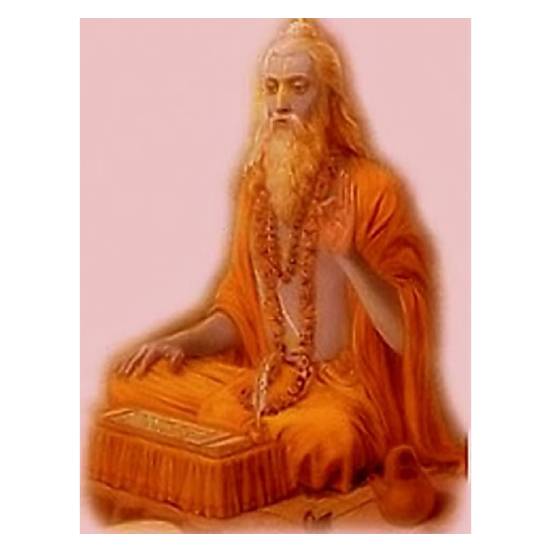
बौधायन
| राष्ट्रीयता | भारतीय |
| रचनाएँ | शुल्ब सूत्र, श्रौतसूत्र |
महर्षि बौधायन – परिचय--
महर्षि बौधायन (Bodhayana) प्राचीन भारत के महान विद्वान, ऋषि और गणितज्ञ थे। उनका समय लगभग ईसा पूर्व 800 के आसपास माना जाता है। वे न केवल धार्मिक अनुष्ठानों और वैदिक कर्मकांडों के विशेषज्ञ थे, बल्कि गणित और ज्यामिति के गहन अध्येता भी थे। उनके द्वारा लिखित शुल्बसूत्र (Śulbasūtra) गणित और ज्यामिति की दृष्टि से अत्यंत महत्वपूर्ण ग्रंथ है। इसमें वैदिक यज्ञों और वेदियों के निर्माण के लिए आवश्यक गणनाएँ, ज्यामितीय रचनाएँ और सूत्र दिए गए हैं।
बौधायन का महत्व इसलिए और बढ़ जाता है क्योंकि उन्होंने पाइथागोरस प्रमेय (Pythagoras Theorem) और √2 (दो का वर्गमूल) के सन्निकटन जैसे सूत्र यूनानियों से कई शताब्दियों पहले प्रस्तुत किए थे।
बौधायन का जीवन और समय--
-
अनुमानित जन्म: ईसा पूर्व 800 के आसपास
-
स्थान: प्राचीन भारत (विशेष उल्लेख उपलब्ध नहीं, परंतु वैदिक परंपरा से संबंधित)
-
कार्यक्षेत्र:
-
वैदिक अनुष्ठानों का वैज्ञानिक स्वरूप देना।
-
यज्ञों और वेदियों की रचना हेतु गणित और ज्यामिति का उपयोग।
-
शुल्बसूत्रों की रचना।
-
बौधायन मूलतः एक वैदिक ऋषि थे, जिन्होंने धर्म, गृहस्थ जीवन, श्रौत कर्म, और यज्ञ-वेदियों की रचना हेतु सूत्र दिए।
बौधायन सूत्र – प्रमुख ग्रंथ--
बौधायन के नाम से छः प्रमुख ग्रंथ मिलते हैं, जो “बौधायन सूत्र” कहलाते हैं—
-
बौधायन श्रौतसूत्र – (लगभग 19 प्रश्नों में)
इसमें यज्ञ-वेदियों के निर्माण और वैदिक अनुष्ठानों के लिए विधियाँ बताई गई हैं। -
बौधायन कर्मान्तसूत्र – (21 अध्यायों में)
इसमें विभिन्न धार्मिक कर्म और अनुष्ठानों की विस्तार से जानकारी है। -
बौधायन द्वैधसूत्र – (4 प्रश्नों में)
इसमें दार्शनिक और धार्मिक द्वंद्वों का समाधान मिलता है। -
बौधायन गृह्यसूत्र – (4 प्रश्नों में)
इसमें विवाह, जन्म, नामकरण आदि घरेलू संस्कारों की विधियाँ हैं। -
बौधायन धर्मसूत्र – (4 प्रश्नों में)
इसमें आचार-संहिता, सामाजिक नियम और धार्मिक कर्तव्यों का उल्लेख है। -
बौधायन शुल्बसूत्र – (3 अध्यायों में)
यह सबसे महत्वपूर्ण ग्रंथ है। इसमें गणित और ज्यामिति का अद्भुत ज्ञान मिलता है।
बौधायन और गणित--
बौधायन ने गणित को केवल सैद्धांतिक रूप में नहीं बल्कि धार्मिक और सामाजिक जीवन में व्यावहारिक रूप से प्रयुक्त किया।
1. पाइथागोरस प्रमेय का वर्णन
बौधायन शुल्बसूत्र में लिखा है—
“दीर्घ चतुरश्रस्या क्षण्यारज्जुः पार्श्वमानी तिर्यग्मानी।
च यत्पृथ्वभूते कुरुतस्ते दुमयं करोति॥”
अर्थ:
किसी समकोण त्रिभुज में कर्ण (रज्जु) का वर्ग, दोनों भुजाओं (आधार और लंब) के वर्गों के योग के बराबर होता है।
यह वही है जिसे आज हम पाइथागोरस प्रमेय के नाम से जानते हैं। इससे स्पष्ट होता है कि यह प्रमेय यूनानी गणितज्ञ पाइथागोरस (ईसा पूर्व 570–495) से कई शताब्दियों पहले भारत में ज्ञात था।
2. √2 का मान (दो का वर्गमूल)
बौधायन शुल्बसूत्र में लिखा है—
“समस्य द्विकर्णि प्रमाणं तृतीयेन वर्धयेत।
तच् चतुर्थेनात्मचतुस्त्रिंशोनेन सविशेषः॥”
अर्थ:
किसी वर्ग का विकर्ण ज्ञात करने के लिए—
-
भुजा में 1/3 जोड़ें,
-
फिर उसका 1/4 जोड़ें,
-
फिर उसका 1/34 भाग घटाएँ।
Maharshi Baudhayana – Introduction--
Maharshi Baudhayana (Bodhayana) was one of the greatest scholars, sages, and mathematicians of ancient India. His period is estimated around 800 BCE. He was not only an expert in Vedic rituals and religious ceremonies but also a profound thinker in mathematics and geometry.
His most famous work is the Śulbasūtra (Sulbasutra), which is considered a foundational text in ancient Indian mathematics. It contains detailed rules and geometric constructions necessary for building Vedic altars (yajna-vedis) and performing rituals.
Baudhayana’s importance lies in the fact that he presented principles like the Pythagoras Theorem and an approximation of √2 (square root of two) centuries before the Greeks.
Life and Period--
-
Estimated Birth: Around 800 BCE
-
Place: Ancient India (exact place unknown, but linked with Vedic traditions)
-
Field of Work:
-
Scientific explanation of Vedic rituals.
-
Use of mathematics and geometry for yajna-vedi construction.
-
Composition of Sulbasutras and other Sutra texts.
-
Baudhayana was primarily a Vedic sage who provided guidelines for rituals, household duties, social rules, and mathematical principles through his Sutras.
Baudhayana Sutras – Major Works--
There are six major texts attributed to him, collectively known as the Baudhayana Sutras:
-
Baudhayana Śrautasutra – Rituals of yajnas and altar construction (19 sections).
-
Baudhayana Karmantasutra – Religious rites and practices (21 chapters).
-
Baudhayana Dvaidhasutra – Solutions to philosophical and ritualistic dilemmas (4 sections).
-
Baudhayana Gṛhyasutra – Domestic rituals like marriage, birth, naming ceremonies (4 sections).
-
Baudhayana Dharmasutra – Ethical and social duties, rules of conduct (4 sections).
-
Baudhayana Śulbasūtra – The most important, containing advanced mathematics and geometry (3 chapters).
Baudhayana and Mathematics
1. Pythagoras Theorem
In the Sulbasutra, Baudhayana wrote:
“In a right-angled triangle, the square of the diagonal (hypotenuse) is equal to the sum of the squares of the two sides.”
This is the earliest known statement of the Pythagoras theorem, several centuries before Pythagoras (570–495 BCE).
2. Approximation of √2
He also gave a highly accurate value for √2:
This matches the modern value (1.414213…) correct to five decimal places – a remarkable achievement of that era.
3. Other Geometric Theorems
-
The diagonals of a rectangle bisect each other.
-
The diagonals of a rhombus bisect each other at right angles.
-
Joining the midpoints of a square produces another square of half the area.
-
Joining the midpoints of a rectangle forms a rhombus of half the area.
-
Construction of larger squares from smaller squares (sum of squares).
-
Geometric solutions for linear and quadratic equations.
Contribution to Science and Rituals
-
Applied mathematics and geometry to design complex altar shapes (squares, rectangles, circles, triangles, rhombuses).
-
Provided an approximate value of π (pi) for circle constructions.
-
Linked mathematics with religious and social practices, showing that math was not just theoretical but deeply practical.
Interesting Facts about Baudhayana
-
He described the Pythagoras theorem centuries before Pythagoras.
-
His value of √2 is one of the most accurate approximations in ancient mathematics.
-
He can be called the world’s first civil engineer, as he applied geometry in altar and structure building.
-
His Sulbasutra is considered one of the world’s earliest mathematical texts, older than Greek and Babylonian traditions.
-
He combined religion, science, and daily life through his Sutras.
Questions & Answers
Q1. Who was Maharshi Baudhayana?
A: He was an ancient Indian sage, mathematician, and Vedic scholar (around 800 BCE), author of several Sutra texts including the Sulbasutra.
Q2. Which text made Baudhayana famous?
A: The Baudhayana Sulbasutra, containing advanced mathematical knowledge.
Q3. Who first mentioned the Pythagoras theorem?
A: Maharshi Baudhayana, nearly 200–300 years before Pythagoras.
Q4. How did Baudhayana calculate √2?
A: By a series expansion method, yielding √2 ≈ 1.414216, accurate to five decimal places.
Q5. Name the six Sutras of Baudhayana.
A: Śrautasutra, Karmantasutra, Dvaidhasutra, Gṛhyasutra, Dharmasutra, Sulbasutra.
Q6. Why is he called a “civil engineer”?
A: Because he applied geometry and measurement techniques to altar constructions, similar to engineering principles.
Conclusion
Maharshi Baudhayana was not just a Vedic sage but also one of the world’s earliest mathematicians and scientists. His Sulbasutra shows a deep understanding of geometry, algebra, and arithmetic, centuries before similar developments in Greece.
By integrating mathematics with Vedic rituals, Baudhayana proved that India was a leading center of scientific knowledge in ancient times. His works remain a testimony to India’s advanced intellectual heritage.